Seasonal Energy Bill Checklist 2026 Tool (Guide & Data)
Track bills, tariffs, weather, interval loads, heating and cooling, water heating, EV charging, pools, appliances, and maintenance through a 12month evidenceled household plan.
Direct Answer
Track bills, tariffs, weather, interval loads, heating and cooling, water heating, EV charging, pools, appliances, and maintenance through a 12month evidenceled household plan.
Energy Efficiency Has a Rhythm
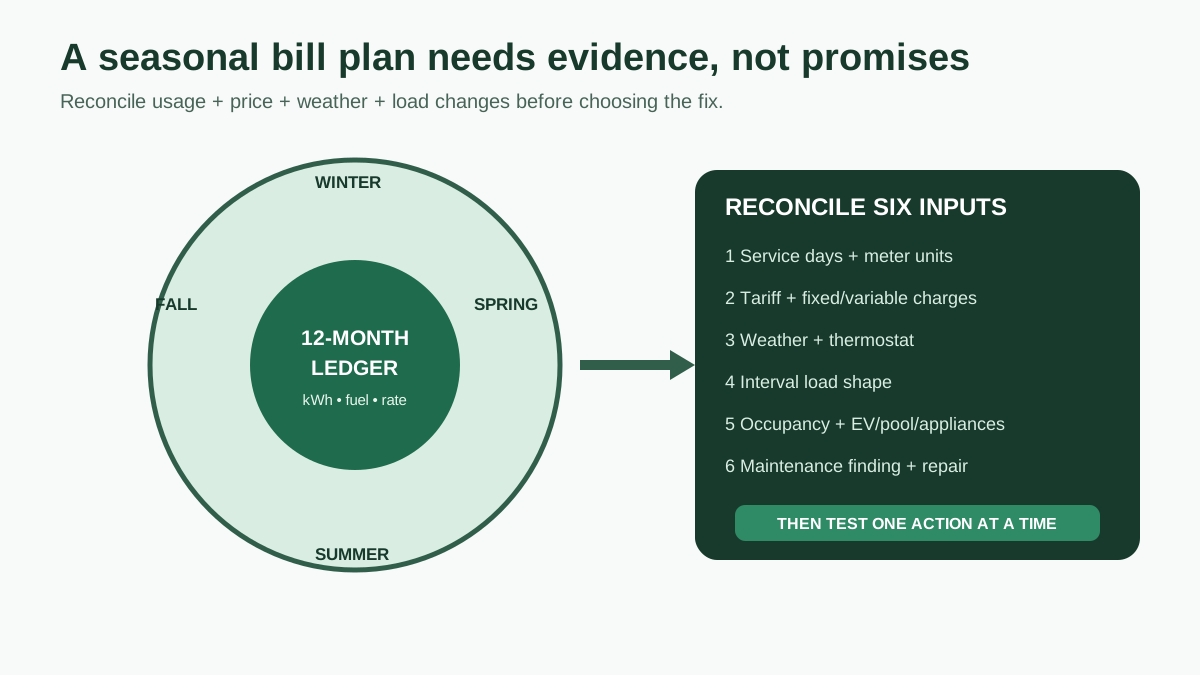
Short answer: Start with bills and meter data, not generic monthly savings promises. Each month, record service days, electricity and fuel use, rate code, fixed and variable charges, outdoor weather, thermostat settings, occupants, EV miles, and equipment changes. Compare usage per day and, where useful, weather-adjusted heating or cooling intensity. Then inspect the seasonal systems before peak conditions. Follow the exact equipment manuals and current tariff; a checklist cannot guarantee a dollar saving.
Your home's energy needs change with the seasons. The tactics that save money in August are irrelevant in January. Yet most homeowners set their thermostat and forget about energy efficiency until a shocking bill arrives.
This month-by-month checklist keeps you proactive. Each month includes specific actions that prevent waste, maximize efficiency, and keep your bills predictable.
Print it. Schedule reminders. Treat your home like the machine it is—because it needs regular maintenance to run efficiently.
January: Deep Winter Efficiency
The challenge: Peak heating season. Cold temperatures stress your HVAC system.
Week 1-2: Heating System Check
- Inspect the HVAC filter and clean or replace it when the model and filter instructions require
- Verify thermostat schedule matches your winter routine
- Check that vents are open and unobstructed
- Look for ice dams on roof (indicates heat escaping into attic)
Week 3-4: Envelope Tightening
- Check weatherstripping on exterior doors
- Map suspected drafts using a safe smoke tool or pressure test; keep flames away from finishes and combustibles
- Ensure attic hatch is sealed and insulated
- Verify fireplace damper is closed (when not in use)
Record the January actions and compare normalized use before claiming savings.
February: Heating Optimization
The challenge: Still peak heating. Utility bills arrive showing full winter impact.
Week 1-2: Behavioral Adjustments
- Lower thermostat 1-2° and wear an extra layer
- If using a listed space heater, follow CPSC clearance, supervision, direct-wall-outlet, and shutoff guidance
- Close blinds at night for insulation
- Open blinds during sunny afternoons (free solar heat)
Week 3-4: Water Heater Focus
- Review water-heater setpoint, scald risk, appliance guidance, and household health needs; DOE commonly uses 120°F as a consumer starting point
- If tankless, check for error codes
- Insulate exposed hot water pipes in cold areas
- Consider shower timer to reduce hot water use
Price any measured change with the applicable marginal rate.
March: Transition Prep
The challenge: Shoulder season. Heating needs decline. Time to prepare for cooling.
Week 1-2: HVAC Transition
- Schedule spring HVAC maintenance (beat the rush)
- Replace filter (end-of-winter refresh)
- Open windows on mild days instead of running HVAC
- Clear accessible debris while power is safely isolated; leave coil cleaning and cabinet access to the manual or qualified service
Week 3-4: Spring Cleaning Energy Audit
- Deep clean refrigerator coils (back or bottom)
- Check dryer vent for lint buildup
- Inspect window screens (for upcoming ventilation season)
- Test ceiling fan direction switch works
Use March to establish the cooling-season baseline.
April: Pre-Cooling Season
The challenge: Cooling season approaches. AC systems should be tested before you need them.
Week 1-2: AC Readiness
- Test AC by running it on a mild day
- Listen for unusual sounds (grinding, clicking)
- Verify cold air is coming from vents
- If issues, call HVAC technician now (cheaper and faster than in June)
Week 3-4: Window and Shading Prep
- Clean windows inside and out (clean glass looks better and lets in more light)
- Check that all windows open properly for ventilation
- Install window film on south/west-facing windows if planned
- Position outdoor furniture to avoid blocking AC condenser
Treat prevention as reliability work unless metered evidence shows an energy change.
May: Shoulder Season Optimization
The challenge: Perfect natural ventilation weather. Don't default to AC yet.
Week 1-2: Ventilation Strategy
- Open windows in early morning and evening; close during afternoon heat
- Use a whole-house fan only when outdoor temperature, humidity, air quality, security, and combustion-safety conditions are suitable
- Use ceiling fans on higher speeds
- Close blinds on sun-facing windows by late morning
Week 3-4: Landscaping for Efficiency
- Plant shade trees (deciduous on south/west sides)
- Install window awnings or exterior shades if budget allows
- Check that vegetation isn't blocking AC condenser airflow
Record hours of mechanical cooling avoided and indoor humidity before assigning a benefit.
June: Early Cooling Season
The challenge: First hot spells. Don't let AC run unchecked.
Week 1-2: Thermostat Settings
- Choose a safe, comfortable cooling setpoint that maintains humidity control; test small changes rather than prescribing one number
- Use programmable/smart thermostat features
- Allow home to warm during peak rate hours (if on TOU)
- Pre-cool in the morning before peak afternoon
Week 3-4: Filter and Maintenance
- Replace HVAC filter (start of heavy cooling use)
- Clear debris from around outdoor AC unit
- Verify all vents are open and clear
- Check thermostat batteries if battery-powered
Compare June kWh per cooling-degree-day where local weather data and a stable baseline allow.
July: Peak Cooling
The challenge: Hottest month. Highest cooling bills. Maximum solar potential.
If usage has already jumped, pause this checklist and run the 60-minute summer bill diagnosis. It distinguishes weather-driven cooling from a rate change, steady overnight load, pool schedule, EV charging, water heating, or an equipment fault.
Week 1-2: Peak Shaving
- Close blinds/curtains on south and west windows by noon
- Use fans to allow higher AC temperature setting
- Avoid oven use during afternoon (use grill, microwave, or slow cooker)
- Schedule dishwasher and laundry only in the official off-peak window and when safe appliance supervision/noise constraints allow
Week 3-4: Appliance Audit
- Check that freezer isn't over-iced (defrost if needed)
- Ensure fridge is at 37-40°F, freezer at 0°F
- Unplug secondary "beer fridge" if running in hot garage
- Check that dryer vent isn't adding heat to house
Reproduce the July bill with interval data before choosing the action.
August: Late Summer Push
The challenge: Heat fatigue. AC has been running hard. Maintenance matters.
Week 1-2: Mid-Season Maintenance
- Replace HVAC filter (heavy use = more changes)
- Log cycle length and conditions; no single minute range diagnoses every variable-speed or staged system
- Inspect the outdoor unit and use only the manufacturer-approved cleaning method
- Verify smart thermostat is on summer schedule
Week 3-4: Behavioral Refresh
- Recommit to closing blinds daily
- Check for open/cracked windows AC is fighting against
- Consider attic ventilation (hot attic heats house from above)
Compare the corrected system under similar weather instead of using a national monthly estimate.
September: Transition Back
The challenge: Cooling needs decline. Perfect weather for free ventilation.
Week 1-2: Maximize Natural Cooling
- Open windows for overnight cooling
- Turn off AC during mild periods (don't default to running it)
- Schedule fall HVAC maintenance
- Clean or replace filter (end of cooling season)
Week 3-4: Pre-Winter Prep
- Inspect weatherstripping (before cold weather reveals failures)
- Test heat pump heating mode if applicable
- Check attic insulation levels
- Clean gutters (clogged gutters can cause ice dams)
September is a measurement and transition month; savings depend on weather and actual shutdown hours.
October: Pre-Heating Season
The challenge: First cold nights. Heating season begins.
Week 1-2: Heating Readiness
- Test furnace/heat pump before you need it desperately
- Replace HVAC filter (start of heating season)
- Reverse ceiling fan direction to clockwise (push warm air down)
- Check that programmable thermostat has correct heating schedule
Week 3-4: Envelope & Draft Check
- Apply new weatherstripping to exterior doors
- Caulk around windows if gaps are visible
- Install outlet and switch plate insulators on exterior walls
- Put draft stoppers at bottom of exterior doors
Document the repairs and verify leakage or comfort change.
November: Early Heating
The challenge: Heating usage ramps up. Holiday cooking increases energy use.
Week 1-2: Thermostat Discipline
- Set a safe, comfortable heating schedule for occupants, equipment, pipes, humidity, and pets; test a modest setback if appropriate
- Layer up before turning up the heat
- Do not assume a space heater is cheaper; compare delivered heat, room isolation, central-system efficiency, and CPSC safety limits
- Close doors to unused rooms
Week 3-4: Holiday Efficiency
- Plan efficient oven use for holiday cooking (batch cooking)
- Use LED holiday lights instead of incandescent
- Put holiday lights on timers (don't run 24/7)
- Unplug decorations when leaving for family visits
Separate holiday load from weather-driven heating before estimating a change.
December: Peak Winter
The challenge: Shortest days, coldest weather, holiday energy use.
Week 1-2: Heating Maintenance
- Replace HVAC filter (monthly during heavy winter use)
- Check for cold spots indicating air leaks
- Verify thermostat is on correct schedule for holiday time-at-home patterns
- Bleed radiators if you have hot water heat
Week 3-4: Year-End Review
- Review the year's utility bills: What months spiked? Why?
- Compare to previous year: Did you improve?
- Set energy goals for next year
- Research rebates for next year's upgrades
Close the year with a reconciled baseline, not a promised December number.
Turn the Calendar into Evidence
Build the 12-Month Bill Ledger First
Use one row per billing period. Keep electricity, gas, oil, propane, district heat, and delivered fuels separate until you convert units with a stated method.
| Period | Service days | kWh | Fuel units | Fixed charges | Variable cost | Rate code | Weather | Major load change |
|---|---|---|---|---|---|---|---|---|
| Jan | ||||||||
| Feb | ||||||||
| Mar | ||||||||
| Apr | ||||||||
| May | ||||||||
| Jun | ||||||||
| Jul | ||||||||
| Aug | ||||||||
| Sep | ||||||||
| Oct | ||||||||
| Nov | ||||||||
| Dec |
Do not compare bill dollars alone. A rate change can raise cost while usage falls. A longer billing period can raise total kWh while daily use stays flat. Calculate:
Average daily use = billed energy ÷ service days
Variable energy price = variable energy-related charges ÷ applicable energy units
Keep fixed customer charges separate because most do not change when one appliance uses less. If a bill includes estimated reads, corrections, minimum bills, tiers, or demand charges, model those rules explicitly.
The electric-bill guide shows how to separate delivery, supply, riders, demand, taxes, and credits. Save the tariff or supplier contract used for each period; a rate-code name without its effective schedule is incomplete.
Reconcile Interval Data Before Diagnosing Loads
Hourly or 15-minute data can show overnight baseload, heating or cooling cycles, EV charging, water-heating bursts, pool schedules, and simultaneous peaks. Green Button Download My Data is a standard for participating utilities to provide usage files (Green Button Alliance). A utility may instead offer CSV or portal charts.
Before interpreting the pattern:
- Confirm time zone and daylight-saving treatment.
- Confirm whether values are interval kWh, cumulative readings, or average kW.
- Separate import and export for solar homes.
- Sum intervals inside the exact billing dates.
- Compare the sum with billed kWh.
- Mark missing, duplicated, estimated, or corrected intervals.
- Remove account identifiers before sharing the file.
If intervals do not reconcile with the bill within a documented tolerance, fix the data model before assigning a cause. One missing hour on a clock-change day is different from a week of estimated data.
Adjust for Weather Without Pretending It Is Exact
Heating-degree-days and cooling-degree-days can help compare periods with different outdoor temperatures. Choose a weather station and base temperature, state both, and use the same method across periods. The best base can differ by building, thermostat, solar gains, and internal loads.
Create a simple seasonal indicator:
Heating intensity = weather-sensitive heating energy ÷ heating-degree-days
Cooling intensity = weather-sensitive cooling energy ÷ cooling-degree-days
Whole-house electricity may include non-weather loads, so first estimate a shoulder-season or overnight baseline. For a gas-heated home, gas use may isolate heating more clearly after subtracting domestic hot-water and cooking baseline. For an all-electric heat pump, interval data and balance-point behavior help separate heating from other electricity.
Do not claim an efficiency improvement from one mild winter. Compare similar occupancy and equipment, use several months, and mark renovations, vacations, EV miles, pool operation, and fuel switching.
Use a Seasonal Trigger Map
| Pattern | Evidence to collect | Likely next action |
|---|---|---|
| High winter use proportional to cold | degree days, thermostat, heating runtime | envelope/HVAC assessment |
| High winter use independent of cold | water heat, EV, plug loads, billing correction | isolate steady/new load |
| Summer overnight floor rises | dehumidifier, pool, refrigeration, AC cycling | circuit or safe plug-load measurement |
| Sharp evening peak | cooking, EV, dryer, water heater, HVAC | TOU or demand overlap model |
| Cost rises, kWh stable | tariff, supplier renewal, riders, tax | rate-plan comparison |
| kWh rises after solar | import/export channels, inverter data, load changes | meter and solar reconciliation |
| Shoulder use never falls | ventilation, pumps, hot water, secondary appliances | baseload inventory |
| One-day spike | interval quality, event, equipment fault | verify timestamp and load log |
The pattern narrows the test; it does not prove the appliance. Confirm with circuit-level data, safe plug measurement, equipment logs, or a qualified diagnostic.
Separate Maintenance from Savings Claims
Maintenance can protect safety, capacity, comfort, drainage, and equipment life even when its energy effect is not isolated. ENERGY STAR recommends spring cooling and fall heating checkups and includes thermostat, electrical, controls, condensate, coil, airflow, refrigerant, and combustion items in its contractor checklist (ENERGY STAR).
Record:
- work performed and measured findings;
- parts, settings, and before/after readings;
- fault code and root cause;
- airflow, temperature split, static pressure, combustion, or charge method as applicable;
- condensate safety test;
- filter model, condition, and actual replacement interval;
- whether the result changed runtime, comfort, or energy under comparable conditions.
Do not let “annual tune-up” become a refrigerant top-off without diagnosis. A sealed system should not need routine refrigerant consumption. Do not clean energized equipment or open combustion/electrical compartments without qualification.
A Worked Bill Reconciliation
Suppose July has 1,420 kWh over 31 days and the prior July has 1,210 kWh over 30 days.
- current daily use: 1,420 ÷ 31 = 45.8 kWh/day;
- prior daily use: 1,210 ÷ 30 = 40.3 kWh/day;
- daily increase: 5.5 kWh/day.
That arithmetic does not identify AC. Compare cooling-degree-days, rate code, occupants, EV miles, pool schedule, thermostat, humidity, and interval shape. If the increase appears as a steady 230-watt addition all day, its daily energy is approximately:
0.230 kW × 24 hours = 5.52 kWh/day
That pattern points toward a continuous or frequently cycling load rather than only afternoon cooling. It could be a dehumidifier, pump, refrigeration, ventilation, or measurement issue. Use the summer bill diagnostic to separate those branches.
These numbers are an illustrative diagnostic example, not a typical household or promised saving.
Prioritize Actions by Cost, Confidence, and Risk
At year end, score each possible action:
| Action | Evidence confidence | Installed cost | Expected energy range | Safety/comfort value | Verification plan | Priority |
|---|---|---|---|---|---|---|
| Correct rate-plan error | ||||||
| Repair failed control or schedule | ||||||
| Seal diagnosed air leak | ||||||
| Service confirmed equipment fault | ||||||
| Replace appliance or HVAC |
Do the no-regret corrections first: billing errors, unsafe equipment, active leaks, failed controls, blocked drains, and settings that conflict with actual occupancy. Then compare capital projects using the affected load and verified installed cost. A large project with uncertain evidence should not outrank a small measured fault merely because it has a rebate.
For each completed action, define the counterfactual. Compare similar weather, occupancy, production, EV miles, and tariff periods. If several projects happen together, avoid assigning the entire bill change to one contractor.
Safety Rules That Override the Calendar
Stop and arrange qualified help for gas or combustion odor, carbon-monoxide alarms, smoke, arcing, hot plugs, repeated breaker trips, water at energized equipment, a damaged flue, refrigerant or oil leakage, sewage, or significant uncontrolled water. Do not wait for the “right month.”
Portable space heaters need special care. CPSC advises keeping them at least three feet from combustible materials and turning them off before sleep; current CPSC safety alerts also emphasize supervision and electrical safety. Never use a seasonal savings target to justify unsafe heater operation.
Avoid roof, attic, electrical-panel, combustion, refrigerant, and energized-equipment work outside your competence. Record the symptom and conditions for the trade rather than dismantling the system.
Frequently Asked Questions
Why did my bill rise when I used less energy?
The rate, fixed charge, riders, taxes, billing days, supplier contract, or demand charge may have changed. Reproduce the bill under the current tariff with the rate-plan guide before diagnosing equipment.
How many months should I compare?
Use at least 12 months so heating and cooling seasons are represented. Two years helps when weather, occupancy, equipment, EV use, or solar changed. DOE's home energy checklist recommends collecting utility bills and targeting the largest use.
Should I replace my HVAC filter every month?
Inspect it monthly during heavy use, then clean or replace according to the system and filter instructions and actual condition. ENERGY STAR gives this check-and-condition approach in its heating and cooling guidance.
Is 120°F the correct water-heater setting for everyone?
DOE commonly uses 120°F in consumer guidance, but appliance limits, scald protection, household health needs, distribution losses, and local requirements can change the safe plan. Use qualified advice where those factors apply (DOE checklist).
Can I compare this January with last January?
Yes, but normalize service days and examine weather, rate, occupants, thermostat, and equipment changes. A single year-over-year percentage is not enough to prove efficiency.
Does moving laundry off peak save energy?
It can lower cost under the applicable tariff while kWh stays similar. Check the official time blocks and appliance safety/noise constraints. The TOU guide separates cost shifting from energy reduction.
What if my utility has no interval download?
Use bills, meter portal charts, equipment logs, and safe temporary measurement. Green Button availability varies by provider (Green Button Alliance).
Annual Planning Summary
| Quarter | Main evidence | Decision output |
|---|---|---|
| Q1 | winter fuel/kWh, degree days, heating runtime | heating and envelope priority |
| Q2 | shoulder baseline, cooling readiness, tariff update | summer operating plan |
| Q3 | interval peaks, cooling/humidity, EV/pool loads | peak-load and fault actions |
| Q4 | heating startup, rate changes, annual reconciliation | next-year project list |
What to Read Next
Start with the electric-bill line-item guide, then compare tariffs using the utility-rate plan worksheet. If the problem is a summer spike, use the 60-minute diagnostic. Measure compatible plug loads through the seven-day smart-plug protocol.
Sources and Verification
Household and water-heating checklist items use DOE FEMP. HVAC sequencing, filter, condensate, electrical, airflow, coil, refrigerant, and combustion-maintenance context uses the ENERGY STAR maintenance checklist and heating/cooling guidance. Warm-season window, thermostat, and assessment context uses DOE Energy Saver. Interval-data claims use Green Button Download My Data. Space-heater cautions use CPSC safety alerts. Exact bills, tariffs, weather station, equipment manuals, occupant needs, and field measurements govern.
About the Editorial Team EnergyBS reviews public program rules, product specifications, utility rates, and reader-facing cost assumptions. Treat savings figures as estimates until you verify local prices, permits, rebates, and contractor quotes.
Sources and Verification
Editorial Review
EnergyBS Editorial Team
EnergyBS publishes practical homeowner guides. Important program, product, and cost claims should be checked against the linked source and local project documents before you commit to work.
Related Guides
View All ArticlesWhy Is My Electric Bill So High in Summer? A 60Minute
A billfirst troubleshooting workflow that separates price changes, billingperiod effects, weatherdriven cooling, baseload growth, pool and waterheating loads, and HVAC faults before money is spent.
How to Read Your Electric Bill 2026 Tool (Guide & Data)
Your electric bill is full of confusing charges, fees, and acronyms. Here's a linebyline breakdown of what you're actually paying for—and where to find savings.
Electricity Rate Plans Explained 2026 Tool (Guide & Data)
A billfirst framework for comparing flat, tiered, timeofuse, criticalpeak, realtime, demand, EV, and retailsupplier plans without relying on headline cents per kWh.