Active vs. Passive Solar Home Design 2026 Tool
Don't just bolt panels to your roof. Learn how to design your home to heat and cool itself legally and efficiently using passive solar physics.
The Difference That Saves You Thousands
Short Answer: Don't just bolt panels to your roof. Learn how to design your home to heat and cool itself legally and efficiently using passive solar physics.
Most people think "solar home" means "solar panels." That is Active Solar (using mechanical/electrical devices to convert sunlight).
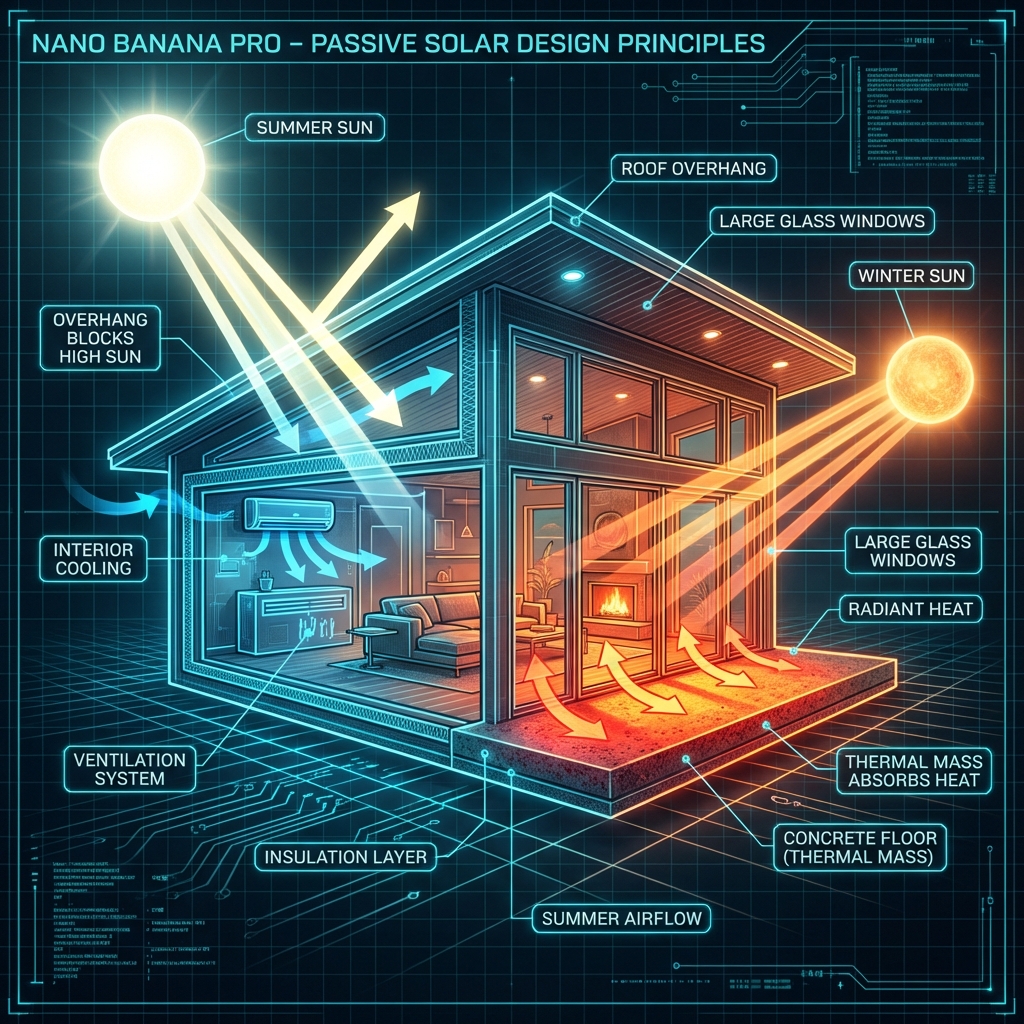
Passive Solar is older, cheaper, and often more effective. It is the art of designing the building itself—its windows, walls, and floors—to collect, store, and distribute solar energy in the form of heat in the winter and reject solar heat in the summer.
[!NOTE] Field Note from Marcus Vance: "The biggest mistake I see in modern 'green' homes is ignoring orientation. I audited a LEED Platinum home that had massive west-facing windows. The AC bill was high because they were essentially living in a greenhouse. Orientation is free if you plan it before you pour the foundation."
5 Principles of Passive Solar Design
- Aperture (The Collector): Large glass areas should face within 30 degrees of true South.
- Absorber (The Hard Surface): The hard, darkened surface of the storage element (floor/wall) sits in the direct path of sunlight.
- Thermal Mass (The Battery): Materials like concrete, brick, stone, or tile that retain heat.
- Distribution: Method by which solar heat circulates from the collection and storage points to different areas of the house (conduction, convection, and radiation).
- Control (Overhangs): Roof overhangs used to shade the aperture during summer months.
Active Solar: The Power Plant
- Active Solar: Install a PV array to cover the remaining electrical load.
- Benefit: Because steps 1 & 2 reduced your needs, you might only need a 6kW system instead of a 10kW system, saving you ~$10,000 upfront.
FAQ: Passive vs. Active Solar
Can I add passive solar to an existing home?
It's harder, but yes.
- Retrofits: You can't rotate your house, but you can add south-facing windows, remove trees blocking solar access, or add thermal mass (like tile floors) in sun-drenched rooms.
- Window Tuning: Use high-solar-gain windows on the South and low-emissivity (insulating) windows on the North.
Does passive solar cause overheating in summer?
Only if designed poorly. This is why overhangs are critical. If you have a wall of glass without shading, your house will be an oven in August. The interplay of glass and shade is the "science" part of building science.
Is passive solar expensive?
Surprisingly, no. It's mostly about decisions, not materials. Placing windows on the South wall costs the same as placing them on the North wall. Orienting the foundation East-West costs the same as North-South. It is virtually free if planned from Day 1.
The Verdict
Don't buy technology to solve a problem that physics can solve for free. Start with Passive Solar to minimize your need for energy. Then use Active Solar to generate the clean power you still need. That is the blueprint for a truly efficient (and cost-effective) home.
About the Editorial Team EnergyBS reviews public program rules, product specifications, utility rates, and reader-facing cost assumptions. Treat savings figures as estimates until you verify local prices, permits, rebates, and contractor quotes.
Practical Decision Framework
Use this page as a starting point for Active vs. Passive Solar Home Design: The practical Guide (2026), then verify the numbers against your own home. Don't just bolt panels to your roof. Learn how to design your home to heat and cool itself legally and efficiently using passive solar physics.
| Decision point | What to check | Why it matters |
|---|---|---|
| Current baseline | Review 12 months of utility bills, fuel use, and outage history. | Savings and resilience only make sense compared with your real starting point. |
| Local rules | Check utility tariffs, rebate deadlines, permit requirements, and eligible equipment lists. | Many projects fail financially because the quote assumed a credit or rate plan that does not apply. |
| Installation constraints | Confirm panel capacity, roof condition, ducts, ventilation, drainage, and access for service. | The hidden work often decides whether the project is affordable. |
| Comfort target | Write down the rooms, seasons, or outage scenarios you are trying to fix. | A narrower goal often leads to a cheaper and better upgrade. |
| Verification step | Ask contractors to separate equipment, labor, electrical work, permits, and incentive assumptions. | Clear line items make quotes easier to compare and reduce surprise costs. |
Reader Checklist
- Get at least two quotes when the project involves electrical, HVAC, insulation, solar, or plumbing work.
- Confirm whether incentives are point-of-sale discounts, mail-in rebates, utility credits, or tax credits.
- Keep screenshots or PDFs of program rules on the date you apply.
- Treat national savings estimates as rough examples, not promises for your address.
- If safety, wiring, refrigerants, combustion, structural work, or permits are involved, use a licensed local professional.
What To Read Next
For broader context, compare this with the EnergyBS green living guide library. It will help you check whether this topic is part of a larger efficiency, rebate, resilience, or electrification plan.
Common Questions
What should I check first before using this design advice?
Start with the numbers that apply to your home: climate, utility rate, equipment age, contractor quote, and local program rules. Don't just bolt panels to your roof. Learn how to design your home to heat and cool itself legally and efficiently using passive solar physics.
How should I verify rebates, tax credits, rates, or savings before spending money?
Treat program amounts, utility rates, and tax rules as date-sensitive. Check the named government, utility, or manufacturer source before you sign a contract, and keep screenshots or PDFs of eligibility rules for your records.
What is the next useful step after reading this?
Compare this with Heat Pump Sizing Guide so you can check the cost, rebate, installation, or operating-risk angle before making a decision.
Sources and Verification
Editorial Review
EnergyBS Editorial Team
EnergyBS publishes practical homeowner guides. Important program, product, and cost claims should be checked against the linked source and local project documents before you commit to work.
Related Guides
View All ArticlesHeat Pump Sizing Guide
A homeownerfocused guide to Manual J loads, Manual S equipment selection, coldweather capacity, balance points, duct constraints, and the documents a defensible heatpump quote should include.
Ductless MiniSplit Head Placement 2026 Tool
A homeowner planning method for locating ductless indoor units by room load, air throw, doors, sensors, noise, condensate, line routes, service access, and wholehome comfort—not wall convenience alone.
Heat Pump Dryer vs Vented Dryer 2026 Tool (Guide & Data)
A householdspecific comparison of heatpump, vented electric, and gas dryers using model energy data, laundry volume, utility rates, cycle time, drainage, room conditions, vent cost, maintenance, and clothing care.