Attic Ventilation Guide
Choose and diagnose attic vents by first defining whether the roof is vented or unvented, then measuring netfree area, intake and exhaust paths, baffles, air leakage, moisture, weather exposure, and field performance.
Direct Answer
Choose and diagnose attic vents by first defining whether the roof is vented or unvented, then measuring netfree area, intake and exhaust paths, baffles, air leakage, moisture, weather exposure, and field performance.
The Cold Attic Paradox
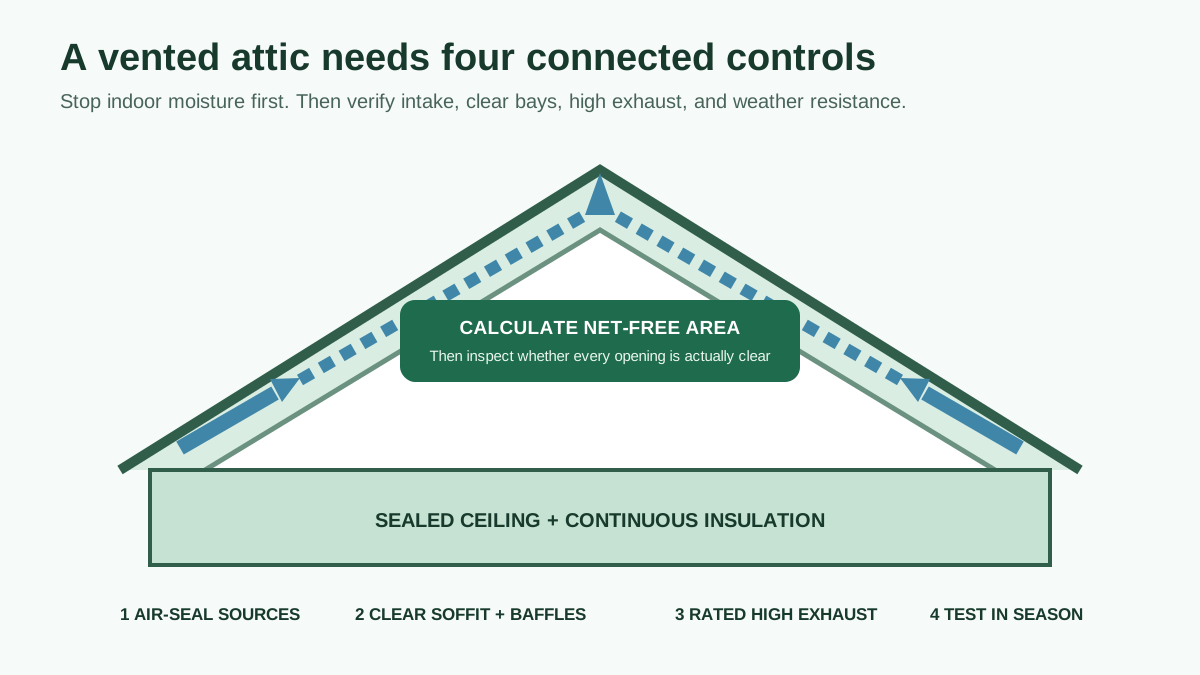
Short answer: First identify the roof assembly. A vented attic usually keeps insulation and the air barrier at the ceiling, with outdoor air entering low through soffits and leaving high through ridge or off-ridge vents. An unvented attic moves the enclosure to the roofline and closes exterior attic vents as part of a designed air, thermal, and moisture-control assembly. Do not add vents as a reflex. Fix roof leaks, indoor-air leakage, attic-terminated exhaust, blocked baffles, and unsafe heat sources, then size and detail the vent path under local code and climate exposure.
Ask an average homeowner what an attic should feel like in winter, and they'll say: "Warm, because heat rises."
A properly performing vented attic should remain cold in winter. A persistently warm attic can indicate heat loss, but sun, ducts, measurement location, and outdoor conditions also matter. If the sheathing or nail tips are frosted, use the attic frost and condensation guide to separate indoor moisture transport from roof or mechanical leaks before changing the vents.
Why We Vent: The Two Enemies
Attic vents support a designed roof assembly. They are not a substitute for the ceiling air barrier, insulation, exterior water management, or indoor moisture control.
1. Ice Dams (The Roof Killer)
A common mechanism:
- Heat leaks from your living room into the attic.
- The attic warms up to 40°F (when it's 20°F outside).
- The snow on your roof melts.
- The water trickles down to the eaves (overhangs).
- The eaves are not over the house, so they are freezing cold (20°F).
- The water re-freezes at the edge, forming a dam of ice.
- The pond backing up behind the dam pushes water under your shingles and into your walls.
The response: Keep roof-deck temperatures more uniform by treating the ceiling air barrier, insulation, heat sources, snow/weather exposure, and vent path as one assembly. The ice-dam prevention guide separates emergency ice removal from the durable attic or roof repair.
2. Moisture (The Mold Killer)
A common mechanism:
- Warm air from your shower and breath rises into the attic.
- If the attic is cold and sealed, that moisture hits the cold plywood roof deck.
- Condensation forms (dew point).
- Frost builds up in winter. When it melts in spring, it "rains" in your attic.
- Black mold grows on the sheathing.
The response: Stop indoor moisture from entering through ceiling leaks or exhaust ducts, correct bulk water, dry wet materials, and restore the intended vent path. Ventilation alone can be overwhelmed by a large air leak.
The Physics: The Stack Effect Engine
Airflow depends on wind, pressure, temperature difference, opening geometry, and resistance. In a conventional vented attic, the intended path is:
- The Exhaust (Ridge): Hot air exits at the absolute peak of the roof.
- The Intake (Soffit): Outdoor air enters low through open soffit vents and baffles when pressure supports that direction.
The useful goal is a clear low-to-high path across the roof sheathing, without insulation blocking intake or mixed vent types short-circuiting the intended route. Flow is not constant, and outdoor air is not always dry.
Vent Types: The Good, The Bad, and The Useless
Ridge and soffit
- How it works: A continuous slot cut along the very peak of the roof (covered by a shingle cap) paired with vented panels under the eaves.
- Why it is often used: Continuous low intake and high exhaust can distribute ventilation across many rafter bays when baffles and net-free area are correct.
Gable vents
- What they are: Louvered vents on the side walls of the attic.
- Design issue: They can be part of some existing vent strategies, but combining gable vents with ridge or off-ridge exhaust can bypass soffit intake. PNNL generally advises against mixing them because of short-circuit risk; high-wind, rain, snow, and wildfire exposure also affect the choice (PNNL).
Box or off-ridge vents
- What they are: Square metal boxes near the ridge.
- Design issue: Spacing, rated net-free area, roof geometry, weather resistance, and soffit intake determine performance. Do not compare unit count without the product's rated net-free area.
Turbine vents
- What they are: Spinning metal chefs hats.
- Design issue: Wind, bearing condition, intake area, weather resistance, and rated performance matter. A turbine is not a repair for ceiling leakage or blocked soffits.
Powered attic ventilators
- What they are: Electric fans that suck air out.
- Design issue: Measure intake capacity and attic-to-house leakage before specifying one. If the fan depressurizes the attic and the ceiling leaks, it can draw conditioned indoor air upward. It can also interact with combustion appliances. Use pressure and combustion-safety testing where relevant; never assume a powered fan saves energy.
The "Hot Roof" Exception (Unvented Attic)
An unvented attic is a complete enclosure redesign, not “spray foam plus blocked vents.” The air barrier, insulation type and location, vapor control, roof drying potential, HVAC/ventilation, combustion equipment, fire protection, pests, roof leaks, and local code all need resolution.
PNNL's vented-versus-unvented guide shows the basic distinction: insulation at the ceiling with exterior attic ventilation versus insulation and air control at the roofline with attic vents closed. Foam can be one material in some unvented assemblies, but no single thickness or foam type is universal.
Do not leave attic-floor insulation in a configuration that creates an unintended double thermal boundary without design review. And do not seal bathroom, kitchen, dryer, plumbing, radon, or combustion vents as if they were attic ventilation openings.
Diagnose the Existing Attic Before Changing Vents
Use this field record:
| Evidence | Record | Why it matters |
|---|---|---|
| Vented or unvented design | defines intended boundary | |
| Roof shape and each vent type | reveals mixed paths and dead bays | |
| Product net-free area | allows intake/exhaust calculation | |
| Clear soffit openings | gross perforation is not usable inlet area | |
| Baffle count and condition | keeps insulation out of intake path | |
| Ceiling air-leak evidence | frost, dirty insulation, open chases | |
| Bath/dryer/kitchen termination | indoor moisture must go outdoors | |
| Roof leaks and staining | bulk water is not a vent calculation | |
| Sheathing moisture/frost pattern | maps source and exposure | |
| Ducts/air handler in attic | adds heat, leakage, and service needs | |
| Flues, wiring, recessed lights | creates safety and clearance constraints | |
| High-wind, wildfire, snow exposure | changes vent and screen detailing |
Attic entry can involve falls, fragile ceilings, heat stress, fibers, vermiculite, mold, energized wiring, pests, and combustion vents. Use safe access and qualified assessment when those hazards are present.
Calculate Net-Free Vent Area, Not Grille Dimensions
Codes specify ventilation ratios and permitted reductions differently. PNNL notes a common 1:300 total net-free-vent-area basis for balanced ventilation, but the adopted code and assembly conditions decide whether that ratio applies (PNNL).
Net-free area is the manufacturer's rated open area after louvers and screens—not the vent's outside dimensions. Build a schedule:
| Vent product/location | Quantity/length | Rated NFVA each | Total NFVA | Intake or exhaust |
|---|---|---|---|---|
| Soffit | intake | |||
| Ridge | exhaust | |||
| Off-ridge/box | exhaust | |||
| Gable | design-specific |
Compare intake and exhaust, then inspect whether each square inch is actually open. Paint, dust, insulation, insect nests, a collapsed baffle, snow, or an incompatible mesh can reduce field area.
Do not cut a ridge slot from a generic internet dimension. Slot width, end setbacks, structural framing, weather baffle, underlayment, fasteners, and shingle cap must follow the exact vent system and roof design.
Check Every Rafter Bay and Roof Geometry
A correct total NFVA can still leave wet sheathing if intake feeds only part of the roof. Map:
- soffits interrupted by porch roofs or additions;
- valleys, hips, dormers, skylights, and cathedral sections;
- insulation packed at the eaves;
- baffles that stop below the top of loose fill;
- vaulted bays without a continuous channel;
- fire blocking and framing that isolates pockets;
- snow-covered or wind-shadowed terminations.
ENERGY STAR recommends rafter vents at soffit locations so insulation can reach the eaves without blocking airflow (rafter-vent guidance). A baffle is also part of wind-wash control: loose insulation should not be displaced away from the exterior top plate.
Air-Seal and Control Sources Before Adding Vent Area
Look for dirty insulation, frost near penetrations, open wall tops, plumbing/electrical holes, attic hatches, dropped soffits, chimney/flue chases, and disconnected exhaust ducts. ENERGY STAR identifies large attic bypasses as priority air-sealing locations (attic air-leak guidance).
Use fire-rated, temperature-appropriate, and product-compatible methods. Maintain clearances at flues, chimneys, heat-producing fixtures, and wiring. Do not cover active knob-and-tube wiring or disturb suspect vermiculite without the required assessment.
EPA says bathroom and kitchen moisture should be exhausted outdoors and wet materials should be dried promptly (EPA). Repair a disconnected fan duct before adding roof vents. Otherwise the attic still receives the moisture at its source.
Treat Weather and Wildfire Exposure as Design Inputs
More open area is not automatically more durable. Roof vents can admit wind-driven rain, powder snow, and embers. PNNL recommends vent products and assemblies suited to wind and water exposure and discusses 1/8-inch or smaller soffit mesh for wildfire resilience, subject to local requirements and maintained net-free area (disaster-resistant venting).
Verify:
- wind/rain test basis for upper vents;
- corrosion resistance and fasteners;
- flashing and underlayment integration;
- ember-resistant details required locally;
- snow and ice blockage risk;
- pest screen effect on NFVA;
- service access for cleaning.
A vent that resists one hazard may impose more pressure drop. Use its certified data and recalculate the system.
Write a Repair Scope with Measurable Acceptance
| Scope item | Required evidence |
|---|---|
| Assembly decision | vented or unvented drawing |
| Roof/water repair | locations, materials, photos |
| Ceiling air sealing | penetrations, fire clearances, pre/post evidence |
| Exhaust corrections | each fan/dryer terminates outdoors |
| Intake/exhaust | product, NFVA, balance calculation |
| Baffles/wind dams | bay map and installation photos |
| Weather resilience | cap/vent test basis and flashing |
| Insulation | final depth/coverage without blocked vents |
| Commissioning | moisture, pressure, visual and seasonal checks |
Reject a quote that says only “add ten roof vents.” It should state why the existing assembly fails and how the proposed openings work with intake, air sealing, moisture sources, and weather.
Commission Through the Problem Season
After work, verify that soffit openings and baffles remain clear, upper vents are correctly flashed, exhaust ducts reach outdoors, and insulation coverage is continuous. Photograph each concealed correction.
Record attic and outdoor temperature/RH, sheathing moisture at repeatable marked points, snowmelt pattern, frost, stains, and indoor humidity. One dry afternoon cannot prove winter performance. Reinspect during the freeze/thaw or wind-driven-rain condition that produced the complaint.
If a powered ventilator remains, measure attic/house pressure and relevant combustion safety under worst-case exhaust operation. Confirm the fan's controls and that it does not substitute for source repair.
Work Through the Symptom, Not the Vent Catalog
Case 1: Frost above one bathroom
The attic has clear soffit baffles and a continuous ridge vent, yet nail tips frost over a small area above the bathroom. Start at the bathroom fan. If its duct is disconnected or leaks at a joint, adding box vents changes the roof while leaving the concentrated moisture source in place.
The repair scope should reconnect and seal the exhaust to an approved outdoor cap, repair the ceiling penetration, dry and assess wet insulation/sheathing, and verify bath-fan airflow. Then monitor the marked roof area through another cold period. The existing attic vent system may need no added area.
Case 2: Ice dams along one eave below a chase
Snow melts above an open plumbing or dropped-soffit chase and refreezes at the eave. The useful repair is a code- and fire-safe air block at the ceiling plane plus continuous insulation and a preserved baffle. A new ridge vent cannot stop the direct heat leak by itself.
Use smoke or pressure-assisted tracing only under safe test conditions. Thermal images can help map the surface pattern, but sun, wind, snow, and emissivity affect interpretation.
Case 3: New loose fill blocks soffit intake
The attic performed acceptably before a top-up. Afterward, insulation fills the eave and wind has shifted material away from some exterior plates. Restore approved rafter baffles and wind dams, then redistribute insulation without compressing it into the channel. Record final depth and clear opening in each affected bay.
This case is why “more R-value” and “more ventilation” should not be separate contracts. The insulation installer needs an intake-preservation detail.
Case 4: Wind-driven rain at a new ridge vent
Water staining starts after the vent replacement and tracks severe wind direction rather than indoor humidity or snowmelt. Inspect slot dimensions, end stops, fasteners, cap shingles, underlayment, baffle design, and the product's wind-driven-rain basis. Do not label it attic condensation because the interior is humid.
The roofer owns the weather-resistive integration. A separate envelope assessor can verify whether indoor moisture also exists, but the two sources need independent evidence.
Check Interaction with Attic HVAC and Storage
Ducts and air handlers in a vented attic can leak heat or cooling and lose energy through their surfaces. Inspect:
- duct-joint leakage and damaged insulation;
- air-handler cabinet leakage;
- condensate pan, drain, and overflow protection;
- filter and service access;
- compressed attic insulation below platforms;
- safety clearances and walkways;
- whether return leaks depressurize the house or draw attic contaminants.
Do not cover equipment, junction boxes, recessed fixtures, or service paths with new insulation. A raised storage deck can compress insulation and create thermal bridges; stored boxes can also block vents or hide roof leaks.
If moving the enclosure to the roofline is proposed mainly because HVAC is in the attic, compare a complete unvented-attic design with duct sealing/replacement, equipment relocation, and ceiling-plane repairs. Include roof replacement timing, fire coating, ventilation/dehumidification, pest inspection, and future roof-leak access. “Condition the attic” is not a complete quote.
Separate Code Minimum from Project Acceptance
A vent-area calculation can satisfy a prescriptive ratio while field performance still fails because openings are blocked or moisture sources remain. Set acceptance requirements beyond paperwork:
| Acceptance item | Method | Pass condition |
|---|---|---|
| Product and NFVA | labels/data sheets | matches schedule and code |
| Intake continuity | bay-by-bay photo/inspection | required bays open and baffled |
| Ceiling air sealing | visual + pressure diagnostics | named bypasses corrected |
| Exhaust terminations | trace and flow check | each reaches outdoors without leakage |
| Roof water control | flashing/vent inspection | no entry under test/weather condition |
| Insulation coverage | depth grid and photos | specified coverage, no blocked intake |
| Moisture outcome | marked sheathing readings | dries/stays within project limits |
| Ice/frost outcome | seasonal observation | causal pattern does not recur |
Define the measurement locations and instruments before work. Otherwise a contractor can select a dry sheathing spot after the repair and claim improvement while the original wet area remains untested.
Maintenance and Reinspection
Inspect from safe accessible locations after roof work, attic insulation, siding/soffit painting, pest treatment, severe wind, wildfire smoke/embers, heavy snow, or a bath-fan replacement. These projects can alter openings even when attic ventilation is not their main purpose.
At routine intervals, look for changed staining, displaced baffles, blocked screens, animal nests, corrosion, loose caps, and wet insulation. Recheck the outdoor termination of every moisture-producing exhaust. Keep dated photographs from the same viewpoints; trends are easier to see than relying on memory.
Never climb onto a steep, wet, icy, hot, or fragile roof to inspect a vent. Ground photography, attic observation, or a qualified roofer is safer. Also avoid moving insulation around energized wiring or suspect hazardous material.
What a Good Contractor Handoff Contains
- pre-work attic and roof plan;
- vent product data and net-free-area math;
- local code/permit basis;
- ceiling air-leak and exhaust findings;
- repair photos before insulation is restored;
- baffle and soffit map;
- roof flashing/underlayment details;
- insulation depth/coverage grid;
- moisture readings and instrument details;
- powered-fan pressure and combustion tests, if applicable;
- product and workmanship warranties;
- seasonal follow-up date and owner maintenance steps.
Keep the packet with roof and insulation records. Future contractors can then distinguish the designed vent system from an accidental opening and avoid undoing the work.
Frequently Asked Questions
Do all roofs need ridge and soffit vents?
No. The assembly may be vented or unvented, and roof geometry or hazard exposure can require another design. PNNL explains both approaches in its vented-versus-unvented attic guide.
Should I close gable vents after adding a ridge vent?
Mixed high vents can short-circuit soffit intake. PNNL generally advises against combining gable vents with ridge or off-ridge vents, but the full roof and local requirements should be assessed before alteration (PNNL).
Will more attic vents stop mold?
Not if roof water, indoor-air leakage, or an attic-terminated exhaust keeps wetting materials. EPA says moisture-source correction is essential (EPA).
Are powered attic fans energy savers?
Not automatically. Measure intake, ceiling leakage, fan power, cooling impact, and building pressure. A powered fan can draw conditioned air through ceiling leaks.
Why are soffit vents blocked by insulation?
Insulation work can cover the eave inlet. ENERGY STAR recommends rafter vents/baffles that preserve the air channel while allowing insulation coverage to the edge (ENERGY STAR).
Can I convert a vented attic by spraying foam under the roof?
Only as a complete designed conversion. PNNL's conversion checklist addresses vent closure, air sealing, insulation, and mechanical/exhaust details; local code and the exact material system govern.
What to Read Next
Trace sheathing frost with the attic frost guide. If snow melts unevenly, use the ice-dam diagnosis. Before covering the ceiling, compare removing old insulation with adding on top, and measure leakage through the blower-door guide.
Sources and Verification
Assembly selection, soffit/ridge paths, mixed-vent limitations, common NFVA ratios, and hazard-resistant details use PNNL's vented-versus-unvented attic guide and disaster-resistant roof venting guide. Baffle and ceiling air-sealing guidance uses ENERGY STAR rafter-vent guidance and attic air-leak guidance. Moisture and exhaust claims use EPA indoor biological-contaminant guidance and the EPA mold guide. The adopted code, exact vent ratings, roof warranty, fire/wildfire requirements, climate, and field measurements govern.
About the Editorial Team EnergyBS reviews public program rules, product specifications, utility rates, and reader-facing cost assumptions. Treat savings figures as estimates until you verify local prices, permits, rebates, and contractor quotes.
Sources and Verification
Editorial Review
EnergyBS Editorial Team
EnergyBS publishes practical homeowner guides. Important program, product, and cost claims should be checked against the linked source and local project documents before you commit to work.
Related Guides
View All ArticlesAttic Frost and Condensation 2026 Tool (Guide & Data)
Separate roof leaks from winter condensation, trace indoorair and exhaust paths, assess wet sheathing and insulation, and commission a safe attic repair.
Ice Dam Prevention
Find the heat and moisture paths behind recurring ice dams, choose a durable attic or compactroof repair, and verify the work instead of treating icicles alone.
Should You Remove Old Attic Insulation or Add More on
Keep dry, clean insulation when it can remain part of a safe assembly; remove only what blocks air sealing or is wet, contaminated, damaged, or incompatible. Includes a quote and depthgrid worksheet.