Vapor Barrier vs. Vapor Retarder 2026 Tool (Guide & Data)
Choose a vaporretarder class only after checking climate, wall layers, rain control, air leakage, exterior insulation, cladding, indoor humidity, and the assembly's drying direction.
The Polyethylene Panic: Why Sealing Too Tight Rots Wood
Short Answer: A vapor retarder is not a universal sheet or a substitute for an air barrier. Choose its class and location from the climate, wall assembly, cladding, exterior insulation, indoor humidity, and code. First control rain and air leakage. Then make sure incidental moisture can dry inward, outward, or through a designed ventilated space without being trapped between low-perm layers.
Low-perm interior layers can help some cold-climate assemblies. They can also reduce inward drying. The result depends on the exterior layers, cladding, rain control, air leakage, indoor humidity, and climate—not the decade in which the material was installed.
Part 1: Permeability (Understanding the 'Perm' Scale)
In 2026, we don't talk about "Barriers"—we talk about Vapor Retarders. Moisture movement is measured in Perms.
- Class I: 0.1 perm or less. Examples can include polyethylene and non-perforated foil.
- Class II: Greater than 0.1 and up to 1.0 perm. Kraft facings and tested vapor-retarder coatings may fall here.
- Class III: Greater than 1.0 and up to 10 perms. Some tested paint systems may qualify.
Product permeance depends on material, thickness, facing, humidity, and test method. Confirm the data sheet instead of assigning a class by appearance.
The Golden Rule: The Wall Must Dry
An assembly needs a recovery path for incidental moisture. Two low-perm layers can sharply limit drying, but hygrothermal behavior also depends on rain, air leakage, material moisture storage, ventilated cavities, temperature, and workmanship. Have the full wall reviewed before adding another low-perm layer.
Part 2: Interstitial Condensation Physics (The Dew Point risk)
"Interstitial" means "between the layers." In a wall, the temperature drops as you move from the warm interior to the cold exterior. Somewhere in the middle of your insulation, the temperature hits the Dew Point—the temperature at which air can no longer hold its water vapor.
- The Problem: If vapor can move freely into the wall but gets stuck at a cold surface (like the back of your plywood sheathing), it turns into liquid water inside the wall.
- One control strategy: Enough exterior continuous insulation can keep sheathing warmer in cold weather. It doesn't make condensation impossible; ratios, air leakage, indoor humidity, rain entry, thermal bridges, and local climate still matter.
Part 3: The "Double Barrier" Sin (The Structural Death Sentence)
The fastest way to destroy a house is to risk the wall on both sides.
- The Common Mistake: A homeowner in the Northeast has plastic on the inside (Correct for the North). But then they decide to "upgrade" their siding and add 2 inches of closed-cell spray foam or foil-faced rigid foam to the outside.
- The risk: Inward and outward drying may both be limited. Review existing layers and the new system's permeance before work, then improve rain control and flashing rather than assuming the wall will stay dry.
Part 4: Reservoir Cladding (Brick & Stone Dangers)
Brick and stone are "reservoir claddings"—they act like sponges. After a heavy rain, the brick is full of water. When the sun comes out, that water is driven inward by solar vapor drive.
- The Danger: If you have an interior vapor barrier, that driven moisture hits the back of the plastic and pools.
- The response: Use the code- and assembly-specific drainage, ventilation, flashing, and separation detail behind the reservoir cladding. A universal one-inch gap is not the only compliant design.
Part 5: The 2026 Solution: Smart Membranes (Intelligent Permeability)
Technology has finally caught up with the physics of the seasons. Products like Pro Clima Intello or CertainTeed MemBrain are "Hygro-variable" membranes.
- Lower-humidity conditions: The membrane has lower permeance and slows diffusion.
- Higher-humidity conditions: Permeance rises, which can support inward drying when the rest of the assembly and indoor conditions allow it.
Use the tested permeance curve and approved application for the exact product. A variable-perm membrane cannot repair bulk-water leakage or uncontrolled airflow.
Part 6: Regional Verdicts for 2026
Where you put your vapor retarder depends entirely on your latitude:
- Cold climates: Check adopted code, exterior R-value, sheathing, cladding, and outward drying before choosing an interior class.
- Hot-humid climates: Avoid creating a cold-side condensation surface or blocking the intended inward drying path. The exact exterior control layer still depends on the wall.
- Marine and mixed climates: Seasonal vapor drives increase the value of an assembly-specific review. Class II, Class III, variable-perm, or no added interior membrane may be appropriate.
The Decision Is About Drying, Not “Breathing”
Walls don't need random air leakage. They need rain control, a continuous air barrier, suitable vapor control, and a defined drying path.
The Action Plan:
- Air Seal first (stop the drafts).
- Exterior Insulate second (keep your studs warm).
- Smart Membrane third (manage the vapor path).
Document every layer before choosing a membrane. That one step prevents most accidental low-perm sandwiches.
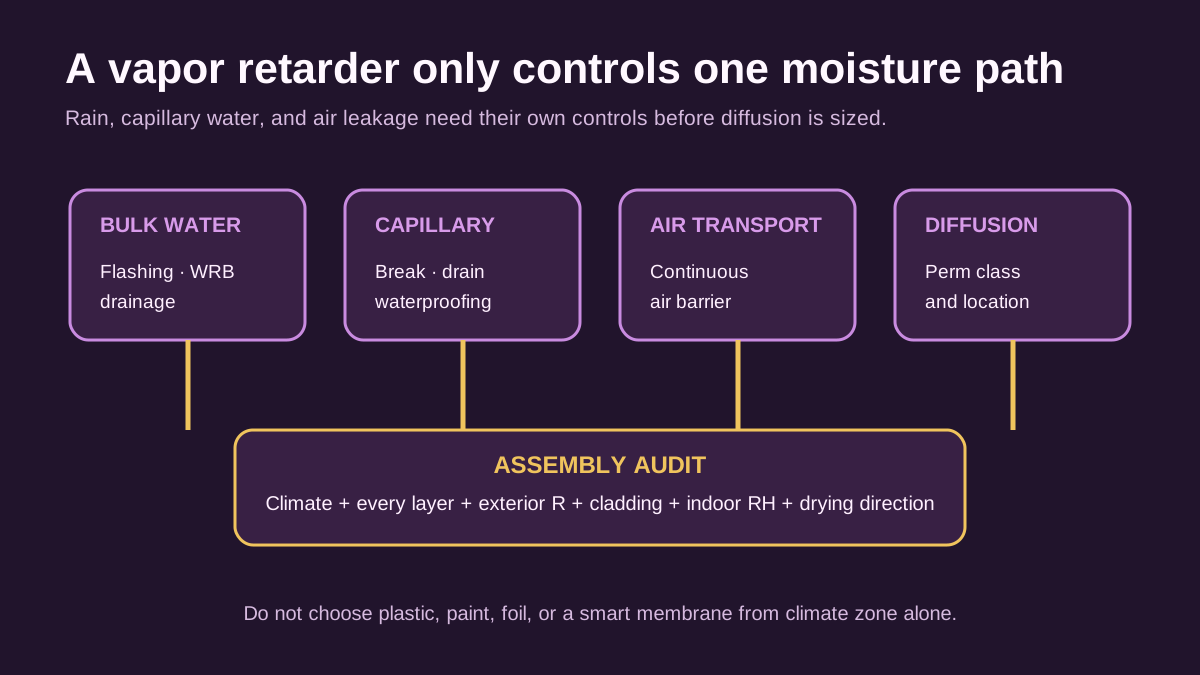
Separate Four Moisture Paths
A vapor retarder deals with diffusion. Most wet-wall failures begin elsewhere.
| Moisture path | Example | Main control |
|---|---|---|
| Bulk water | Rain through failed flashing | Drainage plane, flashing, roof and cladding details |
| Capillary transport | Water moving through masonry or concrete | Capillary break, drainage, waterproofing |
| Air transport | Humid air leaking through a ceiling or wall gap | Continuous air barrier and pressure control |
| Vapor diffusion | Water vapor moving through materials | Vapor-retarder class and location |
A sheet membrane can be an air barrier, a vapor retarder, both, or neither depending on material and installation. The labels are about functions. A Class I material full of holes may slow diffusion through the sheet while allowing moisture-laden air to move through every seam and penetration.
Start with rain and air. Then decide how much diffusion control the assembly needs.
Inventory Every Layer From Inside to Outside
Do not select a vapor product from climate zone alone. Build a layer table:
| Layer | Thickness | Air-control role | Vapor permeance | Water-control role | Can it dry? |
|---|---|---|---|---|---|
| Interior paint | |||||
| Gypsum or plaster | |||||
| Existing membrane or facing | |||||
| Cavity insulation | |||||
| Sheathing | |||||
| WRB | |||||
| Exterior insulation | |||||
| Air space or rainscreen | |||||
| Cladding |
Include wallpaper, cabinet backs, shower surrounds, mirrors, foil-faced boards, closed-cell foam, peel-and-stick membranes, self-adhered WRBs, metal panels, and low-perm coatings. Small areas can matter when they coincide with leaks or cold surfaces.
Unknown layers are a reason to inspect, not a blank to fill with assumptions. Check attic, basement, electrical openings, renovations, permits, product labels, and controlled test openings.
Find the Intended Drying Direction
Ask where construction moisture and incidental rain can leave.
- Drying inward: Interior layers must permit enough movement under the expected conditions.
- Drying outward: Exterior sheathing, WRB, insulation, air space, and cladding must support it.
- Ventilated drying: A designed rainscreen or roof ventilation path removes moisture from the drainage side.
- Limited drying: Some compact or low-perm assemblies rely on exceptional rain and air control plus dry materials at enclosure.
Drying direction can change by season. That is why mixed and marine climates need special care. A wall that dries outward in winter may face inward solar vapor drive in summer.
Do not use “the wall breathes” as a specification. Name the material, permeance, temperature side, moisture source, and path.
Apply Climate and Code to the Actual Wall
DOE Building Science Education says vapor-retarder class depends on climate zone and cladding, and that many cases need no added retarder. PNNL's code brief notes interior Class I or II requirements in some colder zones while allowing Class III under defined conditions such as sufficient exterior insulation or ventilated cladding.
The adopted code edition matters. So do local amendments and Canadian, UK, or European rules. Ask the designer or contractor to cite the exact provision and show how the proposed layers comply.
For cold-weather condensation control, calculate the exterior continuous-insulation requirement from the applicable cavity R-value and climate table. The exterior continuous-insulation guide explains why a nominal board thickness is not enough.
In hot-humid locations, air-conditioned interiors create inward vapor drives. Interior vinyl wallcovering, foil, or polyethylene can form a cold low-perm surface. In marine and mixed climates, the design may need seasonal drying in both directions.
Check Perm Data Under the Right Conditions
Perm ratings can change with thickness, facing, relative humidity, aging, coating thickness, and test procedure. A smart membrane is designed to change. Wood products and some papers also vary with humidity.
Request:
- ASTM E96 or applicable test method;
- dry-cup and wet-cup results where relevant;
- tested thickness and facing;
- declared vapor-retarder class;
- temperature and humidity conditions;
- approved substrates, tapes, sealants, and fasteners;
- fire and interior-finish requirements;
- product limitations for wet or below-grade use.
Do not assume all latex paints are Class III. PNNL's cited DOE wall guide notes that paint systems should be tested at their application thickness.
Air Leakage Usually Carries the Bigger Local Load
Diffusion acts across broad material areas. Air leakage can concentrate indoor moisture at one cold sheathing joint, electrical chase, top plate, or roof penetration. That small path can wet wood even when the vapor-retarder class looks correct on paper.
Define the air barrier separately. Trace it across walls, rim joists, floors, roofs, windows, doors, attached garages, service penetrations, and transitions. Specify repairs and verification.
A blower door can measure whole-house leakage and help locate paths, but it does not prove vapor-retarder continuity. Use the blower door test guide for test-in and test-out boundaries.
Reservoir Claddings Need Solar-Drive Review
Brick, stucco, stone, and some masonry veneers can absorb rain. Sun on a wet cladding can drive vapor inward. The wall needs flashing, drainage, separation, ventilation where designed, and compatible interior layers.
Record:
- cladding absorption and coating condition;
- drainage cavity and weeps;
- WRB location and condition;
- window, door, deck, roof-wall, and base flashing;
- exterior insulation permeance;
- interior membrane and finish;
- indoor summer temperature and humidity.
Do not solve a reservoir-cladding problem by adding interior plastic. Fix rain control and evaluate the full inward and outward drying paths.
Special Case: Basements and Below-Grade Walls
Below-grade foundation walls face soil moisture and liquid-water risk. Interior framed walls also see humid indoor air and cold masonry. The “warm side” shortcut is unreliable here.
PNNL warns against interior vapor retarders over air-permeable foundation insulation in assemblies that need inward drying. A low-perm rigid board directly against masonry can be part of a designed system, but adding polyethylene to the room side of a fibrous wall may risk moisture.
Use the basement moisture-first guide to diagnose water and choose the wall and slab system before selecting a membrane.
Special Case: Roofs and Cathedral Ceilings
Roof assemblies have different vapor, air, ventilation, and exterior-insulation rules. A vented attic, vented cathedral roof, compact unvented roof, and exterior-insulated roof cannot share one membrane prescription.
Check:
- ventilation channel and intake/exhaust continuity;
- roof deck temperature and exterior insulation;
- interior humidity and air leakage;
- spray-foam type and thickness;
- roofing vapor resistance;
- climate and snow/ice conditions;
- drying path during construction and after leaks.
Do not carry a wall recommendation into a roof without an assembly-specific design.
Use Smart Membranes for the Right Reason
A variable-perm membrane can slow winter diffusion and permit more inward drying at higher humidity. It is useful when the assembly needs that response and the product meets code.
It does not:
- stop rain behind siding;
- replace the exterior WRB;
- compensate for missing exterior insulation;
- dry wet framing instantly;
- guarantee summer drying in a cold air-conditioned room;
- work through impermeable interior finishes;
- remove the need to seal air leaks.
Specify compatible tapes, transitions, penetrations, service cavities, and repairs. Confirm how the membrane connects to floors, ceilings, windows, and adjoining walls.
Worked Assembly Audit
Suppose a Zone 5 house has 2x4 walls, fiberglass batts, interior polyethylene, OSB, housewrap, and brick veneer. The owner plans foil-faced exterior foam during siding work.
Do not label the proposal good or bad from one layer. Verify the wall cavity and sheathing condition, brick drainage, WRB and flashing, existing polyethylene continuity, exterior foam R-value and permeance, new cladding ventilation, and adopted code.
The designer might retain, repair, or remove layers depending on access and the final assembly. Enough exterior insulation may improve winter sheathing temperature, while foil facing and interior polyethylene reduce drying. Better rain control and a ventilated cavity may change the risk. The answer must be documented as a complete section detail.
Contractor and Designer Checklist
- Climate zone, code edition, and local amendments identified
- Every wall layer and facing documented
- Bulk-water drainage and flashing reviewed
- Continuous air barrier drawn
- Vapor-retarder class supported by product data
- Inward, outward, or ventilated drying path named
- Exterior-to-cavity R-value checked where applicable
- Reservoir cladding and solar drive considered
- Indoor design temperature and humidity stated
- Construction moisture and material storage plan included
- Window, roof, floor, foundation, and penetration transitions detailed
- Inspection and moisture hold points assigned
Renovation Decision Tree
Use this order before adding insulation, membrane, paint, wallpaper, or cladding:
- Is there active rain or plumbing leakage? Repair and verify it before changing vapor control.
- Are framing or sheathing wet? Find the source and dry or replace materials before enclosure.
- Is the air barrier continuous? Fix airflow paths at transitions and penetrations.
- What low-perm layers already exist? Record both faces of the cavity and any variable-perm materials.
- Where can the assembly dry now? Name the inward, outward, or ventilated route.
- Will exterior insulation change sheathing temperature? Check the adopted condensation-control ratio.
- Will new cladding reduce outward drying? Review rainscreen, WRB, reservoir behavior, and solar drive.
- Does code require a particular class? Cite the edition, zone, exception, and product data.
- Can the proposed wall recover from a window leak? If not, revise rain control or drying.
- How will concealed work be inspected? Set moisture and flashing hold points.
This sequence often shows that the first purchase should be flashing repair, not a membrane.
Diagnose Common Post-Retrofit Symptoms
Peeling interior paint
Check bulk water, interior humidity, wall temperature, paint compatibility, substrate moisture, and air leakage. Peeling does not prove the wall needs a lower-perm coating.
Musty odor after adding insulation
Inspect for wet materials, trapped drying, rain entry, plumbing leaks, construction moisture, and indoor humidity. Do not mask the odor with another coating.
Frost or staining in the attic
Trace air leakage from the house, ventilation paths, indoor humidity, bath and kitchen exhaust, roof design, and insulation. An interior vapor-retarder change may be part of the repair, but attic air transport often dominates.
Wet sheathing behind new siding
Review window and roof flashing, WRB continuity, cladding drainage, exterior insulation ratio, interior low-perm layers, and sheathing moisture at several locations. One failed detail can mimic a whole-wall vapor problem.
Condensation behind cabinets or mirrors
Large low-perm furnishings can reduce inward drying and keep surfaces cool. Check wall temperature, air circulation, insulation continuity, outdoor exposure, rain, and interior humidity before opening the full wall.
Construction Moisture Needs an Exit
New lumber, sheathing, concrete, plaster, joint compound, paint, and wet-applied insulation add moisture. Closing the wall too quickly can risk that load even when the long-term design is sound.
Specify dry storage, weather protection, moisture checks before enclosure, minimum product conditions, and temporary drying. Avoid using indoor combustion heaters that add water vapor unless they are properly vented and approved for the work.
Record wood moisture or another suitable acceptance method at representative locations. The exact threshold and instrument belong in the project specification. A schedule deadline should not override wet materials.
Verify the Finished Assembly
Photograph membrane seams, tapes, corners, service penetrations, window transitions, top and bottom connections, and repairs before drywall. Label the photos by room and elevation.
Use pressure testing when air-barrier performance is in scope. Inspect exterior drainage under suitable weather or an agreed water-test procedure. After occupancy, track indoor humidity and inspect vulnerable openings through the first wet and cold seasons.
If the wall has sensors, define what they measure, normal range, alert threshold, access, calibration, and who interprets the data. A moisture sensor without a response plan is only a number behind drywall.
Frequently Asked Questions
Is a vapor barrier the same as an air barrier?
No. Vapor control limits diffusion through materials. Air control stops airflow through leaks. One product may perform both roles only when it is suitable and installed continuously for both.
Which side of insulation gets the vapor barrier?
There is no universal answer. Climate, assembly layers, cladding, exterior insulation, indoor conditions, and code determine class and location.
Is polyethylene always dangerous?
No. It can be appropriate or required in some cold-climate assemblies. Risk rises when it blocks a needed drying path or is paired with other low-perm layers without analysis.
Can I add exterior foam over an interior vapor barrier?
Possibly. Check exterior R-value, board permeance, rain control, cladding ventilation, and drying. Do not assume the two low-perm layers are harmless or automatically fatal.
Does a smart membrane prevent mold?
No product prevents mold by itself. Moisture source control, dry materials, air sealing, temperature control, and a recovery path matter.
Does my wall need to breathe?
It needs controlled ventilation for people and a designed drying path for assemblies—not random wall air leakage.
For crawlspace work, a ground membrane is only one part of the enclosure. The crawlspace encapsulation guide connects it to drainage, perimeter air sealing, insulation, conditioning, radon, pests, and combustion safety.
Can a vapor retarder fix condensation?
It may reduce diffusion, but condensation caused by air leaks, cold bridges, high indoor humidity, missing exterior insulation, or rain needs the corresponding fix.
What to Read Next
Use the exterior continuous-insulation retrofit guide to coordinate sheathing temperature and outward layers, or the basement insulation and mold guide for below-grade assemblies.
Sources and Method
This refresh uses DOE Building Science Education, PNNL Building America condensation and code-compliance guidance, DOE high-R wall research, and ASTM E96/E96M as the cited vapor-transmission test. Project decisions must use the adopted local code, exact product data, and the complete wall or roof assembly.
About the Editorial Team EnergyBS reviews public program rules, product specifications, utility rates, and reader-facing cost assumptions. Treat savings figures as estimates until you verify local prices, permits, rebates, and contractor quotes.
Sources and Verification
Editorial Review
EnergyBS Editorial Team
EnergyBS publishes practical homeowner guides. Important program, product, and cost claims should be checked against the linked source and local project documents before you commit to work.
Related Guides
View All ArticlesInsulation Payback by Climate: A Homeowner's Savings and Quote Worksheet
A climateaware method for estimating attic and envelope insulation payback without applying a generic savings percentage to the entire utility bill.
Ice Dam Prevention
Find the heat and moisture paths behind recurring ice dams, choose a durable attic or compactroof repair, and verify the work instead of treating icicles alone.
Attic Frost and Condensation 2026 Tool (Guide & Data)
Separate roof leaks from winter condensation, trace indoorair and exhaust paths, assess wet sheathing and insulation, and commission a safe attic repair.