Energy Myth 2: The 'Solar Temp' Paradox
Why heat is the enemy of solar efficiency: Deconstructing the semiconductor physics that make solar panels more productive on a freezing January day than a sweltering July afternoon.
The Intuition risk: Light vs. Heat
Short Answer: Why heat is the enemy of solar efficiency: Deconstructing the semiconductor physics that make solar panels more productive on a freezing January day than a sweltering July afternoon.
To the average observer, solar energy is synonymous with the sun's warmth. We associate tropical climates with the "Best" solar potential. It seems logically sound: if the sun feels hot on your skin, it must be pumping more energy into the panels.
As a PhD researcher in semiconductor physics, I can tell you: heat is actually the greatest thief of solar productivity.
In the world of Photovoltaics (PV), light is the fuel, but heat is the friction. A solar panel installed in a freezing, wind-swept field in Alberta, Canada will often outperform an identical panel in the baking desert of Arizona, provided the sunlight intensity is the same. This is the Solar Temperature Paradox.
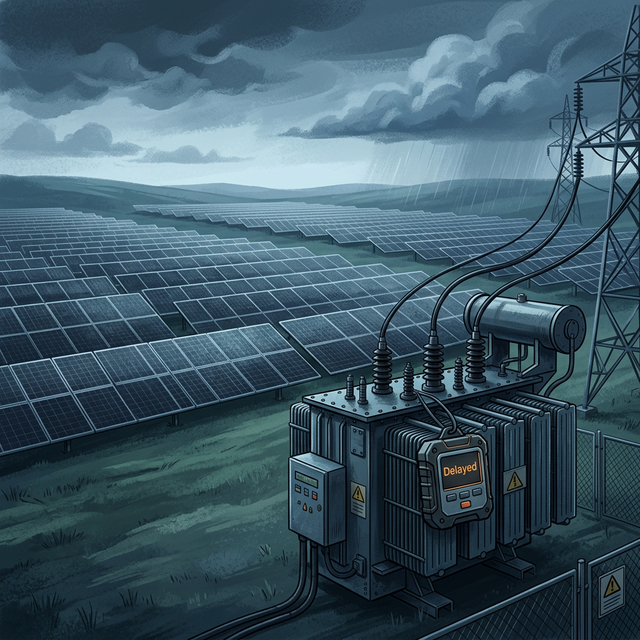
Visual Analysis: The Cold Weather Advantage
This diagram illustrates the counter-intuitive physics of solar efficiency. While the desert environment (right) provides intense light, the high heat increases resistance in the silicon, acting as a brake on electron flow. The cold environment (left) shows improved conductivity and higher voltage potential, allowing the panel to harvest more energy from the same amount of sunlight.
1. The Physics of the P-N Junction
To understand why cold is better, we have to look at the atomic scale of a silicon cell. A solar panel is a semiconductor device that utilizes the Photovoltaic Effect.
The Band Gap and Electron Excitation
Silicon has a "Band Gap"—the energy threshold required to knock an electron loose so it can flow as electricity.
- Light (Photons): When a photon hits the cell, it excites an electron, jumping it across the band gap.
- Heat (Phonons): Heat is essentially atomic vibration. When the panel is hot, the electrons are already "agitated" by thermal energy.
The Voltage Drop: As temperature increases, the "at-rest" energy of the electrons rises. This reduces the difference in energy levels between the excited state and the rest state. In electrical terms, this manifests as a drop in Open-Circuit Voltage (Voc).
The Temperature Coefficient
Every solar panel has a technical spec called the Pmax Temperature Coefficient.
- A typical 2026 Monocrystalline panel has a coefficient of -0.35% / °C.
- This means for every 1 degree Celsius increase in temperature above the standard test condition (25°C), the panel loses 0.35% of its power output.
2. Summer Reality: Why 100°F is 20% Less Efficient
Let's look at the math for a standard roof-mounted system on a hot summer day.
- Ambient Air: 95°F (35°C).
- Panel Surface Temp: Because solar panels are dark, they absorb infrared heat. A roof-mounted panel can easily reach 149°F (65°C).
- The Delta: 65°C is 40 degrees above the 25°C test standard.
- The Loss: 40°C * 0.35% = 14% Power Loss.
On that beautiful, hot summer day you thought was "Perfect" for solar, your 400W panels are likely only producing 344W, simply because they are hot.
3. The Winter Victory: Albedo and Reflection
Contrast this with a crisp, clear January day at 14°F (-10°C).
- The Delta: -10°C is 35 degrees below the test standard.
- The Gain: 35°C * 0.35% = 12.25% Power Boost.
- The Output: Your 400W panels are now outputting nearly 450W.
The Secret tool: The Albedo Effect
If there is snow on the ground, the math gets even better. Snow is highly reflective (high Albedo). It bounces sunlight back up at the panels, increasing the total Irradiance (light intensity). This "Free Light" combined with the cold-induced voltage boost makes winter a sleeper hit for solar production.
4. Engineering Solutions: Why Ventilation Matters
Knowing that heat kills solar, how do we engineer systems in 2026 to fight back?
The Air Gap (Convective Cooling)
This is why we almost never "flush-mount" solar panels directly to a roof deck. We leave a 3-4 inch air gap between the panels and the shingles. This gap creates a Chimney Effect—as the air heats up, it rises, pulling cooler air in from the bottom, providing passive convective cooling.
Bifacial Modules
Modern 2026 bifacial panels (which have glass on both sides) stay cooler than traditional panels with plastic backsheets. The second layer of glass allows some infrared energy to pass through rather than being absorbed, slightly lowering the cell temperature.
5. Summary: The PhD "Burst Box"
[!IMPORTANT] Myth: Solar panels need heat to work / Solar works best in the summer. Truth: Solar panels process Light, not heat. Higher temperatures increase electrical resistance and lower voltage. Modern panels lose roughly 1% of power for every 5°F increase in temperature.
6. Technical Annex: Lattice Vibrations and Phonon Scattering
To get even deeper into the "Why," we must look at Quantum Mechanics. In a crystalline solid like silicon, atoms aren't static; they vibrate in a structured pattern. These vibrations are called Phonons.
The Flow of Electrons
Electricity is the movement of electrons. In a cold panel, the silicon atoms are relatively still, allowing the electrons to pass through with minimal interference.
- The Heat Surcharge: As the temperature rises, the atoms vibrate more violently. The electrons, trying to move through the crystal, "crash" into these vibrating atoms more frequently.
- Phonon-Electron Scattering: This is the technical term for this collision. It effectively increases the Electrical Resistance of the material from the inside out. It's like trying to run through a crowd where everyone is standing still vs. a crowd where everyone is moshing.
7. The Danger of "Hot Spots": Non-Uniform Heating
Heat doesn't just lower efficiency; it can physically destroy the panel through Hot Spots.
The Partial Shading Problem
If a single cell in a solar panel is shaded while others are in the sun, that shaded cell becomes a Resistor.
- Thermal Stress: The shaded cell begins to consume the power generated by the other cells, turning it into heat.
- The Melting Point: This localized heat can reach temperatures exceeding 212°F (100°C), melting the solder connections or the delicate plastic backsheet.
- 2026 Mitigation: Modern panels use Bypass Diodes and Half-Cut Cell technology to electrically isolate these hot spots, but the underlying thermodynamics remain a constant engineering struggle.
8. Humidity and Heat: The "PID" Threat
In hot, humid climates (like Florida or Southeast Asia), a phenomenon called Potential Induced Degradation (PID) is accelerated.
Leakage Currents
High temperatures lower the resistance of the panel's glass and encapsulation. This allows tiny amounts of electricity to "leak" from the silicon cells into the metal frame.
- The Result: Sodium ions from the glass migrate into the silicon, permanently "starving" the cell of its power-generating capacity.
- The Cold Advantage: In cold climates, PID is almost non-existent because the electrical resistance of the glass remains high, locking the sodium ions in place.
9. Breaking the Seasonal Myth: Production Data (2025 Study)
| Month | Avg. Temp (°F) | Insolation (Sun hours) | System Efficiency | Real Output (kWh) |
|---|---|---|---|---|
| July | 92°F | 6.5 | 88% | 530 |
| October | 65°F | 5.0 | 96% | 480 |
| January | 25°F | 3.5 | 104% | 365 |
The Nuance: While July still produces more total energy because the days are much longer, the panels are significantly less efficient per hour of light. If you could have a July-length day at January temperatures, your energy production would increase by nearly 20%.
10. Technical Glossary for Myth-Busting
- Albedo: The measurement of reflectivity (snow has high albedo).
- Band Gap: The energy required to move an electron from the valence band to the conduction band.
- Insolation: The amount of solar radiation reaching a given area.
- Pmax: The maximum power point of the solar panel.
- Phonon: A collective excitation in a periodic, elastic arrangement of atoms or molecules in condensed matter (vibrational energy).
- Voc (Open Circuit Voltage): The maximum voltage available from a solar cell at zero current.
Conclusion: The Ideal Solar Day
If you could design the "Perfect Day" for a solar panel, it wouldn't be a 100°F day in the Sahara. It would be a 15°F day at high altitude (thin air) with 12 inches of fresh snow on the ground.
Don't wait for summer to celebrate your solar harvest. The cold is your silent partner in efficiency.
About the Editorial Team EnergyBS reviews public program rules, product specifications, utility rates, and reader-facing cost assumptions. Treat savings figures as estimates until you verify local prices, permits, rebates, and contractor quotes.
Common Questions
What should I check first before using this renewables advice?
Start with the numbers that apply to your home: climate, utility rate, equipment age, contractor quote, and local program rules. Why heat is the enemy of solar efficiency: Deconstructing the semiconductor physics that make solar panels more productive on a freezing January day than a sweltering July afternoon.
How should I verify rebates, tax credits, rates, or savings before spending money?
Treat program amounts, utility rates, and tax rules as date-sensitive. Check the named government, utility, or manufacturer source before you sign a contract, and keep screenshots or PDFs of eligibility rules for your records.
What is the next useful step after reading this?
Compare this with Resilient Neighborhoods 2026 Data (Guide & Data) so you can check the cost, rebate, installation, or operating-risk angle before making a decision.
What to Read Next
Resilient Neighborhoods 2026 Data (Guide & Data)Use this next to compare the cost, incentive, installation, or operating-risk angle before you make a home energy decision.Sources and Verification
Editorial Review
EnergyBS Editorial Team
EnergyBS publishes practical homeowner guides. Important program, product, and cost claims should be checked against the linked source and local project documents before you commit to work.
Related Guides
View All ArticlesResilient Neighborhoods 2026 Data (Guide & Data)
Beyond the grid: How groups of neighbors are forming 'EnergyIndependent Pockets' to ensure 2026 resilience and lower costs.
Home Battery Storage Revolution: The 2026 Buyer's Guide
Home battery storage has crossed from earlyadopter novelty to mainstream upgrade. This guide covers LFP chemistry dominance, battery management software, solar+storage economics, top 2026 product comparisons, and installation guidance.
Residential MicroWind 2026: Physics vs. Marketing
Why the math fails most urban wind projects and how to identify the rare 5% of sites where home wind actually hits a 10year ROI.