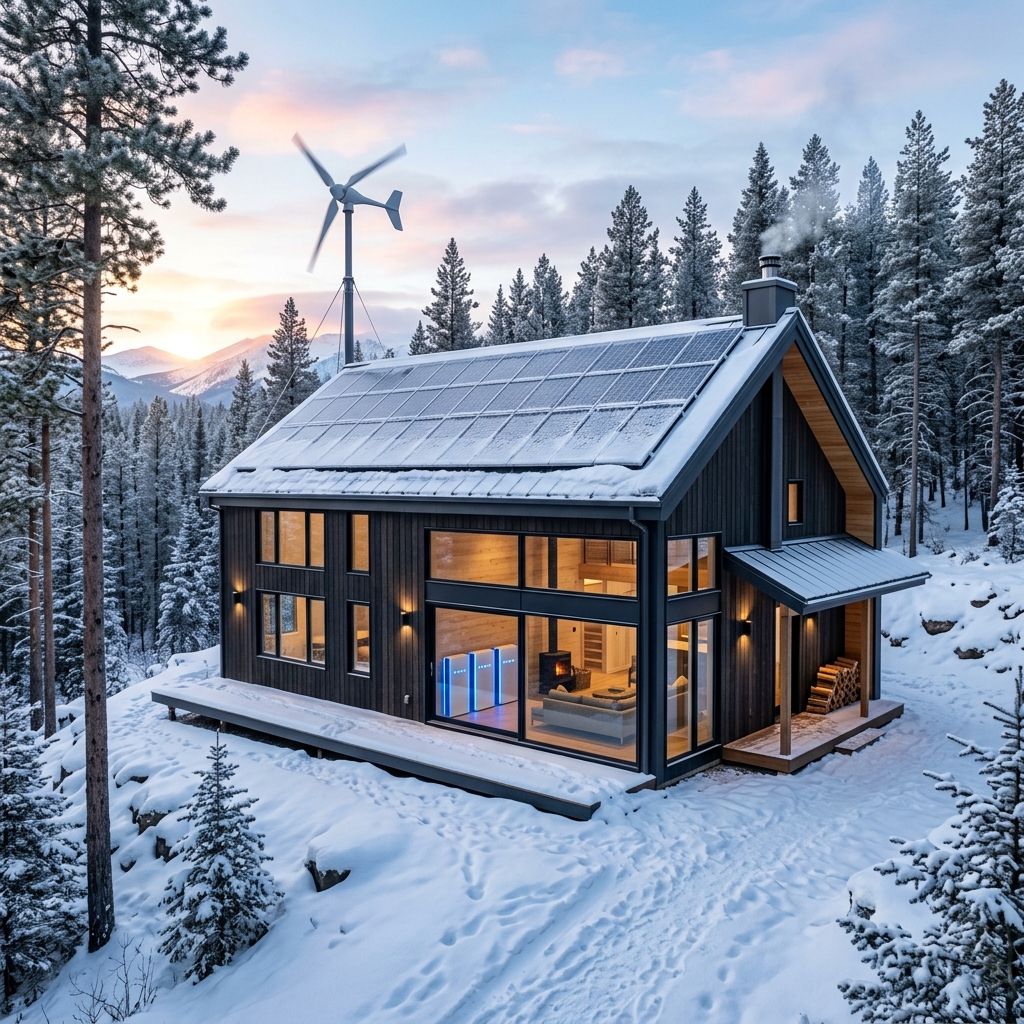
OffGrid Suburban Homes in 2026 Data (Guide & Data)
A realistic look at offgrid suburban homes in 2026, including winter sizing, permits, batteries, backup heat, and why most households should start with gridtied resilience.
Off-Grid Suburban Homes in 2026: Costs, Risks, and Better First Steps
Short Answer: A suburban home can go off-grid, but it is rarely the cheapest or simplest resilience strategy. Winter heating, battery sizing, permits, backup generation, and resale concerns make full disconnection a specialized project. Most households should first reduce demand, add critical-load backup, and keep the grid connection.
Off-grid living is no longer limited to remote cabins. Solar, batteries, efficient heat pumps, and smart panels have made serious home backup more available. But there is a big difference between "my home can ride through an outage" and "my home never needs the grid."
That difference matters. A grid-tied resilience system can be modest, flexible, and easier to permit. A fully off-grid suburban home has to work during the worst week of the year, not the average day.
The Winter Sizing Problem
The hardest month is usually not July. In cold regions, the hard case is a cloudy winter stretch with short days, high heating demand, and snow reducing solar production.
Before designing an off-grid system, estimate:
- Daily winter electricity use.
- Heating load during design-temperature weather.
- Solar production in the lowest-output month.
- Battery reserve needed for two or more low-production days.
- Backup heat or generator runtime if storage is depleted.
A home that uses 25 kWh on an average spring day may use far more in winter if it is all-electric. That does not make off-grid impossible, but it changes the price quickly.
A More Realistic Upgrade Path
Most homeowners should build resilience in stages:
| Stage | What it does | Why it comes first |
|---|---|---|
| Air sealing and insulation | Reduces heating and cooling load | Smaller loads need smaller backup systems. |
| Critical-loads panel | Keeps essential circuits separate | Avoids paying to back up every appliance. |
| Smart load control | Prevents large loads from running together | Protects batteries and service panels. |
| Solar plus battery | Extends outage runtime | Works while keeping grid backup. |
| Vehicle-to-home | Adds large backup capacity if supported | Useful, but needs compatible hardware. |
This staged path lets you improve reliability without committing to full disconnection before you know the real load profile.
Permits, Insurance, and Resale
Local rules vary. Some areas require a utility connection for occupancy, some allow off-grid systems with engineering documentation, and some treat the issue differently depending on water, septic, fire access, and electrical inspection.
Before severing any utility connection, check:
- Electrical code requirements.
- Building and occupancy rules.
- Insurance coverage.
- Fire department access and labeling.
- Future buyer expectations.
- Maintenance obligations for batteries, inverters, and backup equipment.
An off-grid system that works technically can still create paperwork problems if it is not permitted cleanly.
When Full Off-Grid Can Make Sense
Full disconnection is most reasonable when the grid connection itself is extremely expensive, unreliable, or unavailable. Rural new builds, remote lots, and homes facing high line-extension charges are the clearest candidates.
For an existing suburban home with a working utility connection, the case is harder. You may still want high backup capability, but grid-tied solar, storage, and load management usually provide more value per dollar.
What To Read Next
The best next step is our home energy resilience guide, which walks through the practical load-planning questions before you price batteries or disconnect anything.
Frequently Asked Questions
How much storage does an off-grid home need?
It depends on winter load, backup heat, solar production, and acceptable risk. Many all-electric homes need much more storage than a standard 10 kWh to 15 kWh wall battery.
Can a small wind turbine solve winter production?
Sometimes, but only on a suitable site. Many suburban lots have turbulent, low-quality wind. Measure the site before assuming wind will fill the winter gap.
Is off-grid legal in a city or suburb?
It depends on local code, occupancy rules, and utility requirements. Always verify before designing around disconnection.
Is grid-tied backup still useful?
Yes. For most households, grid-tied backup is the best first move because it improves outage resilience without forcing the home to carry every worst-case scenario alone.
Sources and Verification
Editorial Review
EnergyBS Editorial Team
EnergyBS publishes practical homeowner guides. Important program, product, and cost claims should be checked against the linked source and local project documents before you commit to work.
Related Guides
View All ArticlesMicrogrid Living 2026
As 2026 grid volatility peaks, a new architectural movement has emerged: The Resilient Neighborhood. We analyze the technical shift from 'Isolated Batteries' to 'PeertoPeer Microgrid Clusters' and why this is the only way to survive a highenergycost winter.
Home Microgrid Design 2026 Guide & Data (Analysis)
When the grid goes down, your house must become an island. We analyze gridforming inverters (GFM), darkstart battery requirements, and the physics of 'islanding' safety.
Heat Pump Sizing Guide
A homeownerfocused guide to Manual J loads, Manual S equipment selection, coldweather capacity, balance points, duct constraints, and the documents a defensible heatpump quote should include.