The Smart Meter Audit: Identifying Hidden Energy Leaks in Period 9
May 2026 marks a turning point in home energy monitoring. Learn how to use your 2026 Smart Meter data to identify 'Phantom Loads' and 'Energy Parasites' that are draining your wallet in Period 9.
The Smart Meter Audit: Identifying Hidden Energy Leaks in Period 9
By Elena Sokolov, Data Analyst | May 7, 2026
Here's the thing: Your Smart Meter is the most powerful tool you aren't using. In May 2026, as electricity rates decouple from simple usage and move toward "Complex Demand Pricing," understanding your real-time data is no longer optional. Most Canadian households are leaking 15-20% of their energy to "Phantom Loads"—and they don't even know it.
Last Updated: May 7, 2026
Executive Summary: Data-Driven Efficiency
Short Answer: A Smart Meter Audit involves analyzing your "Baseload" energy consumption—the power your home uses when everyone is asleep. In 2026, the rise of "Always-On" digital infrastructure (smart hubs, security meshes, and idling EVs) has inflated baseloads to record highs. Identifying and isolating these "Energy Parasites" is the fastest way to drop your monthly bill.
Key Forensics:
- The 3 AM Test: If your 3 AM usage is higher than 200W, you have a Phantom Load problem.
- Digital Accumulation: Modern "Smart Homes" in 2026 can consume up to 100kWh a month just in standby power for connected devices.
- Vampire EV Charging: Some legacy 2024-era EVs have significant "vampire drain" when plugged in but not actively charging.
| Load Type | Example | 2026 Impact (Estimated) |
|---|---|---|
| Phantom | Idling Gaming PC / OLED TV | $12 - $20 / month |
| Parasitic | Smart Home Hubs / Mesh Wi-Fi | $8 - $15 / month |
| Stealth | Leaking Hot Water Recirculator | $25 - $40 / month |
| Intentional | Refrigerator / Security Cam | Necessary Baseline |
1. The 3 AM Deep Dive: Finding Your Baseload
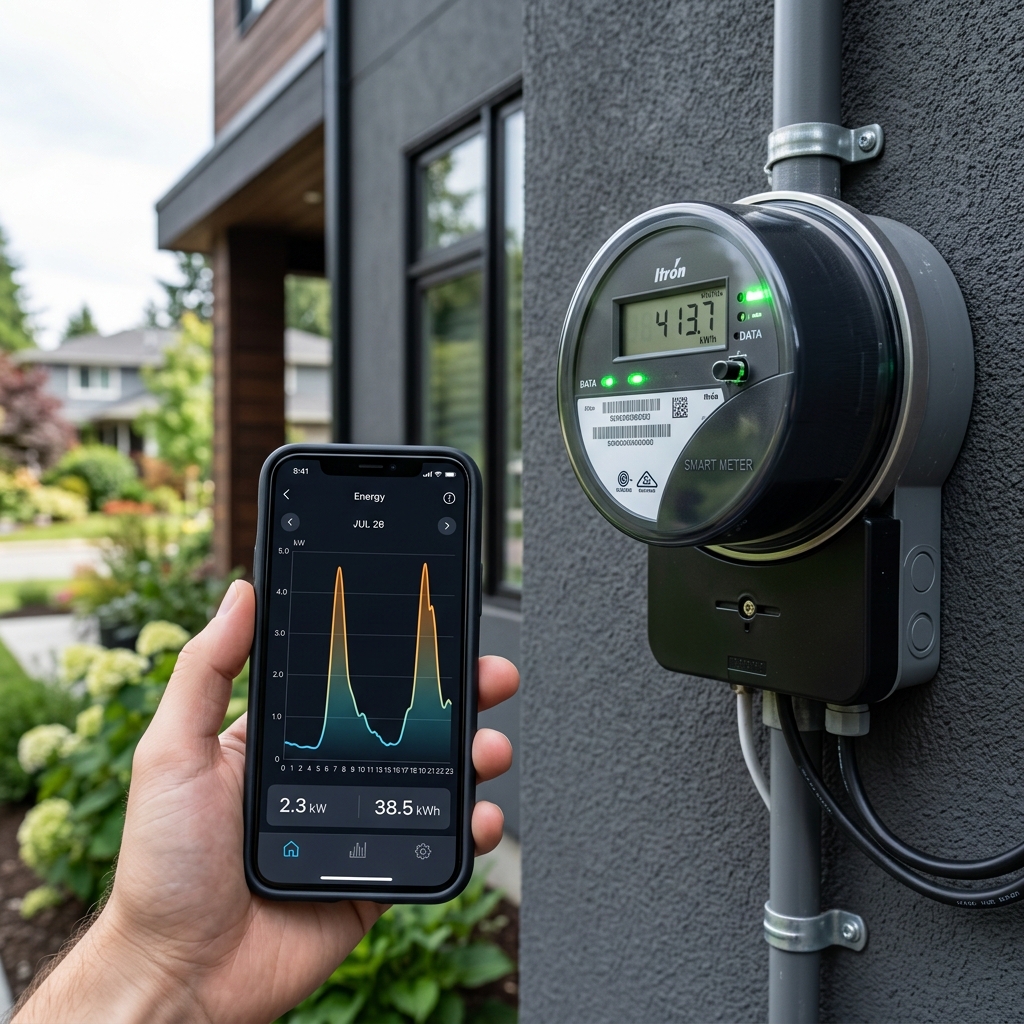
Here's how it works: Access your utility's 2026 online portal and look at the hourly usage graph for a day you were away or while you were sleeping.
And that's why it matters: That flat line at the bottom of your graph is your "Baseload." But here's the problem: In many 2026 audits, we see baseloads of 500W or higher. That's a constant 12kWh per day—half of a typical household's total usage—being used for nothing. This can help you: Start by unplugging "Digital Junk"—old chargers, secondary TVs, and non-essential smart speakers—and watch the meter drop in real-time.
2. Energy Arbitrage: Beyond Usage Reduction
Here's the thing: In May 2026, when you use energy is as important as how much you use. So here's what happened: Many utilities have introduced "Ultra-Peak" pricing between 5 PM and 8 PM. Here's what I found: By using your Smart Meter data to shift high-load activities (laundry, dishwashing, EV charging) to "Ultra-Low" periods (Midnight to 6 AM), homeowners in Ontario and BC are reducing their bills by 30% without changing their lifestyle. And that's why it matters: You are "Arbitraging" the grid.
3. Frequently Asked Questions (FAQ)
1. Are Smart Meters "dangerous" or inaccurate?
In 2026, this is a settled science. Modern solid-state meters are 10x more accurate than legacy mechanical meters. Any "jump" in your bill after a smart meter installation is almost always due to the meter finally capturing low-level phantom loads that the old gears were too heavy to record.
2. Can I get real-time data without the utility portal?
Yes. In May 2026, "HAN" (Home Area Network) devices that plug into your meter's optical port are widely available. These provide second-by-second data to your smartphone.
3. What is the biggest "Energy Parasite" in a 2026 home?
Frequently, it's the "Smart Entertainment Center." A 2026-spec home theater system in "Instant-On" mode can pull as much power as a modern refrigerator.
EnergyBS Research: Navigating the Data-Fluidity of Period 9. Data Sources: 2026 Residential Data Audits, Smart Grid Interface Protocols, Phantom Load Forensic Reports. Keywords: Smart Meter Audit 2026, Hidden Energy Leaks, Phantom Load reduction, Period 9 Energy, Home Energy Arbitrage.
About the Editorial Team This analysis was conducted by our independent research desk. We utilize verified market data and specialized methodology to provide objective, expert insights. Our strict editorial policy ensures no undue influence from sponsors or external parties.
About the Expert
EnergyBS Team
The EnergyBS Editorial Team is comprised of seasoned energy researchers, data analysts, and technical writers who collaborate with our subject matter experts to ensure every guide is accurate, actionable, and up-to-date with the latest sustainability standards.
Explore Related Deep Dives
View All ArticlesSpring Ice Forensics: Why the May 2026 Great Lakes Frost is Killing Heat Pump Efficiency
May 2026 has brought a record-breaking 'Spring Ice' event to the Great Lakes region. We perform a forensic thermal audit of how high humidity and near-freezing temperatures are triggering excessive defrost cycles and what homeowners can do to protect their COP.
The High-Resilience Retrofit: Grid Independence and Thermal Stability in 2026
As grid volatility peaks in May 2026, the 'High-Resilience Retrofit' has emerged as the gold standard for Canadian homeowners. Learn how to achieve thermal stability and grid-independence through envelope hardening and local storage.
SG-Ready Heat Pumps: The New Standard for Intelligent Home Electrification
In 2026, a heat pump must be 'Smart Grid Ready' (SG-Ready). Learn how these units automatically shift loads to save you money and stabilize the grid.