Dishwasher Repair or Replace? A Cost, Energy, and Reliability Worksheet
A diagnosisfirst dishwasher repairversusreplace worksheet covering fixed repair scope, age and condition, model energy and water, installed replacement cost, racks and cycle fit, drying, noise, leak protection, warranty, and disposal.
The Short Answer
Short Answer: Repair a dishwasher when the failure is diagnosed, the tub/cabinet/wiring and major systems are sound, parts and qualified service are available, the fixed repair price is reasonable, and the machine still fits the household. Replace when leakage, electrical damage, severe corrosion, unavailable parts, repeated major faults, poor capacity, or total repair risk outweighs the full installed price of a suitable model. Energy savings alone rarely justify replacement without model-level math.
Do not use a rule such as “repair if under half the new price” without defining new price. Replacement includes delivery, electrical/plumbing/cabinet corrections, permits where applicable, haul-away, tax, accessories, finish damage, and the household cost of a model that does not fit dishes or dry as expected.
Apply Safety and Recall Gates First
Stop use for smoke, burning/electrical odor, sparking, repeated trips, melted wiring, active leak near power, damaged cord/terminal, or a manufacturer/CPSC stop-use recall. Do not repeatedly reset protection or operate to “see if it clears.”
Check exact model and serial against CPSC and manufacturer recall/service notices. A recall remedy may be repair, replacement, refund, or other action; do not sell or donate a recalled product contrary to law/notice.
Active contaminated-water backup, broken glass in pump, or major leak also needs safe isolation before economics.
Diagnosis Before Dollars
A repair quote should identify cause, not only symptom. “Doesn't clean” can result from loading, filter, spray obstruction, inlet water, pump, heater, sensor, detergent, drain backflow, or control. “Leaks” can be door loading, foam, hose, valve, pump seal, tub, or installation.
Use the drying diagnostic for wet items and the odor/standing-water drain guide for drainage/backflow. Correct installation or building-drain problems before condemning the appliance.
Require:
- exact failed condition and evidence;
- part number and availability;
- labor, travel, diagnostic, tax, and return charges;
- fixed price or documented uncertainty;
- collateral damage/second fault findings;
- repair warranty;
- post-repair wash, heat/dry, drain, and leak test;
- refund/credit treatment for diagnostic fee.
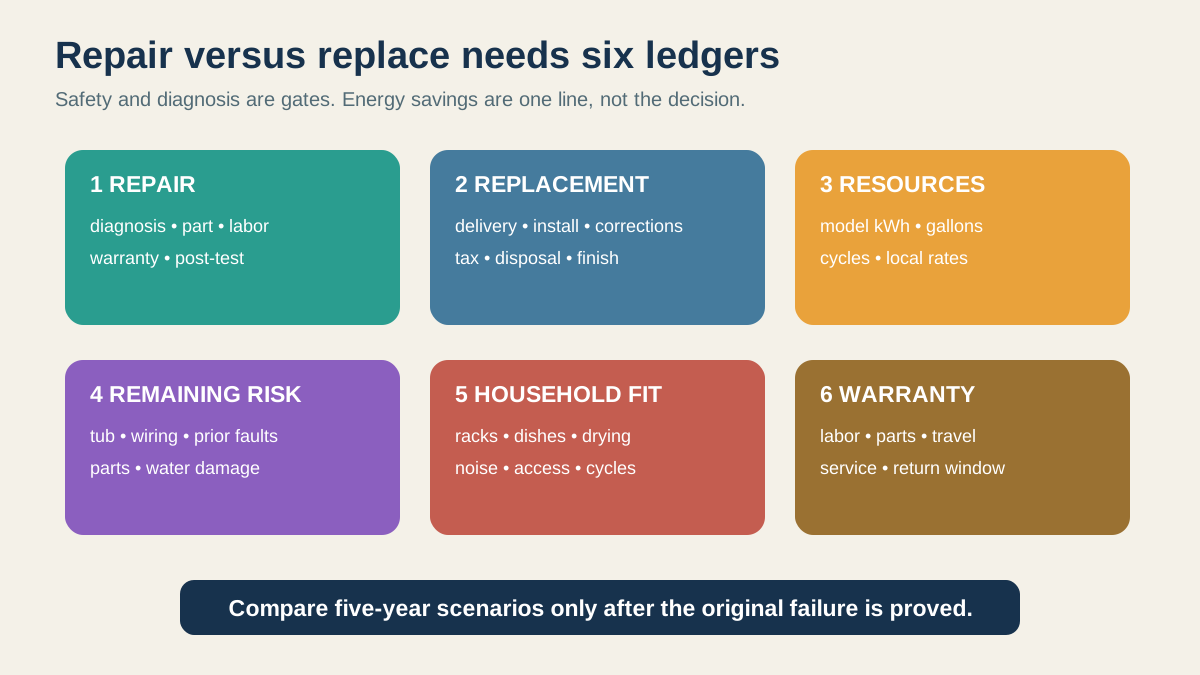
The Six-Ledger Decision
1. Repair ledger
- diagnostic fee;
- part and labor;
- travel/tax;
- adjacent hose, seal, wiring, or cabinet work;
- future access;
- repair warranty;
- expected downtime.
2. Replacement ledger
- exact model purchase;
- delivery and stairs;
- installation kit/hoses/cord as applicable;
- electrical/plumbing corrections;
- air gap/high loop/disposal work;
- cabinet/floor/counter repair;
- permit/inspection;
- old unit removal/disposal;
- tax and warranty.
3. Energy and water ledger
- current model annual kWh/water if verifiable;
- candidate EnergyGuide and ENERGY STAR data;
- household cycles/year;
- local marginal electricity, water, sewer, and hot-water cost;
- rewash/pre-rinse caused by actual faults;
- time-of-use schedule.
4. Remaining-risk ledger
- age and use cycles;
- tub, racks, pump, heater, seals, wiring, controls, and corrosion;
- prior repairs;
- parts/support availability;
- leak protection and location consequence;
- evidence for expected remaining life—not a promise.
5. Household-fit ledger
- place-setting capacity versus real plates/pans;
- rack adjustability and loading;
- cycle time and noise;
- drying technology/plastics;
- filter maintenance;
- accessibility and controls;
- kitchen finish/handle fit.
6. Warranty/service ledger
- labor and parts term;
- tub/rack/electronics special coverage;
- registration;
- in-home service availability;
- exclusions and diagnostic/travel charges;
- retailer return window.
Calculate Full Installed Replacement Cost
Use a written quote:
| Replacement component | Cost |
|---|---|
| Appliance after verified discount | |
| Delivery/stairs | |
| Install labor | |
| Hose/valve/air gap/disposal parts | |
| Electrical correction | |
| Cabinet/floor/counter correction | |
| Permit/inspection | |
| Haul-away/disposal | |
| Tax | |
| Extended warranty if chosen | |
| Total installed |
A $700 retail price can become a materially different project if the shutoff is seized, wiring is improper, floor is damaged, opening is nonstandard, or drain connection needs correction.
Normalize Energy and Water
ENERGY STAR's current standard-size certified criteria cap tested annual electricity and per-cycle water under the applicable test. The federal EnergyGuide shows estimated yearly electricity and cost for comparison among similar models. FTC warns that estimated operating cost uses typical use and an average energy price, so recalculate with your price and cycles.
Annual electricity cost = listed annual kWh × local marginal electricity rate
For water/sewer:
Annual water cost = gallons per cycle × household cycles × combined marginal water/sewer cost per gallon
If hot-water energy is embedded in the standardized annual energy figure, do not add it again. Understand the data definition.
Worked Energy Example
Hypothetical current dishwasher: 330 kWh/year and 5.5 gallons/cycle under available model data. Candidate: 240 kWh/year and 3.2 gallons/cycle. Household runs 215 cycles/year, electricity is $0.22/kWh, combined water/sewer is $0.018/gallon.
Annual electricity difference:
(330−240) × $0.22 = $19.80.
Annual water difference:
(5.5−3.2) × 215 × $0.018 = $8.90.
Modeled total = $28.70/year before any hot-water/data-boundary adjustment. Even a $500 net replacement premium would take over 17 years on these simplified savings. Energy/water alone would not justify early replacement.
If the current machine requires frequent rewashing because of a confirmed unrepairable fault, model those extra cycles separately. Do not treat poor loading as a permanent appliance penalty.
Estimate Household Cycles
Count cycles for four representative weeks. Include repeated cleaning cycles and rewashes separately. Do not assume the ENERGY STAR test-cycle count matches the home.
| Week | Normal | Heavy | Quick | Cleaning | Rewash | Total |
|---|---|---|---|---|---|---|
| 1 |
Full loads matter because ENERGY STAR notes dishwashers use about the same energy/water regardless of dish count. If the household runs many half loads due to poor rack fit, a candidate with better real capacity may reduce cycles even if nominal place settings look similar.
Age Without the “Average Lifespan” risk
Age informs parts availability, corrosion, prior use, and remaining warranty, but does not determine failure by itself. A lightly used older unit with a sound tub and simple confirmed valve fault can be a good repair. A newer unit with water-damaged wiring and repeated pump/control faults may not.
Record:
- installation date and cycles/week;
- model service bulletins;
- repair history;
- tub and base condition;
- racks/coating/tines;
- seals and hoses;
- pump, heater, fan, dispenser, controls;
- leakage/water-damage history;
- parts lead time and discontinuation;
- household plan to move/remodel.
Ask the technician which observations, not age alone, drive the recommendation.
Common Repair Scenarios
Inlet valve or drain pump
A diagnosed replaceable valve/pump with an available OEM part and sound surrounding systems may favor repair. Include cause such as debris, glass, plumbing, or voltage issue so the replacement is not immediately damaged.
Control board
Compare confirmed board diagnosis, firmware/configuration, part warranty, supply time, and possibility of another failed load/component. “Board” should not be a guess after unrelated parts.
Heater or drying component
Verify the model's drying design, setting, and temperature evidence first. Wet plastics alone do not justify heater replacement.
Door seal or latch
Check level, loading, foam, hinge, tub alignment, and cabinet distortion. A new gasket will not correct a warped tub or overloaded door.
Tub or base leak
Material tub/pump-base cracking, corrosion, or repeated internal leakage can move the decision toward replacement, especially with water-damage risk. Prove source before deciding.
Rack corrosion
Replacement racks can be surprisingly expensive. Price exact racks/tines and consider whether exposed metal, rust transfer, fit, and other machine condition make the repair worthwhile.
Replacement Fit Audit
Measure opening width/height/depth at multiple points, floor height, door swing, counter edge, handle interference, hose/wire route, and toe kick. Confirm:
- standard or special height;
- hardwired versus cord under local/model requirements;
- dedicated circuit/protection;
- shutoff and supply;
- drain connection/high loop/air gap;
- cabinet anchoring;
- floor support and leak evidence;
- insulation and sound package;
- auto-open steam path;
- panel-ready dimensions/weight if applicable.
Do not order from nominal width alone.
Rack and Dish Fit Test
Bring measurements of the largest dinner plates, bowls, glasses, baking sheet, cutting boards, pots, and reusable containers. If retailer permits, test rack layout without soiled dishes.
Record:
- plate clearance from spray arm;
- bowl spacing;
- tall glass stability;
- third-rack utensil depth;
- adjustable rack mechanism;
- tine fold pattern;
- filter access with racks loaded;
- capacity for one normal household day.
A quiet efficient machine that forces two cycles is not a better fit.
Drying and Noise Expectations
Identify exposed/concealed heater, condensation, fan, auto-open, or other drying method. Ask how plastics perform, whether rinse aid is assumed, which option is in the energy estimate, and how auto-open affects cabinets.
Compare stated sound rating, but also pump/drain/fan phases, kitchen openness, night schedule, and floor/cabinet vibration. Installation affects sound.
Leak Protection and Risk
Consider pan/drain conditions, floor material, finished space below, detector, automatic shutoff design, tub/base sensors, hose protection, and local alarm. Smart notification that depends on Wi-Fi is not a substitute for local containment and shutoff behavior.
Do not buy a feature name without understanding what it detects, whether it stops inlet water, whether stored tub water remains, and how it is tested.
Weighted Scorecard
Apply safety, recall, fit, supply, and drain compliance as pass/fail gates. Then score 0–5:
| Category | Weight | Repair | Replace A | Replace B |
|---|---|---|---|---|
| Five-year cost | 25 | |||
| Reliability evidence | 20 | |||
| Rack/household fit | 15 | |||
| Wash/dry performance | 15 | |||
| Installation risk | 10 | |||
| Energy/water | 5 | |||
| Noise/accessibility | 5 | |||
| Warranty/service | 5 |
Explain every score. Do not award repair a speculative ten-year life or new equipment zero repair risk.
Three Worked Decisions
Four-year-old unit, confirmed drain pump
Tub, racks, wiring, heater, and controls are sound. OEM pump is available with fixed $320 installed repair and one-year repair warranty. Comparable replacement is $1,050 installed. Repair is defensible after the drain cause and post-test are documented.
Eleven-year-old unit with tub leak and rack corrosion
Water source is confirmed at a non-serviceable tub/base area, both racks are corroded, control is intermittent, and parts are scarce. Replacement likely wins even if a patch appears cheaper, because risk and multiple systems are material.
Seven-year-old unit “not cleaning” after disposal work
Filter and machine test normally. Disposal inlet was never opened and drain hose is misrouted. Correcting installation solves drainage. Neither appliance repair nor replacement was the first decision.
Environmental and Disposal Considerations
Extending service life through a sound repair avoids manufacturing and disposal impacts. Replacement can reduce operating resources when the difference is real. Neither slogan decides the project.
Ask whether the old unit is reused only if safe/not recalled, recycled through an appropriate program, or disposed under local rules. Remove personal network/app data and accounts. Do not donate a leaking, electrically unsafe, or recalled appliance.
Final Checklist
- Recall/safety status checked.
- Failure source diagnosed.
- Fixed repair scope and warranty obtained.
- Tub, wiring, racks, and other systems assessed.
- Full installed replacement quotes obtained.
- Exact model kWh/water recalculated locally.
- Household cycles and rack fit tested.
- Drying and plastics expectations understood.
- Electrical, supply, drain, air gap, cabinet scope defined.
- Leak protection and finished-space risk reviewed.
- Service/parts/warranty availability confirmed.
- Disposal/recycling assigned.
- Post-repair or post-install full-cycle test required.
Five-Year Scenario Model
Build three scenarios instead of pretending the remaining life is known.
Repair option
Five-year repair scenario = current repair + modeled additional service + current machine energy/water + downtime risk
Use low, middle, and high cases for additional repair. The low case can be zero only if labeled optimistic. The high case should not stack every possible part without evidence. Ask the technician which adjacent systems show wear.
Replacement option
Five-year replacement scenario = installed purchase + model energy/water + planned maintenance + modeled uncovered service − verified rebate
Do not subtract a rebate until eligibility, model, purchase date, application, and funding are verified. Do not assume warranty eliminates travel, diagnosis, labor, removal, or reinstall costs unless terms say so.
Example:
| Item | Repair current | Replace A | Replace B |
|---|---|---|---|
| Initial action | $340 | $1,050 | $1,380 |
| Five-year energy/water | $310 | $245 | $230 |
| Middle service scenario | $250 | $150 | $100 |
| Accessories/maintenance | $40 | $60 | $85 |
| Five-year modeled total | $940 | $1,505 | $1,795 |
These hypothetical figures show the method, not expected market prices. Repair wins in this middle case, but a confirmed tub leak or unsafe wiring would fail a safety/reliability gate regardless of total.
Calculate cost per year only across the period you reasonably expect to own the home/appliance. A household moving in one year may value transfer documents and a reliable repair differently, but should disclose known defects and follow local sale requirements.
Quote Uncertainty and Change Orders
Ask what must be disassembled to confirm diagnosis and what can change the price. A useful authorization states:
- diagnostic scope and fee;
- price ceiling before further approval;
- exact part and substitute approval;
- consequence if part is unavailable;
- treatment if repair does not correct the original symptom;
- water/electrical damage discovered;
- cabinet/floor access and restoration;
- old part return or disposal;
- warranty start and claim process.
Avoid authorizing an open sequence of “try a part” repairs without a stopping rule. Sometimes component-level certainty is impossible until disassembly, but the technician should explain the test result and decision tree.
For replacement, require approval before model substitution. Similar color and nominal width do not prove equivalent racks, drying, annual energy, noise, controls, leak protection, or panel fit.
Retailer and Installer Comparison
The appliance seller, delivery crew, and installer may be different companies. Assign:
- site measurement and fit responsibility;
- old-unit disconnection;
- shutoff/supply replacement;
- hardwire/cord and electrical correction;
- disposal/air-gap/high-loop connection;
- cabinet anchoring and panel alignment;
- floor/counter protection;
- haul-away;
- permits;
- full-cycle test;
- damage claims;
- warranty registration.
Read delivery exclusions for stairs, door removal, parking, rural travel, panel-ready fronts, and stacked tasks. Photograph kitchen, floor, counter, adjacent cabinets, and old connections before removal. Inspect the new unit for shipping damage and verify model/serial before installation.
A “free installation” offer can exclude every correction that makes the project safe and functional. Compare final written scope, not promotion labels.
Panel-Ready and Custom-Kitchen Risk
Panel-ready replacements add hinge weight, panel dimensions, handle, toe kick, alignment, cabinet reveal, template, and finish responsibility. Verify:
- candidate accepts panel dimensions/weight;
- old panel is reusable and warranty-compatible;
- handle does not hit drawers or adjacent appliances;
- door remains balanced;
- installer/cabinetmaker owns drilling and alignment;
- water protection for panel/counter is included;
- replacement panel lead time/cost;
- removal access remains possible.
A $400 appliance repair may be more attractive when replacement requires a new $900 custom panel and cabinet work. Conversely, a failing obsolete panel-ready unit can justify planned replacement before a leak emergency.
Accessibility and Household Use
Include more than energy:
- control visibility for the user;
- button force and readability;
- audible/visual completion indicators;
- rack height and reach;
- handle grip and door force;
- filter removal ability;
- app not required for core operation;
- child lock and household safety;
- ability to load mobility/feeding equipment as permitted;
- noise sensitivity and nighttime use.
Test controls in person when possible. A highly efficient model that a household member cannot operate or maintain reliably is a poor replacement.
Post-Repair Acceptance Test
Repeat the original failure condition with a representative load. A complete check may include, as appropriate:
- fill without leak;
- circulation and spray exposure;
- detergent dispensing;
- temperature/heater behavior under model diagnostics;
- full drain without return water;
- drying result for known materials;
- door/latch/auto-open;
- no error, trip, burning odor, or abnormal noise;
- under-sink/toe-kick leak inspection;
- test again after appliance is pushed/secured.
Preserve settings and before/after evidence. “It turns on” is not acceptance for a pump, heater, drain, or leak repair.
Post-Replacement First-Month Log
Track at least ten loads:
| Load | Cycle/options | Fill/load level | Wash result | Dry result | Drain/odor | Minutes | Notes |
|---|
Use the retailer return/defect window promptly if the model cannot fit ordinary dishes, damages items under correct use, or installation defects appear. Distinguish product failure from learning a new rack, filter, detergent, or drying method.
Check under sink and toe kick after first, fifth, and tenth loads. Verify auto-open steam does not damage finishes. Register warranty and store EnergyGuide, receipt, installation photos, permit, and model/serial together.
Repair Red Flags
- diagnosis is only “probably the board” without tests;
- multiple parts proposed sequentially without price cap;
- active leak source not identified;
- electrician/plumber needed but omitted;
- used or substitute part warranty unclear;
- no post-repair full-cycle/leak test;
- recalled or unsafe model treated as ordinary repair;
- technician ignores disposal/backflow/installation evidence;
- repair warranty excludes the exact symptom;
- severe tub/wiring corrosion is not documented.
Replacement Red Flags
- salesperson promises savings without model kWh/rate math;
- nominal width accepted without site measurement;
- racks are not tested with household dishes;
- annual cost is copied from national EnergyGuide price without local recalculation;
- “installation included” lacks drain, electrical, supply, anchoring, and testing;
- old leak/water damage is covered by the new machine;
- auto-open/steam is not reviewed for counters;
- unavailable service and parts are dismissed;
- subscription/app is required for a desired core feature but not disclosed.
Frequently Asked Questions
Is a ten-year-old dishwasher worth repairing?
Age alone cannot decide. Use diagnosis, tub/wiring/rack condition, parts, prior faults, fixed repair price, installed replacement cost, and household fit.
What repair cost is too high?
There is no universal percentage. Compare full installed replacement, remaining-condition evidence, repair warranty, water-damage risk, and expected ownership.
Will a new dishwasher pay for itself in energy savings?
Usually not without model-level math. Recalculate listed annual kWh and water with local rates and cycles. Avoided rewashes count only if a real unrepairable fault causes them.
Should I replace because dishes stay wet?
Not before checking material, loading, rinse aid, cycle, inlet, drying design, installation, and confirmed component function. Wet plastics can be expected.
Does ENERGY STAR mean better cleaning?
ENERGY STAR certifies energy/water criteria and includes test requirements; it does not guarantee fit or performance for every loading pattern. Compare racks, cycles, reviews/methods, and return policy.
Should I buy an extended warranty?
Compare price, term, covered labor/parts/travel, exclusions, provider, existing credit-card/retailer/manufacturer coverage, and likely service access. It is risk transfer, not a reliability guarantee.
What to Read Next
Prove the symptom first with the dishwasher drying guide or drain and odor guide. Optimize a sound machine using the dishwasher loading and spray guide. If schedule affects cost, use the time-of-use rate guide.
Sources and Verification
Editorial Review
EnergyBS Editorial Team
EnergyBS publishes practical homeowner guides. Important program, product, and cost claims should be checked against the linked source and local project documents before you commit to work.
Related Guides
View All ArticlesDishwasher Not Drying? Diagnose Plastics, Rinse Aid, Heat, and Venting
A controlledload dishwasher drying diagnostic that separates expected wet plastics and pooled water from cycle, rinseaid, loading, inlettemperature, dooropening, fan, vent, heater, sensor, and installation faults.
Dishwasher Smells or Has Standing Water? Trace the Drain Path
A safetyfirst odor and standingwater diagnostic that follows the dishwasher filter, sump, drain pump, hose, high loop or air gap, disposal connection, sink drain, door seal, supply, and installation history.
Dishwasher Loading Guide: Stop Rinsing Your Dishes (2026)
Prerinsing is a sin. The 'Cookie Sheet Blockade' is real. We analyze the fluid dynamics of your spray arm to understand why your dishes are still dirty.