Dishwasher Smells or Has Standing Water? Trace the Drain Path
A safetyfirst odor and standingwater diagnostic that follows the dishwasher filter, sump, drain pump, hose, high loop or air gap, disposal connection, sink drain, door seal, supply, and installation history.
The Short Answer
Short Answer: A dishwasher can smell because food and biofilm remain on the filter, sump, seal, spray system, or hidden drain path; because wastewater flows back from the sink/disposal; because the machine does not drain; or because an electrical, overheating, sewer-gas, or supply problem needs service. Stop for smoke, burning/electrical odor, gas/sewer hazard, active leak near power, or repeated trips. Otherwise, identify whether water remains after cancel/drain, where the drain hose connects, and which owner-cleanable parts the exact manual permits.
Do not mix bleach, vinegar/acid, ammonia, drain opener, or dishwasher cleaners. Do not reach blindly into the sump where glass and sharp debris can hide. Do not run chemical drain cleaner through a dishwasher pump or hose unless the exact manufacturer explicitly directs it.
First Classify the Smell
Describe it without leaning over hot steam:
- stale food or “wet dog” after loads;
- sewage/drain odor, especially when sink/disposal is used;
- sulfur/rotten egg in hot and/or cold water at fixtures;
- melting plastic, hot wiring, or burning electronics;
- overheated rubber/belt-like smell;
- chemical perfume after cleaner or rinse aid;
- musty odor after long idle;
- odor only from one item or material.
Burning/electrical odor is a stop-use/service path. Sewer-gas odor may involve plumbing traps, venting, drain connections, or building sanitation. Sulfur in all hot water may belong to the water-heater/water-quality system, not the dishwasher.
How Much Water Is Normal?
Some models retain a small amount of clean water below the visible filter/sump area to protect seals or prime the system. A large visible pool above the filter or tub floor after a completed drain may indicate failure. Use the exact manual and baseline photographs; there is no universal depth.
Record:
- water level immediately after cycle;
- water level after cancel/drain;
- whether it rises while machine is off;
- color, debris, foam, and odor;
- sink/disposal use before water returns;
- error code;
- pump sound;
- recent installation, disposal, plumbing, or cleaning.
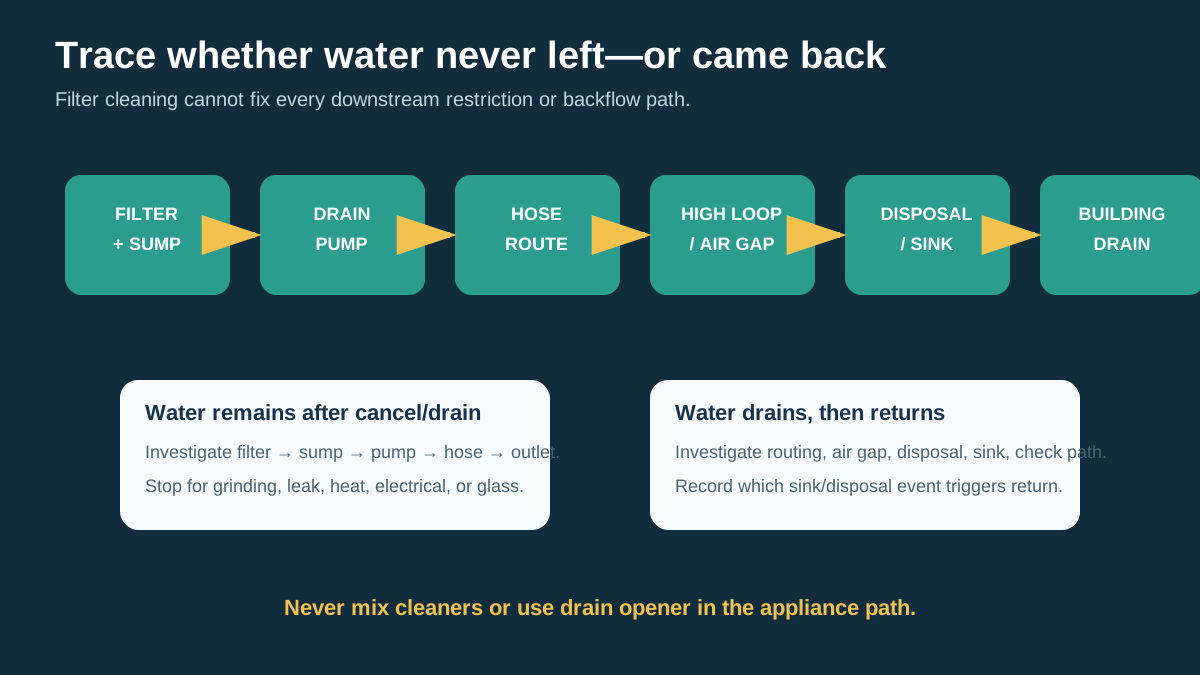
Water that returns when the sink drains suggests a different branch from water the dishwasher never pumped out.
The Drain Path Map
Follow the system in order:
- tub surfaces, racks, seal, and owner-cleanable filter;
- sump and accessible cover under the manual;
- internal drain pump/check devices—usually service territory;
- hose from machine;
- high loop or countertop air gap where required/designed;
- disposal or sink-tailpiece connection;
- sink risk and building drain;
- plumbing vent/backflow/installation conditions.
Cleaning the filter cannot correct a kinked hose, unopened disposal inlet, failed pump, or clogged sink drain.
Safety Preparation
Before owner maintenance:
- check model recalls and manual;
- stop cycle and allow hot parts/water to cool;
- use the electrical shutoff method specified for service/cleaning;
- protect hands from glass/sharp debris;
- photograph filter and parts orientation;
- keep children/pets away;
- prepare towels without covering electrical/vent openings;
- do not remove hardwired panels or disturb supply/drain connections unless qualified.
If standing water is dirty, treat it as contaminated. Avoid splashing and sanitize tools/surfaces using compatible labeled methods—never chemical mixtures.
Branch One: Filter and Visible Food Soil
Bosch and Whirlpool owner guidance commonly identifies trapped food/debris at filters and pump areas as a reason for odor or drainage trouble. Designs differ: some have removable manual-clean filters, others use self-cleaning systems or different access.
Under the exact manual:
- remove racks only as instructed;
- uses/remove owner-serviceable filter components;
- inspect for labels, bones, seeds, glass, paper, and film;
- rinse/brush with permitted tools/products;
- inspect sealing surfaces;
- reinstall in correct orientation and lock fully;
- rotate spray arms/check clearance if owner-approved.
A loose filter can allow debris downstream and worsen cleaning. Do not force a part that does not match an online video.
Branch Two: Sump and Pump Sound
After permitted filter removal, the sump may contain limited water. Some manuals allow removal of visible debris from a defined area; others require service.
Do not insert fingers into pump impellers, remove unknown covers, or energize with guards removed. Broken glass may be invisible.
Record the drain sound:
- normal pump sound but no water movement;
- humming/buzzing;
- grinding/rattling;
- silence when drain should run;
- pump starts then errors;
- repeated drain cycles.
These clues help a technician distinguish obstruction, pump, control, supply, sensor, or hose branches, but sound alone does not identify a part.
Branch Three: Drain Hose Routing
Inspect only visible accessible hose without pulling a hardwired/plumbed appliance unsafely. Look for:
- kink or crushing behind cabinet/appliance;
- sag holding debris;
- loose/leaking connection;
- hose routed without the required high loop;
- incorrect air-gap connection;
- hose too long/short or wrong material;
- recent cabinet/disposal work;
- heat or abrasion damage.
The exact installation manual and local plumbing requirements govern high loop, air gap, connection height, hose length, and securing. Do not assume a high loop can replace an air gap where an air gap is required.
Branch Four: Countertop Air Gap
Where installed, an air gap creates physical separation to reduce backflow. Overflow from the cap during drain can indicate blockage downstream, incorrect connections, or another fault.
Under approved owner instructions, the cap may be inspected/cleaned. Do not remove plumbing beyond your skill or pour drain opener into it. Record whether overflow occurs only when dishwasher drains and whether the disposal/sink is also slow.
After any service, verify no leaks below the counter and that hoses are secured to the correct ports.
Branch Five: Garbage Disposal Connection
A dishwasher drain commonly connects to a disposal. After a new disposal installation, an inlet knockout may not have been removed, the hose may be connected incorrectly, or the disposal/sink may be obstructed.
Do not put hands in a disposal. Isolate power and use qualified plumbing/appliance service. Record:
- disposal installation date;
- whether dishwasher ever drained after installation;
- sink/disposal drainage;
- connection location and leakage;
- water returning to dishwasher after sink use.
A dishwasher that stopped draining immediately after disposal replacement provides a strong installation timeline.
Branch Six: Sink and Building Drain
If the sink drains slowly, backs up, gurgles, or sends water toward the dishwasher, address the plumbing path. The dishwasher pump is not a building-drain cleaner.
Do not combine drain chemicals with dishwasher cleaner or open plumbing where chemicals may remain. Tell the plumber exactly what products were used.
In multifamily buildings, common-stack issues can affect multiple fixtures. Notify the responsible party and avoid repeated dishwasher cycles into a backed-up system.
Branch Seven: Door Seal, Tub, and Hidden Food
Odor can remain even when drainage is normal because soil collects on:
- door-lip areas outside the main spray;
- removable seals/gaskets only if manual permits;
- utensil basket and rack tracks;
- spray-arm holes;
- dispenser;
- filter housing;
- labels/adhesive;
- trapped food in nested items.
Use compatible mild cleaning methods from the manual. Do not damage seals with abrasive tools or flood the door/control.
Branch Eight: Detergent, Foam, and Water Chemistry
Too much or wrong detergent, hand dish soap, soft water, spills, or mixed products can create foam, residue, odor, leaks, and poor drain sensing. Hard water can create scale and film.
Record detergent form/dose, hardness/softener, rinse aid, recent cleaner, and whether foam is visible. Follow manufacturer support for wrong-soap events. Do not neutralize one cleaner with another.
Run only the cleaning cycle/product permitted for the exact tub/material and household needs. A fragrance that masks odor does not remove a blocked drain path.
Branch Nine: Hot-Water or Supply Odor
Compare a clean glass of cold and hot water from the kitchen tap, using safe sensory practice and local water guidance. If odor exists before entering the dishwasher, investigate supply, water heater, well/plumbing, stagnation, or treatment.
Hot-only sulfur odor can involve water chemistry, bacteria, stagnation, temperature, and water-heater corrosion protection. Use the anode and water-heater maintenance guide; do not remove an anode or add chemicals casually.
Branch Ten: Electrical or Melting Odor
Stop use for melting plastic, hot wiring, smoke, repeated trips, arcing, or a new harsh electrical smell. Inspect only visible dishwasher-safe items after cool-down; a lightweight plastic may have fallen onto an exposed heater on some designs.
Do not touch the heater, remove toe-kick/door panels, or re-energize repeatedly. Qualified service should inspect wiring, terminal box, heater, pump/motor, control, insulation, and installation. Check CPSC/manufacturer recalls by model and serial.
A Controlled Drain Test
After permitted cleaning/reassembly and when no hazard exists:
- start with the documented water level;
- use the manual's cancel/drain command;
- listen and time behavior;
- observe the sink/air gap/disposal connection safely;
- check for leaks under the sink and at toe kick without touching electrical areas;
- photograph remaining level;
- wait and see whether water returns while appliance is off.
Do not run repeated drain tests if pump grinds, overheats, errors, leaks, or cannot move water.
Three Worked Patterns
Water remains after a new disposal
The dishwasher worked before disposal replacement and has never drained afterward. Sink drains normally. This timeline prioritizes the disposal inlet and hose connection. The installer/plumber should verify knockout removal, correct port, hose routing, clamps, and leak-free drain test.
Water drains, then returns overnight
Cancel/drain empties the visible pool. Water returns after sink use. The branch shifts toward backflow prevention, hose/air-gap/high-loop, disposal/sink drain, or check device—not simply a failed pump.
No standing water, but stale food odor
Drain completes and water does not return. Manual-clean filter has accumulated food, door lip is soiled, and loads sit for days. Clean owner-serviceable parts, scrape food rather than pre-rinsing, use the rinse/appropriate cycle when loads wait under ENERGY STAR guidance, and verify odor over several loads.
Repair or Replace
Repair owner-maintenance, installation, hose/air-gap/disposal, pump, sensor, seal, or control faults when diagnosis, safe parts, warranty, and cost support it. Consider replacement for tub leakage, repeated electrical/control/pump faults, unavailable parts, severe corrosion, or repair cost unfavorable to an efficient suitable model.
Do not replace before checking the building drain and installation. A new dishwasher connected to the same unopened disposal inlet or backflow path will repeat the problem.
Use the dishwasher repair-versus-replace worksheet after a diagnosis.
Prevention Record
- clean filter at the exact manual's interval or finding;
- scrape rather than pre-rinse under ENERGY STAR guidance;
- use correct detergent/dose for water conditions;
- load so spray arms and filter remain open;
- inspect air gap/visible hose and sink drainage;
- run full loads and an appropriate rinse feature if soil sits;
- check door lip/seal owner-cleanable areas;
- preserve service and installation records;
- respond to longer drain time, gurgle, return water, or new odor.
Do not invent monthly chemical cleaning if the manual does not call for it. Physical source control comes first.
Installation Acceptance for a New Dishwasher
Before the installer leaves, document the complete water and drain path:
- exact model and serial;
- hot/cold supply connection required by the manual;
- shutoff location and accessible leak-free connection;
- drain hose material, length, and routing;
- high loop secured at the required height or air-gap configuration;
- disposal/tailpiece connection and confirmed open inlet;
- no hose kink/crush behind appliance;
- level and rack/door operation;
- insulation and toe kick installed correctly;
- electrical connection/permit responsibility;
- full fill, wash, drain, and leak test;
- owner filter and cleaning demonstration;
- photos under sink and before toe kick closes.
Run more than a few seconds of pump noise. An installation test should introduce and drain enough clean water under the model procedure to reveal an unopened disposal port, leak, kink, or return path. Check connections again after the machine is pushed fully into the cabinet.
Do not accept “plumber will connect later” without assigning final operation and leak testing. Split responsibility between appliance delivery, electrician, cabinet installer, and plumber can leave no one accountable for the complete system.
Multifamily and Shared-Drain Conditions
In an apartment or condominium, the dishwasher may connect to in-unit plumbing while the restriction lies in a common branch or stack. Record whether neighbors or other fixtures have:
- slow drainage or gurgling;
- sewer odor;
- backup after upper-unit use;
- recent stack cleaning;
- renovation or shutdown;
- pest or sanitation issue.
Notify the landlord/condominium according to emergency and access rules. Do not open common plumbing, use aggressive chemicals, or repeatedly pump wastewater into a known backup. Preserve the time pattern and affected fixtures.
If water from a common drain entered the dishwasher, treat contents and tub as contaminated. Follow public-health/building and manufacturer guidance for cleanup or service; an ordinary fragrance cycle is not proof of sanitation.
Safe Removal of Standing Water
The goal is to permit qualified inspection or approved owner cleaning, not to force the appliance through another cycle.
When the manual permits and no electrical/chemical hazard exists:
- isolate power using the specified method;
- let hot water cool;
- remove racks carefully;
- use a disposable cup/sponge or wet vacuum only if appropriate and electrically safe, without contacting hidden components;
- watch for glass/sharp objects;
- contain and dispose of dirty water appropriately;
- photograph debris and water level;
- clean/sanitize tools and surrounding surfaces compatibly.
Do not tip a built-in dishwasher, disconnect a hardwired appliance, or flood the floor to empty it. Tell service if drain cleaner, bleach, acid, detergent, or other chemicals are in the water.
Odor Source Isolation Table
| Observation | Likely first investigation | Evidence to collect |
|---|---|---|
| Smell only after dirty dishes sit | Food soil/filter/load schedule | Sit time, filter, rinse option |
| Smell immediately after sink/disposal use | Backflow/drain connection | Water return, hose/air gap, sink flow |
| Smell in hot tap before dishwasher | Hot-water supply | Hot vs cold, all fixtures, stagnation |
| Burning odor during cycle | Electrical/heater/pump/item | Stop use, code, item, trip/smoke |
| Chemical odor after cleaning | Product/residue/mixing | Exact labels, dose, products used |
| Musty after vacation | Stagnant residual water/soil | Idle period, filter, supply odor |
| Sewer odor with gurgling fixtures | risk/vent/building drain | Affected fixtures, timing, building reports |
Do not use smell alone to decide the repair. Combine timing, water level, drain behavior, and location.
Four Additional Worked Patterns
Air gap spills onto the counter
Water emerges from the countertop air-gap cap only while the dishwasher drains. The dishwasher pump is clearly moving water, but the path from air gap to disposal/sink may be restricted or misconnected. Stop cycles that overflow and have the downstream path inspected. Do not cap the air gap; overflow is revealing a problem.
Drain pump grinds after broken glass
A glass broke in the prior load. The filter was removed, but grinding begins during drain and water remains. Stop. Do not reach into or energize the pump. Give the technician the broken-glass history and filter orientation. Hidden fragments can injure and damage components.
Excess foam pushes water at the door
Hand dish soap was accidentally used. Foam fills the tub and leaks at the door even though the drain path was previously normal. Stop and contact manufacturer support for the exact recovery process. Do not add vinegar, oil, salt, bleach, or another improvised chemical. Protect electrical areas and disclose every product used.
New smell after long eco cycles
Drain completes, filter is clean, and no water returns. Loads sit two days before running; heavy food remains trapped in nested bowls. Instead of continuous pre-rinsing, scrape well, load for spray exposure, use the model's rinse/hold feature when appropriate, select a cycle suited to soil, and clean owner-serviceable areas. ENERGY STAR recommends scraping rather than running-water pre-rinsing.
Energy and Water Consequences
A failed drain or persistent odor often causes rewashing, pre-rinsing, hot-water flushing, and chemical cleaning. Measure the real penalty:
- extra dishwasher cycles;
- sink hot-water minutes;
- disposal operation;
- purchased cleaners;
- service visits;
- water damage;
- time and unusable loads.
Do not respond to an efficiency problem by running half-empty repeated cleaning cycles indefinitely. Correct the physical source. ENERGY STAR notes dishwashers use similar energy/water regardless of load count, so full appropriate loads matter after function is restored.
For a confirmed major repair, compare current model consumption and household cycles with a candidate's EnergyGuide rather than claiming replacement always saves enough to pay back.
Post-Repair Verification
Use the same sequence that exposed the problem:
- inspect reassembled filter and connections;
- run an approved clean-water test cycle;
- observe fill, circulation, drain sound, air gap/sink, and leaks;
- photograph final residual water level;
- wait through the former return-water period;
- use sink/disposal as before to test backflow correction;
- run three normal loads;
- record odor without adding fragrance cleaner;
- check under sink and toe kick after each;
- preserve invoice, parts, and final route photos.
An empty tub immediately after drain is not full verification if water formerly returned overnight. A pleasant cleaner smell is not proof the drain source was corrected.
Service Provider Questions
Ask:
- Did the dishwasher fail to pump out, or did water return afterward?
- Which obstruction, component, or installation detail caused it?
- Is the filter/sump owner-serviceable on this exact model?
- Is the hose/high loop/air gap/disposal connection compliant with the manual and local rules?
- Is the sink/building drain part of the problem?
- Did contaminated or chemical water reach pump, seals, insulation, or wiring?
- What repair and part warranty applies?
- What post-drain and backflow test passed?
- Which maintenance interval follows the actual finding?
- At what repair cost/condition should replacement be considered?
Avoid paying for “cleared blockage” without knowing where it was, why it formed, and whether routing or use will cause recurrence.
Service Worksheet
Provide model/serial, water level photos, odor description, error, pump sound, cancel/drain result, filter findings, hose/air-gap/disposal layout, sink behavior, recent plumbing, detergent/cleaner history, and leak/electrical symptoms. Ask for cause, measurements/findings, repair, post-drain test, leak test, and prevention instruction.
Frequently Asked Questions
Is a little water in the dishwasher normal?
Some models retain limited water below the filter/sump. Use the exact manual. A visible pool above the tub floor/filter or water returning after drain needs investigation.
Can I pour drain cleaner into the dishwasher?
Do not. It can damage the appliance, create chemical exposure, and remain in plumbing. Use manufacturer-approved cleaning and qualified drain service.
Why does it smell after a new garbage disposal?
Check the installation timeline: dishwasher inlet knockout, hose connection, routing, leaks, and disposal/sink drainage. Use qualified service and never put hands in the disposal.
Can I mix vinegar and dishwasher cleaner?
No. Never mix cleaning chemicals. Follow one approved product/procedure from the exact manual and label.
Why does water come back after the dishwasher drains?
Backflow may involve hose routing, high loop/air gap, disposal/sink blockage, check components, or building drain. Record what sink use triggers it.
Is a rotten-egg odor from the dishwasher?
It may come from drain, trapped food, water supply, or hot-water system. Compare hot/cold tap water and investigate safely.
What to Read Next
If items are also wet, use the dishwasher drying diagnostic. If a major pump, control, tub, or wiring fault is confirmed, compare options with the dishwasher repair-versus-replace guide. Improve soil removal using the loading and spray guide.
Sources and Verification
Editorial Review
EnergyBS Editorial Team
EnergyBS publishes practical homeowner guides. Important program, product, and cost claims should be checked against the linked source and local project documents before you commit to work.
Related Guides
View All ArticlesDishwasher Not Drying? Diagnose Plastics, Rinse Aid, Heat, and Venting
A controlledload dishwasher drying diagnostic that separates expected wet plastics and pooled water from cycle, rinseaid, loading, inlettemperature, dooropening, fan, vent, heater, sensor, and installation faults.
Dishwasher Repair or Replace? A Cost, Energy, and Reliability Worksheet
A diagnosisfirst dishwasher repairversusreplace worksheet covering fixed repair scope, age and condition, model energy and water, installed replacement cost, racks and cycle fit, drying, noise, leak protection, warranty, and disposal.
Dishwasher Loading Guide: Stop Rinsing Your Dishes (2026)
Prerinsing is a sin. The 'Cookie Sheet Blockade' is real. We analyze the fluid dynamics of your spray arm to understand why your dishes are still dirty.