Range Hood Venting Guide: Capture, Duct Route, Noise, and Makeup Air
Plan a kitchen range hood by capture geometry, verified airflow, smooth metal duct size and developed length, termination, noise, cleaning access, pressure and combustion safety, makeup air, commissioning, and a comparable installation quote.
Direct Answer
Plan a kitchen range hood by capture geometry, verified airflow, smooth metal duct size and developed length, termination, noise, cleaning access, pressure and combustion safety, makeup air, commissioning, and a comparable installation quote.
A Hood Is a Capture System, Not a CFM Sticker
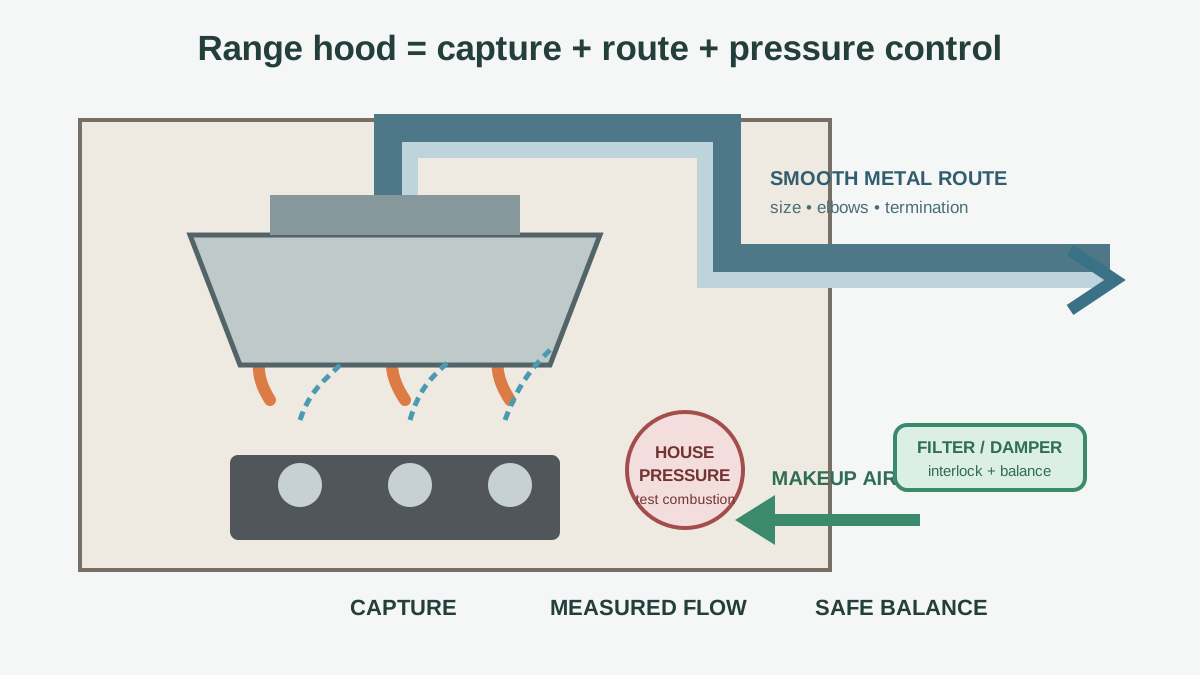
Short answer: Choose a range hood only after matching its width, depth, mounting height, capture area, and verified airflow to the cooking surface and cooking style. Route the exact manufacturer-required smooth metal duct as short and straight as practical to an approved outdoor termination. Then evaluate noise, grease access, enclosure air, house depressurization, combustion appliances, and any required makeup air. Commission actual operation instead of assuming the advertised maximum reaches the kitchen.
A 600-CFM fan behind a shallow decorative canopy can miss a front-burner plume. An oversized fan on a narrow, elbow-filled duct can be loud without delivering its label airflow. A high-flow exhaust in a tight home can change building pressure and affect natural-draft combustion equipment. Product, duct, house, and user behavior must be designed together.
Cooking Pollutants Are Not Only a Gas-Stove Issue
Cooking itself can create particles, moisture, odors, and other pollutants. Fuel combustion can add combustion products. EPA's current cooking air-quality guidance recommends using a hood vented outdoors, running it while cooking and afterward, cooking on back burners when possible, and cleaning the grease filter.
EPA's indoor particle page says cooking method, food, fat, and burning affect particle production and recommends outdoor exhaust where possible. Switching to induction can remove on-site gas combustion at the cooktop, but frying and searing still generate cooking emissions. Keep effective capture in an electrified kitchen.
Define the Cooking Load
Before shopping, record:
- cooktop/range type, width, and model;
- wall, island, downdraft, or custom enclosure;
- burner/zone positions, especially front burners;
- gas input or electric power under the exact appliance documentation;
- frequent methods: boiling, frying, wok, griddle, searing, baking;
- simultaneous burners and household frequency;
- mounting height and cabinet constraints;
- open-plan room and cross-drafts;
- window/door use and outdoor air quality;
- existing duct route and termination;
- fuel-burning appliances and fireplace in the pressure boundary;
- house airtightness information if available.
Do not size from kitchen floor area alone. Capture occurs at the appliance plume before pollutants mix into the whole room.
Capture Geometry Comes First
The canopy should intercept rising plumes. Compare:
- hood width relative to cooking surface;
- hood depth over front zones;
- side coverage;
- mounting height permitted by hood and range manuals;
- capture volume or reservoir;
- filter area and location;
- blower position;
- cabinets or soffits that constrain flow;
- island cross-drafts;
- user's head clearance and sight lines.
A deeper hood at a compliant height can capture differently from a shallow hood with more advertised airflow. Island hoods often have less wall assistance and more cross-draft exposure. Downdraft systems fight natural plume rise and require product-specific design.
Back burners and early fan use
EPA recommends back-burner cooking and hood operation where possible. These behaviors help a capable hood; they do not rescue an obstructed duct or an undersized canopy.
Rated Airflow Is Not Installed Airflow
Fan airflow falls as resistance rises. Resistance comes from:
- undersized duct;
- long developed length;
- elbows and transitions;
- crushed or rough flexible duct;
- backdraft damper;
- restrictive wall/roof cap;
- dirty filters;
- poorly built custom enclosure;
- makeup-air imbalance;
- simultaneous exhaust interactions.
PNNL's kitchen exhaust retrofit guide says to follow manufacturer duct sizing and notes that undersized duct can significantly reduce delivered airflow. Ask for the hood's performance data and duct instructions, not only “maximum CFM.”
Draw the Complete Duct Route
Show the centerline from hood collar to exterior. Record:
- round or rectangular size;
- every transition;
- each elbow and angle;
- straight lengths;
- wall, ceiling, cabinet, attic, joist, and roof passages;
- fire-rated and structural assemblies;
- backdraft damper;
- exterior cap;
- cleanout/service access where needed;
- insulation/condensation plan;
- air and weather sealing;
- developed/equivalent length under product rules.
PNNL's guide calls for smooth rigid metal duct in common range-hood applications and warns against flex. Grease and lint-like residue can accumulate in corrugations, while flex adds resistance and is commonly prohibited. Use exact local code and appliance instructions.
Route Choices
Through an exterior wall
Often shortest, but check cabinet height, studs, headers, exterior clearances, property line, weather, and visible cap location.
Through the roof
Can suit an interior or island hood, but adds roof flashing, condensation, service access, developed length, snow, and leak consequences. Coordinate roofing warranty and qualified flashing.
Through a side soffit or chase
Can preserve cabinets but may add elbows and hidden joints. Do not terminate in an attic, soffit cavity, garage, crawlspace, or wall.
Recirculating mode
Recirculating hoods filter some grease and sometimes odor but do not exhaust moisture or all pollutants outdoors. If exterior venting is infeasible, document filter type, replacement cost, availability, maintenance, and supplemental ventilation/air cleaning. EPA says outdoor-vented capture is preferable where possible.
Termination Placement
The exterior outlet should:
- use the product/code-approved wall or roof cap;
- open freely at design airflow;
- resist weather and pests without a restrictive screen;
- remain accessible for inspection;
- discharge away from outdoor-air intakes, operable windows, doors, and other prohibited locations;
- avoid staining or grease on walls/roof;
- not create a nuisance at walkways or neighboring property;
- be flashed and sealed to the water/air layers;
- avoid snow burial and vegetation obstruction.
Do not use a dryer cap, plumbing vent, attic vent, or improvised grille without approval. Label the route when multiple exterior caps exist.
Makeup Air Is a Pressure and Safety Question
Exhaust removes air from the house. Replacement air enters through intentional openings or uncontrolled leaks. In a tight house or at high exhaust flow, pressure can affect doors, fireplaces, chimneys, and natural-draft combustion appliances.
EPA's remodeling guidance warns that larger fans may need makeup air to avoid excessive depressurization and potential backdrafting. EPA's particle guidance also warns that high exhaust can contribute to combustion backdrafting.
This is not solved by an online CFM threshold alone. Evaluate:
- adopted mechanical code trigger;
- hood tested or rated flow;
- house tightness and pressure boundary;
- other exhaust fans and dryer;
- fireplaces and solid-fuel equipment;
- natural-draft water heater, boiler, or furnace;
- attached garage and pollutant zones;
- existing mechanical ventilation;
- climate and conditioning needs;
- makeup-air path, controls, filtration, heating/cooling, and commissioning.
Combustion safety testing belongs to qualified professionals. Do not operate a high-flow test that creates spillage exposure.
Makeup-Air Options Need a Complete Scope
A project-specific system can use passive or mechanical delivery under applicable rules. Document:
- intake location and weather hood;
- duct size and route;
- damper and interlock;
- airflow relationship to hood stages;
- filtration and access;
- tempering/heating/cooling if required;
- freeze and condensation control;
- distribution location that does not disrupt capture;
- pest and water protection;
- electrical/control failure behavior;
- balancing and combustion-safety test;
- maintenance.
Do not dump cold outdoor air behind a cabinet or directly across the cooking plume without design. A large opening that the occupant blocks in winter is not a durable solution.
Whole-House Ventilation Is Not Automatically Makeup Air
An HRV or ERV supplies and exhausts planned ventilation air, often at much lower flow than a high-speed range hood. It can affect pressure balance but is not automatically sized or controlled to replace hood exhaust. Ask the ventilation designer to document simultaneous operation and controls.
The HRV/ERV guide provides system context. Do not reprogram balanced ventilation without product and design review.
Noise Determines Whether the Hood Gets Used
Sound at each useful speed matters more than the quietest marketing number. Record:
- airflow and sound for low, normal, and high settings;
- blower location: in hood, inline, or remote exterior;
- duct vibration and cabinet resonance;
- transition/elbow turbulence;
- backdraft-damper chatter;
- makeup-air noise;
- controls reachable during cooking;
- delay-off or automatic features;
- filter cleanliness effect.
EPA recommends choosing a quiet or remote fan so noise does not discourage use. A remote blower can reduce kitchen motor noise but may move sound outside or into framing and still needs service access.
Electrical, Gas, Cabinet, and Fire Scope
Identify:
- hood/blower circuit and disconnect method;
- controls and makeup-air interlock;
- cabinet cutouts and structural supports;
- clearances to combustible materials;
- range/cooktop manual requirements;
- gas shutoff and qualified work if gas remains;
- fire blocking and rated-assembly penetrations;
- suppression or commercial requirements if applicable;
- lighting and replacement components;
- finish carpentry, tile, paint, roof, and exterior repair.
Do not assume an appliance electrician, HVAC contractor, roofer, and cabinet installer include one another's work. Assign every penetration and inspection.
Filter and Grease Maintenance
The owner must be able to remove and clean or replace filters without tools beyond the manual. Record:
- grease filter type and quantity;
- dishwasher permission or cleaning method;
- charcoal/recirculation filter part and interval;
- access to blower and grease-prone surfaces;
- exterior cap inspection;
- safe shutoff before service;
- replacement availability and price.
EPA's cooking guidance recommends routine grease-filter cleaning. A clogged filter changes airflow and noise.
Quote Comparison Worksheet
| Field | Bid A | Bid B | Bid C |
|---|---|---|---|
| Hood/blower exact models | |||
| Width/depth/mount height | |||
| Airflow at useful speeds | |||
| Sound at useful speeds | |||
| Duct size/material | |||
| Developed route/elbows | |||
| Wall/roof cap | |||
| Cabinet/roof/finish work | |||
| Makeup-air determination | |||
| Makeup-air model/route | |||
| Combustion-safety scope | |||
| Electrical/control interlock | |||
| Permit/inspection | |||
| Measured airflow/commissioning | |||
| Cleaning/service access | |||
| Gross cash price |
Blank “by owner” fields are costs, not savings.
Commissioning
Before final payment:
- verify model, mounting, clearances, and filters;
- inspect accessible duct joints, supports, and transition;
- confirm exterior cap opens freely and route exhausts outdoors;
- measure airflow using an accepted method under the program/contract;
- test every speed and record sound/abnormal vibration;
- test backdraft damper;
- verify makeup-air damper/interlock and delivered flow if installed;
- perform required combustion-safety/pressure tests with simultaneous exhaust scenarios;
- inspect air/water/fire sealing at penetrations;
- demonstrate filter, control, and maintenance access.
EPA Indoor airPLUS materials use measured exhaust in program contexts. Do not accept “the tissue sticks to the filter” as a calibrated airflow test.
Worked Remodel Example
A 30-inch range sits on an exterior wall. Bid A proposes a 900-CFM decorative hood on an existing 4-inch flex route with two elbows. Bid B proposes a deeper 36-inch hood at product-approved height, a short smooth-metal route sized by the manual, exterior cap, measured airflow, and a pressure/combustion assessment that may trigger controlled makeup air.
Bid A has the larger label and lower initial cabinet work, but its duct can prevent useful airflow and increase noise. Bid B defines capture and installed performance. Normalize cabinetry, electrical, exterior finish, makeup air, permits, and commissioning before comparing price.
Capture Testing and User Observation
Installed airflow is necessary but does not fully describe capture. A hood can move its rated exhaust while cross-drafts or shallow geometry allow cooking plumes to escape.
During commissioning and early use, observe representative cooking under safe conditions:
- which burner is used;
- pan diameter and height;
- cooking method and heat level;
- hood speed and start time;
- nearby HVAC supply, ceiling fan, window, and door state;
- visible steam/smoke path without deliberately burning food;
- grease or condensation patterns at the hood edge;
- sound level that affects actual use;
- odor or particle sensor trends if available, without treating consumer sensors as certification instruments.
If capture is poor, review mounting, canopy coverage, filter, duct flow, cross-draft, and burner practice before simply installing a larger motor. EPA's back-burner and run-on guidance can improve use, but the system still needs adequate installed performance.
Measurement record
| Operating point | Control setting | Measured airflow | Sound/observation | Pass/source |
|---|---|---|---|---|
| Low | ||||
| Normal cooking | ||||
| High/searing | ||||
| Boost/delay | ||||
| Makeup air active | ||||
| Other exhaust simultaneous |
State the measurement method and uncertainty. Do not compare a free-air label with a field result from a different test basis as if they are identical.
Apartment, Condominium, and Attached-Home Constraints
Exterior venting in attached housing can affect common walls, roofs, shafts, fire separations, facade appearance, neighbors, and shared pressure systems. Before ordering:
- confirm unit ownership and condominium/landlord approval;
- locate existing dedicated or shared exhaust path;
- verify that a shared shaft is designed for the connection;
- identify fire/smoke dampers and rated penetrations;
- check roof/facade access responsibility;
- assess odor and grease discharge near other units;
- coordinate suite makeup air and corridor pressure;
- preserve common ventilation balance;
- assign cleaning and fire-safety maintenance;
- obtain permits and engineering where required.
Never connect a range hood to a bath, dryer, natural-draft vent, or unknown common duct by assumption. A recirculating hood may be the only feasible appliance in some buildings, but then source control, filter maintenance, general ventilation, and cooking behavior need a documented plan.
Remodel Sequence
- Select range/cooktop family and likely cooking load.
- Survey exterior, structural, fire, roof, and property constraints.
- Draw the shortest compliant duct candidates.
- Evaluate capture geometry and mounting height.
- Select hood/blower against the chosen route.
- Evaluate pressure, combustion, and makeup air.
- Coordinate cabinets, electrical, gas, mechanical, roof, and finishes.
- Obtain approvals before closing walls.
- Photograph duct, joints, dampers, wiring, and penetrations.
- Commission flow, controls, pressure/safety, sound, and access.
Ordering cabinets before steps two through six can force a poor route or a shallow hood. Put collar location, cabinet opening, service panel, and duct size on the cabinet drawings.
Change-Order Risks to Preprice
| Hidden condition | Evidence | Preplanned response |
|---|---|---|
| Structural header blocks wall route | Open/scan under qualified method | Roof or side-chase route |
| Old duct is undersized/flex | Route inspection | Full rigid-metal replacement |
| Roof contains hazardous material | Qualified assessment | Stop work/abatement |
| Natural-draft appliance fails pressure test | Qualified test | Makeup air/combustion solution |
| Shared shaft is not approved | Building documents/engineer | Recirculation or alternate exterior path |
| Cabinet cannot fit transition | Field and shop drawings | Cabinet/hood redesign |
Require written scope, price, schedule, and authorization. A hood removed for renovation can leave the kitchen unusable while an unpriced roof or makeup-air problem is negotiated.
Owner Use and Maintenance Card
Leave a simple card:
- start the hood before cooking;
- use back burners when practical;
- select the speed that captures the plume;
- leave it running after cooking under EPA/product guidance;
- clean grease filters by the product method;
- replace recirculation filters when applicable;
- keep exterior cap and makeup-air intake clear;
- report damper chatter, reduced flow, new odor, grease leakage, or combustion alarm;
- never disable the makeup-air interlock or block its intake;
- test and maintain CO alarms under current safety guidance.
Record filter part numbers and access to any remote blower. A quiet hood that is easy to use and maintain can outperform a large system occupants avoid.
First-Month Performance Log
For several representative meals, note burner position, cooking method, hood speed, nearby windows/fans, visible plume escape, odor persistence, sound, and whether the makeup-air system operated. Inspect the grease filter and exterior cap after the first month without entering unsafe roof or electrical areas.
If users repeatedly choose a lower speed because the design speed is too loud, treat that as an installed-performance issue. If a pressure door becomes hard to open, a fireplace changes behavior, a CO alarm activates, or combustion odor appears, stop and seek qualified safety evaluation. Do not tune a makeup-air damper by comfort alone.
Keep the log with measured airflow, pressure/combustion results, hood and blower manuals, duct drawing, filter parts, permits, and warranty. Future cabinet, range, window, air-sealing, dryer, or ventilation changes can alter capture or pressure; the record makes the original design basis visible.
Common Failure Modes
- hood selected after cabinets are fabricated;
- shallow canopy misses front burners;
- mounting height violates hood or range instructions;
- duct reduced to match an old opening;
- flex hidden in a soffit;
- too many abrupt elbows;
- termination flap sticks or screen loads with grease;
- exhaust ends in attic/garage/crawlspace;
- makeup air decided by fan label alone;
- natural-draft appliances never tested;
- cold makeup air causes comfort complaints and is blocked;
- hood is too loud at the speed needed;
- filters and remote blower cannot be serviced;
- induction conversion used as reason to remove exhaust.
Sources and Verification
- EPA's cooking IAQ infographic supports outdoor exhaust use, back-burner capture, run-on time, and filter cleaning.
- EPA's particle source guidance supports cooking-emission control and warns about backdrafting from high exhaust.
- EPA's remodeling guidance supports correctly sized, quiet outdoor exhaust and makeup-air assessment.
- PNNL's retrofit duct guide supports smooth rigid duct, manufacturer sizing, route planning, and makeup-air coordination.
- EPA Indoor airPLUS specifications provide measured kitchen-exhaust program context.
- EPA's air-cleaner guide explains filtration as a supplement, not source capture.
Verify exact hood/range manuals and adopted local code. Combustion, gas, roof, fire, electrical, and makeup-air work require qualified trades.
Frequently Asked Questions
Does an induction cooktop still need a hood?
Cooking still creates particles, moisture, and odors. EPA's particle guidance recommends outdoor-vented capture where possible regardless of cooking-emission source.
Is more CFM always better?
No. Capture geometry, duct resistance, noise, pressure, makeup air, and installed airflow matter. EPA warns that high exhaust can backdraft combustion appliances.
Can I use flexible duct?
PNNL's kitchen exhaust guide calls for smooth rigid metal in common range-hood applications and identifies flex as prohibited in its code context. Verify local and product rules.
Can the hood vent into the attic?
No. Exhaust should terminate outdoors at an approved location, not into an attic, wall, garage, soffit cavity, or crawlspace.
When is makeup air required?
Adopted code, actual exhaust, tightness, combustion appliances, and simultaneous fans decide. EPA's remodeling guidance explains the depressurization risk but does not replace local design.
Should I cook on back burners?
When practical, EPA recommends back-burner use because capture is often better, alongside running the hood.
Can a portable air cleaner replace a hood?
No. EPA presents air cleaning as a supplement when outdoor exhaust is absent or insufficient. It does not remove cooking moisture at the source or replace required ventilation.
What to Read Next
Compare cooking technology with the induction versus gas guide, review tight-house pressure with air-sealing physics, and check central filtration with the MERV guide.
Sources and Verification
- U.S. EPA: Strategies for Improving Indoor Air Quality While Cooking
- U.S. EPA: Sources of Indoor Particulate Matter
- U.S. EPA: Remodeling Your Home and Indoor Air Quality
- PNNL Building America: Kitchen Exhaust Retrofit Duct Guide
- EPA Indoor airPLUS New Construction Specifications
- U.S. EPA: Guide to Air Cleaners in the Home
Editorial Review
EnergyBS Editorial Team
EnergyBS publishes practical homeowner guides. Important program, product, and cost claims should be checked against the linked source and local project documents before you commit to work.
Related Guides
View All ArticlesInduction vs Gas Cooking Guide: Speed, Safety, and Efficiency (2026)
Compare induction and gas cooking by heat delivery, indoorair implications, control, cookware, ventilation, installation scope, and local operating cost.
Best MERV Rating for a Home: Choose by Airflow, Not the Number
Choose an HVAC filter by particleremoval goal, clean and loaded pressure drop, filter area, and measured system airflow. Includes a MERV decision table and commissioning worksheet.
The Physics of Air Sealing: Why Your RValue Doesn't Matter (If You Don't Seal)
Insulation is just a sweater. Air sealing is the windbreaker. We explain the physics of the Stack Effect, why Rvalues lie, and how to stop your home from leaking energy like a sieve.