Why Hot Water Runs Out Fast: A Draw, Recovery, and Mixing Diagnosis
A homeowner diagnostic for short hotwater supply that separates fixture flow, overlapping draws, tank firsthour capacity, recovery, thermostat/mode, diptube and element faults, mixing valves, leaks, piping loss, and sediment.
The Short Answer
Short Answer: When hot water runs out sooner than it used to, first measure the demand: fixture flow, shower length, inlet and delivered temperatures, overlapping appliances, and time since the last draw. Then compare that peak with the storage heater's First Hour Rating or a tankless heater's flow at the required temperature rise. If the same routine previously worked, suspect a changed setting or heat-pump mode, failed heating stage, dip-tube/mixing problem, hot-water leak, recirculation loss, sediment, or degraded equipment—not automatically an undersized tank.
Do not raise water temperature as the first fix. Higher storage temperature increases scald risk and may require a properly designed mixing strategy. Do not open electrical panels, adjust gas combustion, defeat safety controls, or operate a leaking or damaged heater. Use the evidence plan below, then give a qualified plumber or service technician a repeatable symptom.
Define “Runs Out” Precisely
Write what actually happens:
- water begins hot and gradually cools;
- it turns cold abruptly;
- one shower works but the second does not;
- only one fixture has the problem;
- temperature oscillates at low flow;
- water is lukewarm everywhere from the start;
- recovery takes much longer than before;
- the issue began after a new fixture, setting, repair, or appliance;
- it occurs only in heat-pump/economy mode or cold weather;
- hot water disappears when another fixture opens.
Those patterns lead to different branches. A single shower valve fault should not trigger water-heater replacement. A whole-house gradual decline after repeated draws may be normal capacity. Whole-house lukewarm water after hours of no use suggests a heating, control, mixing, or loss problem.
Safety Stops
Stop and obtain appropriate help for:
- gas odor, combustion odor, soot, or venting concern;
- active tank leak, bulging, severe corrosion, or water near electrical parts;
- repeated breaker trips, scorched wiring, or damaged disconnect;
- relief valve discharging hot water or steam;
- water temperature that is unexpectedly scalding;
- unusual pressure, banging with discharge, or suspected closed-system expansion problem;
- error or manufacturer notice requiring shutdown.
For gas odor, leave and follow the gas utility/emergency authority's instructions. Do not search with a flame or operate switches. Never cap, plug, or isolate a temperature-and-pressure relief valve.
The Demand–Storage–Recovery Ledger
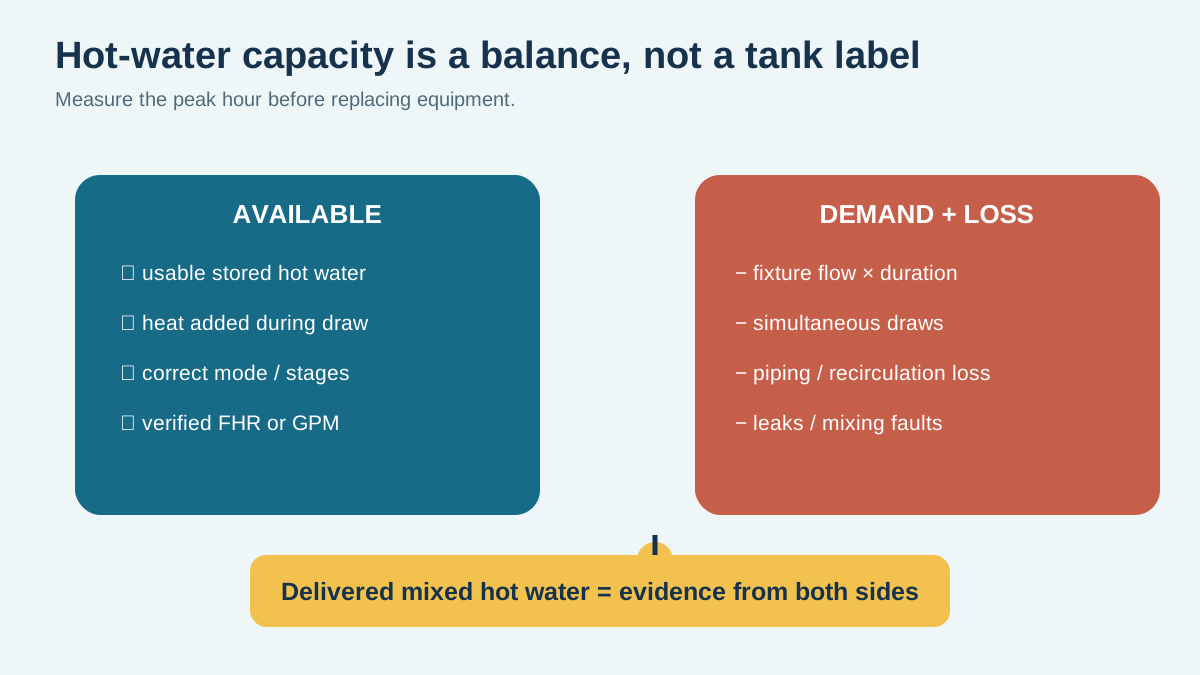
The available service is a balance:
usable stored hot water + heat added during the draw − distribution and unintended losses = delivered mixed hot water
ENERGY STAR defines First Hour Rating as the estimated maximum volume a storage heater can supply in an hour starting fully heated. Tank gallons alone are not the same as delivered first-hour capacity. Recovery input, controls, stored temperature, inlet temperature, and mixing matter.
For tankless equipment, capacity is commonly expressed as flow at a specified temperature rise. Incoming winter water can require a larger rise than summer water, reducing available flow for the same heating input.
Step One: Measure Fixture Flow
Use a container with known volume and a timer at the problem fixture, avoiding scald exposure.
Flow in gallons per minute = container gallons ÷ fill time in minutes
Example: a 2-gallon container fills in 48 seconds, or 0.8 minute. Flow is 2 ÷ 0.8 = 2.5 gpm.
Record shower duration and other simultaneous draws. A 2.5 gpm shower for 12 minutes delivers 30 gallons of mixed water, not 30 gallons of pure tank water. The hot fraction depends on hot, cold, and desired mixed temperatures.
Approximate hot-water fraction:
hot fraction = (mixed temperature − cold temperature) ÷ (hot temperature − cold temperature)
Hypothetical example:
- inlet cold: 50°F;
- hot supply: 120°F;
- shower mix: 105°F;
- hot fraction: (105−50) ÷ (120−50) = 55 ÷ 70 = 0.786.
A 30-gallon shower would use about 23.6 gallons from the hot supply in this simplified steady mix. Real fixtures, piping, heater stratification, and temperature change complicate the result, but the calculation exposes demand.
Do not measure dangerously hot water directly by hand. Use appropriate thermometry and safe procedures.
Step Two: Build the Peak-Hour Timeline
List every draw in the hour before the failure:
| Time | Fixture/appliance | Flow or estimated hot volume | Duration | Simultaneous? |
|---|---|---|---|---|
| 6:45 | Shower 1 | |||
| 7:00 | Dishwasher fill | |||
| 7:05 | Shower 2 | |||
| 7:15 | Sink cleanup |
Include baths, hand washing, laundry, dishwasher, recirculation, and leaks. Appliance hot-water use varies by model and cycle; do not apply a generic number without checking.
If the measured peak exceeds the heater's verified ability, the system may be operating normally but mismatched to the schedule. Lower-flow fixtures, separating draws, correcting recirculation, or a properly selected replacement can solve it. If demand is below the former routine and performance changed, continue diagnosing.
Step Three: Verify the Heater Identity and Rating
Photograph model/serial and record:
- storage, tankless, heat pump, indirect, or combi type;
- nominal and actual storage volume;
- fuel and input;
- First Hour Rating for storage equipment;
- tankless flow at relevant rise;
- installation date and warranty;
- thermostat/setpoint and operating mode;
- mixing valve and recirculation equipment;
- error codes;
- recent repairs.
Use the manufacturer data for the exact model. ENERGY STAR product data can provide FHR and UEF for certified products. Do not infer FHR from a “50-gallon” label.
The heat-pump water-heater guide explains why tank size, FHR, room air, mode, and resistance backup must be considered together.
Step Four: Start Fully Recovered
Repeat one controlled test only after the heater has had enough time under its actual mode to recover fully. Record the no-draw recovery period.
If a fully recovered tank handles the first event but fails after closely spaced draws, recovery or peak demand is central. If it is lukewarm at the first draw after a long idle, look at setpoint, heating stages, power/fuel, mixing, unintended flow, or loss.
Do not force recovery by raising temperature or selecting an unfamiliar emergency mode without reading the manual. For heat-pump water heaters, ENERGY STAR explains that hybrid modes may use resistance heat during high demand, while efficiency/economy modes prioritize the heat pump and can recover differently.
Branch A: Operating Mode or Schedule Changed
Check for:
- vacation or away mode left active;
- efficiency-only mode during unusually high demand;
- time-of-use schedule preventing recovery;
- demand-response event or utility control;
- app setting changed by another user;
- clock reset after outage;
- temperature setpoint reduced;
- tankless recirculation schedule or mode changed;
- firmware or control replacement.
Record before changing. Restore only a manufacturer-supported household mode. A mode that solves capacity by energizing resistance heat may increase cost; use the demand log to choose intentionally.
Branch B: One Heating Stage Is Not Working
An electric storage heater can sometimes deliver a small amount of hot water when one element, control, power leg, or related component is not functioning normally. Gas equipment can have burner, ignition, vent, control, fuel, or scale problems. Heat-pump units can fall back to resistance or show refrigeration/airflow faults.
Clues include:
- only a small top layer becomes hot;
- recovery suddenly takes much longer;
- energy pattern changes;
- error codes recur;
- heat-pump fan/compressor behavior changes;
- burner does not operate normally;
- breaker or protection trips.
Electrical element testing, gas combustion, internal controls, refrigeration, and live power measurements belong to qualified service. Provide the timeline and first-draw pattern.
Branch C: Dip Tube or Internal Stratification Problem
Many storage heaters direct incoming cold water toward the bottom so hot water remains available near the top outlet. A damaged or displaced dip tube, internal connection problem, or unusual mixing can let cold inlet water reach the outlet sooner.
Possible pattern:
- water starts hot but cools much earlier than tank rating and historic performance;
- recovery seems to occur, yet usable volume is small;
- debris appears after an internal component degrades on some designs.
Do not assume the dip tube is the cause from age alone. A plumber should compare model construction, symptom, inlet/outlet piping, and other branches.
Branch D: Mixing Valve or Crossover
A thermostatic mixing valve may blend hot storage water with cold to deliver a controlled distribution temperature. If misadjusted, fouled, failed, or fed by unstable pressures, it can produce lukewarm water or variable capacity.
A failed single-handle fixture cartridge or other plumbing crossover can also allow cold water into the hot distribution. Clues include:
- problem began after fixture work;
- hot pipe near the heater is hot but fixtures are lukewarm;
- one area behaves differently;
- temperature changes when a particular fixture or appliance is isolated by a professional;
- both heater and demand appear normal.
Do not dismantle scald-protection devices casually. Qualified diagnosis should verify storage, mixed outlet, and fixture temperatures while preserving anti-scald protection.
Branch E: Hot-Water Leak or Recirculation Loss
A hidden hot leak can consume stored heat continuously. A recirculation loop can also lose heat or run longer than intended.
Look for:
- water meter movement when all intentional uses are off, using the utility's approved method;
- warm floor/wall areas;
- sound of flow;
- pump running continuously;
- return line remaining hot all day;
- unexpectedly high water and energy bills;
- relief or drain discharge;
- fixture drips.
Do not enter confined spaces or open hot piping. The hot-water recirculation guide compares continuous, timer, temperature, and demand operation and their heat-loss implications.
Branch F: Sediment, Scale, or Heat-Transfer Loss
Water chemistry, temperature, and heater design affect mineral accumulation. Sediment can reduce usable volume, create noise, cover heating surfaces, impede heat transfer, or complicate draining. Tankless heat exchangers can scale and lose performance.
Clues include:
- rumbling/popping;
- slow recovery;
- reduced flow in tankless equipment;
- temperature instability;
- maintenance overdue under the exact manual;
- hard-water history.
Do not blindly power-flush an old neglected tank. Drain valves can leak, sediment can block the valve, and manufacturer procedures vary. Use the exact care instructions and a qualified service plan, especially for gas, electric, heat-pump, tankless, or corroded equipment.
Branch G: Distribution Loss and Distance
If water is hot near the heater but not at a distant fixture, the issue may be distribution:
- long uninsulated piping;
- pipe routed through cold space;
- recirculation imbalance;
- mixing/crossover near the fixture;
- excessive wait causing users to exhaust hot water before it arrives;
- low-flow fixture interacting with a tankless minimum activation rate;
- seasonal inlet temperature.
Measure temperature over time at a near and far fixture with safe methods. Separate wait time from tank capacity. Insulating accessible hot piping can reduce loss but must preserve clearances and follow material requirements.
Tankless-Specific Diagnosis
For a tankless heater, calculate simultaneous flow and required temperature rise.
Required rise = desired outlet temperature − incoming water temperature
The same heater may support more flow at a smaller rise. In winter, colder inlet water reduces delivered flow at the same outlet target.
Check:
- all simultaneous fixtures and appliances;
- inlet filter and owner maintenance under the manual;
- scale/service history;
- error codes;
- fuel/electrical supply;
- exhaust/combustion by qualified service;
- minimum flow activation;
- mixing/crossover;
- recirculation configuration.
ENERGY STAR advises sizing tankless equipment by likely simultaneous GPM and temperature rise. The tankless versus storage guide provides the full retrofit comparison.
Heat-Pump-Water-Heater-Specific Diagnosis
Record ambient intake temperature, filter condition, airflow clearance, mode, error code, condensate, and whether resistance elements are enabled/working. ENERGY STAR notes that heat-pump units may switch to resistance during high demand and that sizing/storage can reduce reliance on inefficient resistance recovery.
A unit in a cold space may leave heat-pump operation under its controls. Ducting, room volume, door openings, and temperature limits are model-specific. Do not block airflow to quiet the unit.
If demand routinely forces high-energy mode, the problem may be sizing or schedule rather than failure. Model a larger tank, lower-flow fixtures, separated draws, or different approved mode before replacing a functioning machine.
Repair, Reschedule, or Replace
Reschedule or reduce demand when
- measured peak legitimately exceeds FHR/GPM;
- all heating stages and controls test normally;
- fixture flow is higher than needed;
- simultaneous use is avoidable;
- recovery time is normal for the selected efficient mode.
Repair when
- performance changed under the same demand;
- a heating stage, control, mixing valve, dip tube, leak, recirculation, scale, or installation fault is confirmed;
- safe parts and qualified service are available;
- tank shell is sound and economics favor repair.
Replace when
- the tank itself leaks;
- severe corrosion or unsafe condition exists;
- repair cost and remaining life are unfavorable;
- required capacity cannot be met reasonably;
- parts or compliant repair are unavailable;
- fuel/vent/electrical transition is part of a planned upgrade.
Use the water-heater fuel cost comparison and tankless versus tank guide after diagnosis, not before.
Three Worked Patterns
Pattern 1: The new high-flow shower
A family previously used a 1.75 gpm showerhead for ten-minute showers. A remodel installs a 2.5 gpm fixture and a body spray. The heater, setpoint, and recovery have not changed. The second shower now cools early.
The correct first step is to measure combined flow and the actual sequence. A 43% increase from 1.75 to 2.5 gpm changes mixed-water demand materially before the body spray is counted. If a controlled load confirms the heater still meets its rated behavior, replacing elements or flushing the tank does not solve the design mismatch. Options include a lower-flow fixture, avoiding simultaneous sprays, scheduling recovery, or selecting greater verified first-hour capacity at replacement.
Pattern 2: Electric tank heats only a small top volume
The same two showers worked for years. Now the first starts hot and cools after several minutes, even after an overnight recovery. The peak-hour routine and fixture flow are unchanged. This pattern is different from simple demand overload.
A qualified technician can evaluate electrical supply, controls, elements, thermostats, internal delivery, and tank condition. The homeowner should not remove covers or work around live high voltage. The useful evidence is: fully recovered start, measured flow, time to temperature drop, whole-house symptom, no recent plumbing change, and any breaker/error history.
Pattern 3: Heat-pump mode changed after an outage
A heat-pump water heater resets its clock or schedule after a power event. Morning recovery is blocked or the unit remains in an away/efficiency mode that cannot meet the family's concentrated draw. The tank is not necessarily undersized and the compressor is not necessarily defective.
Record the control screen, app schedule, demand-response state, mode, setpoint, and error history. Restore a supported schedule under the manual, allow full recovery, and repeat the same draw. If hybrid mode solves the event but uses resistance frequently, compare schedule and storage improvements rather than assuming that high-energy mode must remain permanent.
Fixture-Only Versus Whole-House Isolation
Test a near and far fixture with safe temperature measurement after adequate recovery.
| Pattern | More likely branch |
|---|---|
| One shower only; sinks remain hot | Shower cartridge, anti-scald limit, local crossover, flow |
| All fixtures lukewarm | Heater, central mixing, unintended flow, setpoint |
| Near fixture hot; distant fixture cool | Distribution loss, local mixing, recirculation |
| Temperature falls when one appliance starts | Capacity, crossover, simultaneous flow |
| Hot tap pulses on tankless at very low flow | Minimum activation, flow restriction, control, crossover |
Do not remove anti-scald limits or defeat thermostatic valves as a test. Have a plumber compare inlet, hot outlet, mixed distribution, and fixture temperatures using appropriate instruments. A central mixing valve can make every fixture appear to have a heater problem; a single failed cartridge can make only one shower fail or create a cross-connection that affects the system.
Ask whether recent faucet, shower, dishwasher, washing-machine, recirculation, or plumbing work preceded the change. Time correlation is evidence, not proof, but it helps select the first isolation test.
A Seven-Day Hot-Water Log
For intermittent problems, one test can miss the trigger. Keep a short log:
| Date/time | Mode/setpoint | First draw after full recovery? | Simultaneous uses | Flow/duration | Result | Error/energy note |
|---|
Record cold inlet seasonally if it varies materially. Note guests, baths, laundry cycles, dishwasher, and recirculation schedules. Avoid collecting personal details that do not help diagnosis.
Compare failure and success days. If every failure follows two simultaneous showers, capacity is prominent. If failures occur after no use, control or loss rises. If only cold mornings fail, inlet temperature, heat-pump ambient condition, piping exposure, or schedule may matter. If results follow one fixture, investigate that branch.
The log also improves replacement sizing. A salesperson's household-count chart is weaker than measured peak flow, duration, schedule, and temperature rise.
Verify the Fix
Repeat the same controlled draw after repair or schedule change. Record starting condition, flow, duration, outlet temperature pattern, recovery time, mode, and energy stage. Do not accept “it fires” or “the element has continuity” as proof that the original service level returned.
For a new heater, preserve the sizing basis, First Hour Rating or tankless performance table, settings, mixing/recirculation design, commissioning, permits, and owner training. If the new system cannot reproduce the contracted draw under the agreed conditions, the record makes the gap concrete.
Service Call Worksheet
- exact model, serial, fuel/type, and age;
- FHR or rated GPM at rise;
- setpoint, mode, schedules, and recent changes;
- fixture flow and shower duration;
- inlet, stored/near, and delivered temperatures measured safely;
- peak-hour draw timeline;
- time to full recovery;
- first-draw versus later-draw behavior;
- error codes and energy pattern;
- leaks, recirculation, mixing valve, and recent plumbing work;
- water quality/scale history;
- safety symptoms.
Ask the technician to document cause, measurements, repair, parts, final settings, and a repeat controlled draw test.
Sources and Verification
- ENERGY STAR's residential water-heater criteria provide the official basis for First Hour Rating and model-level performance comparison.
- ENERGY STAR's heat-pump water-heater design considerations support sizing, location, mode, electrical, and hot-water-availability planning.
- ENERGY STAR's technology explainer explains heat-pump versus resistance operation and recovery context.
- Rheem's technical bulletin library is a manufacturer example for model-specific diagnostics; use the exact brand/model manual for the installed heater.
Temperature, pressure, gas, electrical, relief-device, and internal-tank work requires qualified service. Verify current model documents and local plumbing/mechanical requirements.
Frequently Asked Questions
Why do I get only ten minutes of hot water?
Measure shower flow and temperatures, then compare demand with verified FHR. If this is a new decline, check mode, heating stages, mixing/crossover, leaks, dip tube, and recovery rather than assuming tank size.
Does turning the thermostat higher create more hot water?
It can increase usable mixed volume in a properly designed system, but it raises scald and energy risk and may require a mixing valve. Do not use it as an unreviewed fix.
Why does the second shower go cold?
The first draw plus simultaneous use may consume available storage faster than recovery, or recovery may be impaired. Build the hour timeline and verify full recovery, FHR, and heating stages.
Can sediment make hot water run out faster?
It can reduce usable volume or heat transfer in some equipment, but symptoms overlap with many faults. Follow the exact manual and professional diagnosis; aggressive flushing of an old tank is not universally safe.
Why does tankless water get cold when another tap opens?
Combined flow may exceed capacity at the current temperature rise, or supply, scale, control, crossover, and minimum-flow issues may exist. Record flows and inlet temperature.
Is a heat-pump water heater too slow?
It may recover more slowly in heat-pump-only mode, while hybrid/resistance modes add faster heat with different energy use. ENERGY STAR's technology guide explains the operating modes; exact recovery and capacity come from the model documentation and First Hour Rating criteria.
What to Read Next
Use the heat-pump water-heater readiness guide to compare FHR, storage, mode, room air, and electrical needs. If the tank is wet, switch to the water-heater leak-source guide. For a sound tank, the anode and maintenance guide helps preserve the owner record without applying a generic flush schedule.
Sources and Verification
Editorial Review
EnergyBS Editorial Team
EnergyBS publishes practical homeowner guides. Important program, product, and cost claims should be checked against the linked source and local project documents before you commit to work.
Related Guides
View All ArticlesHeat Pump Water Heater Guide: Savings and Installation (2026)
Size and specify a heat pump water heater using firsthour rating, installation air, electrical capacity, condensate routing, operating modes, noise, and local energy prices.
Tankless vs. Tank Water Heaters: Flow, Cost, and Retrofit Guide (2026)
Compare tankless and storage water heaters using peak flow, inletwater temperature, firsthour rating, fuel and electrical capacity, venting, distribution delay, maintenance, and installed cost.
Gas vs Electric Water Heater Operating Cost Comparison 2026
Compare gas, electric resistance, propane, and heat pump water heater operating costs using 2026 energyprice assumptions and practical installation tradeoffs.