Freezer Frost and Ice Buildup 2026 Tool (Guide & Data)
A locationbased freezer frost diagnostic that separates normal foodsurface crystals from humidair leaks, door problems, blocked vents, drain or icemaker leaks, fan icing, and defrost faults.
The Short Answer
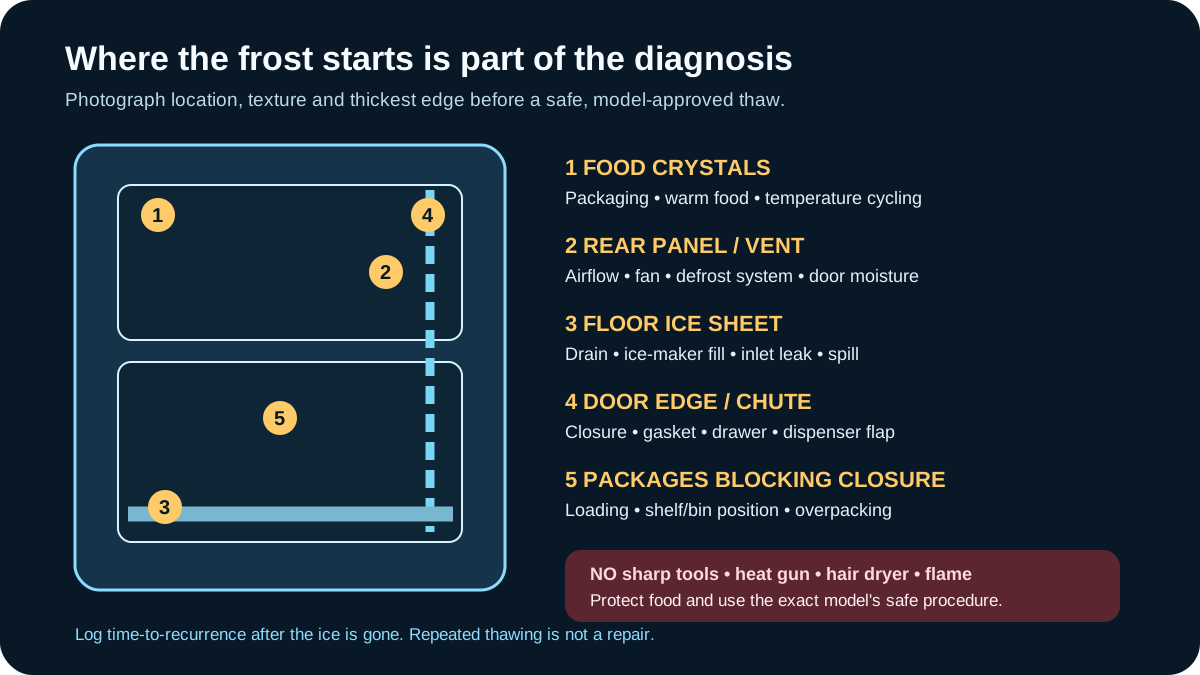
Short Answer: Photograph the frost before removing it and classify its location, shape, and recurrence. Snow near one door edge usually sends you toward closure or gasket leakage; frost on a rear interior panel can indicate restricted evaporator airflow or a defrost condition; a floor ice sheet can come from a drain or water leak; and loose crystals on poorly wrapped food are often a packaging issue. Protect food, verify temperature, and follow the exact model's safe thaw instructions before exposing or replacing parts.
Do not chip ice with a knife, screwdriver, awl, or pick. Do not use a heat gun, hair dryer, open flame, boiling water, or unapproved chemical. A punctured liner or refrigerant tube can turn a manageable frost problem into an unsafe and uneconomic appliance failure.
Frost Is Evidence of Water, Air, Temperature, and Time
Frost forms when water vapour reaches a surface below freezing. The useful question is not “How do I remove ice?” It is “Where did the moisture enter, why did it freeze there, and what stopped the appliance from managing it?”
Four ingredients shape the pattern:
- Moisture source: room air, uncovered food, a spill, an ice-maker fill, a dispenser flap, or defrost water.
- Entry or travel path: door gap, gasket edge, vent, drain, tube, chute, or cabinet seam.
- Cold surface: food package, shelf, liner, evaporator cover, fan housing, drain channel, or ice bucket.
- Exposure time: a brief door opening may leave light temporary frost; a persistent gap or failing system creates a repeat pattern.
Removing the ice erases the pattern. Photograph wide views and close-ups first.
The Freezer Frost Location Ledger
Complete this ledger before thawing:
| Location | Texture/shape | Thickest edge | First noticed | Returns after removal | Door/water event |
|---|---|---|---|---|---|
| Door or drawer edge | |||||
| Rear interior panel | |||||
| Ceiling/air vent | |||||
| Freezer floor | |||||
| Ice bucket/chute | |||||
| Food/package surface |
Also record independent refrigerator and freezer temperatures, room humidity if available, error codes, unusual sounds, and the last door, power, grocery, cleaning, filter, ice-maker, or plumbing event.
Protect Food and Measure Temperature
The FDA advises a freezer temperature of 0°F (-18°C) and a refrigerator temperature at or below 40°F (4°C). Use independent appliance thermometers; a hard package or an icy wall is not a temperature reading.
If a thaw is required:
- move food to another verified freezer or an appropriate insulated container;
- keep frozen items grouped and the container closed;
- label the time transfer began;
- prevent raw-food drips from contaminating other food;
- use FoodSafety.gov guidance for partially thawed or warmed food;
- never taste food to judge safety;
- do not assume food is safe merely because the centre remains firm.
FoodSafety.gov says a closed full freezer can maintain safe temperature for about 48 hours during a power outage and a half-full freezer for about 24 hours. Those are outage planning estimates, not a guarantee during a door leak, partial cooling fault, repeated opening, or warm-room repair. An appliance thermometer and item condition are the better evidence.
Decide Whether the Frost Is Abnormal
A small amount of temporary surface frost can appear after frequent opening, humid weather, loading warm uncovered food, or restoring power. GE notes that warm food - especially uncovered - can produce temporary frost or ice crystals. Frost-free does not mean water vapour never freezes; it means the appliance is designed to manage ordinary evaporator frost automatically.
Treat frost as abnormal when it:
- grows into a snowbank or hard sheet;
- prevents a drawer, door, fan, or vent from operating;
- returns quickly after a complete approved thaw;
- concentrates at the same gasket edge or chute;
- covers a rear panel while cooling or airflow declines;
- appears with water on the floor or under drawers;
- causes scraping or fan noise;
- accompanies temperatures outside the safe/target range;
- recurs with an error code;
- deforms panels, shelving, or an ice bucket.
The amount matters less than the consequence and recurrence.
Run a Moisture-Source Experiment, Not a Guess
When the appliance remains food-safe and the manual permits continued operation, hold one suspected moisture source constant for several days. This helps distinguish an intermittent household condition from a recurring appliance fault.
Start by recording room temperature and relative humidity, if a trustworthy monitor is available. Photograph the frost location at the same time each day. Then choose only one safe change:
- prepare and cool food before loading it, while keeping other habits steady;
- reseal freezer packages and avoid leaving open containers;
- reduce unnecessary door openings without changing the control setting;
- reposition one package that was touching a door or blocking a return;
- disable the ice maker only if the exact manual allows it, while leaving the water condition otherwise unchanged;
- clean an accessible sticky gasket by the approved method;
- correct one documented drawer or shelf obstruction.
Use a ledger:
| Day | Suspected source controlled | Room humidity | Door events | New frost location/size | Temperatures |
|---|---|---|---|---|---|
| Baseline | None | ||||
| 1 | |||||
| 3 | |||||
| 7 |
If frost stops growing after one closure or loading correction, continue monitoring before buying a part. If it grows at the same spot despite stable use, the repeated path strengthens the service case. Do not extend an experiment when temperatures become unsafe, a leak is active, a fan is striking ice, or an electrical hazard appears.
Seasonality can also be evidence. Frost that appears only during humid weather may expose a marginal gasket or dispenser flap rather than prove that humidity alone is the cause. A properly operating closure still has to manage the appliance's rated environment. Compare the pattern, not just the season.
Pattern 1: Snow or Frost at One Door Edge
LG explains that frost concentrated more heavily on one side of a freezer can indicate that the drawer is not sealing correctly. Warm humid room air enters at the gap, and frost often thickens closest to that entry point.
Inspect:
- a food bag, box, shelf, basket, or bin blocking closure;
- a drawer rail that is not fully seated;
- baskets installed in the wrong position after cleaning;
- a gasket folded, twisted, dirty, torn, hardened, or loose;
- an uneven cabinet or floor affecting alignment;
- ice behind a drawer that prevents full travel;
- a French-door mullion or closer that does not engage;
- a handle, panel, or adjacent cabinet interfering with the swing;
- condensation on the matching exterior edge.
Remove only accessible obstructions and clean the gasket by the manual. Do not force a frozen drawer or adjust heavy doors without the required procedure and support. Photograph the closed gap from several angles.
The flashlight and paper checks have limits
A visible line of light in a dark room can reveal a large gap on some models, but interior lights and cabinet design can confuse the result. A strip of paper that pulls easily at one edge is a comparison, not a calibrated pressure test. Use these clues with frost location, gasket condition, closure, and alignment - not as standalone proof that a gasket must be purchased.
Pattern 2: Frost Across the Rear Interior Panel
On many frost-free models, the evaporator sits behind an interior panel. A uniform heavy frost blanket on that panel plus weak airflow, warming fresh-food temperatures, or fan contact can support a defrost/airflow branch. It does not prove the heater alone failed.
Possible conditions include:
- defrost heater, sensor/thermistor, fuse, timer, or control fault;
- evaporator fan problem;
- drain/ice condition affecting the evaporator area;
- door leakage adding more moisture than the system can manage;
- blocked internal air path;
- model-specific service bulletin or control behaviour.
Frost-free designs may initiate defrost by accumulated compressor time or adaptive controls, as GE describes. The parts and logic vary. Do not remove the rear panel, energize exposed components, bypass a switch, or resistance-test live wiring unless qualified. A technician should diagnose the complete defrost circuit and moisture cause instead of replacing the most familiar part.
If an approved full thaw restores airflow but the same panel frost returns, record how many hours or days it took. Recurrence is valuable evidence; repeated manual thawing is not a repair.
Pattern 3: Frost at an Air Vent or Fan Noise
Ice around a vent can restrict cold-air delivery. Ice near a fan may produce scraping, ticking, roaring, or a noise that changes when a door opens. The ice can be a consequence of air leakage, a defrost condition, drainage, or a fan/cover problem.
Owner observations:
- exact noise and when it starts;
- whether it changes under normal door-switch operation;
- location of visible frost relative to vents;
- refrigerator/freezer temperature trend;
- recent door-left-open event;
- whether an approved thaw temporarily ends the noise;
- time until the noise returns;
- any fan-related error code.
Do not insert a tool into the fan path, press a concealed door switch to run exposed equipment, or operate with required panels removed. Samsung notes that a manual defrost may silence fan-contact noise while service is still needed to correct why the ice returns.
Pattern 4: A Sheet of Ice on the Freezer Floor
A smooth slab under the bottom drawer suggests liquid water reached the floor and froze. Potential paths include:
- a defrost drain blocked or frozen;
- a drain trough or tube out of position;
- an ice-maker fill splash, cracked tube, loose fitting, or overflowing mould;
- a water-filter or inlet connection leak travelling into the cabinet;
- a spill or leaking food container;
- condensation migrating from a door gap;
- a model-specific drain design problem.
Distinguish a one-time spill from a recurring path. Photograph staining, ice direction, mineral residue, and the location of the thickest edge. If connected to water, know the appliance shutoff location. Shut off water for active leakage when it is safe and consistent with the manual; do not rely on unplugging to stop a pressurized supply leak.
Internal drain clearing, cabinet disassembly, inlet-valve work, and hidden tubing repair may require service. Never force rigid wire through a drain where it could puncture tubing or damage a risk.
Pattern 5: Frost in the Ice Bucket or Dispenser Chute
Samsung notes that an ice-dispenser flap that does not close can admit warm air and cause frost. Inspect owner-accessible areas for:
- a cube or shard holding the flap open;
- sticky residue or packaging debris;
- a warped or damaged seal;
- a bucket not seated correctly;
- clumped ice preventing normal movement;
- a door/bin obstruction;
- repeated wet or hollow cubes suggesting fill behaviour;
- frost concentrated around the chute rather than the whole freezer.
Turn off the ice maker if the manual directs that step for an overflow or absent water supply. Do not reach into an auger, bypass an interlock, or dismantle a powered dispenser. If the flap, heater, motor, fill valve, or control does not operate under the documented check, arrange service.
Pattern 6: Ice Crystals Only on Food
Loose crystals on food or inside packaging can come from moisture migration, poor wrapping, air exposure, temperature cycling, or warm food placed into the freezer. This differs from a cabinet full of structural frost.
Check:
- package seal and headspace;
- torn bags or lids that lift;
- food put away while steaming;
- frequent door opening;
- warm zones near a door or vent;
- freezer burn/drying;
- evidence of partial thaw and refreeze;
- packages pressed against an air outlet or wall;
- thermometer history.
Repackage as appropriate for freezer storage and date items. Do not infer microbiological safety from crystals or freezer burn. Freezer burn is mainly a quality condition, while time-temperature exposure determines safety.
Pattern 7: Frost Everywhere After a Door Was Left Open
A known door-left-open event can admit a large moisture load. First protect food and measure temperatures. Then:
- remove the closure obstruction;
- verify gasket, shelves, baskets, and rails;
- follow the exact manual's recovery or defrost instructions;
- dry accessible water with power precautions;
- restore documented settings;
- log both compartments through the stabilization period;
- check whether frost returns without another door event.
Do not assume the appliance is permanently repaired until the fan and airflow remain normal and temperatures stabilize. Ice can persist behind a panel after the visible frost is gone.
Safe Thaw Planning
The exact manual controls. A general planning checklist is:
- identify alternate cold storage and transfer food first;
- turn off/disconnect power exactly as directed;
- shut off the water supply if the manual or leak condition calls for it;
- protect flooring and cabinetry with absorbent materials and shallow trays;
- keep children and pets away;
- leave required doors open and allow time for passive melting;
- never accelerate thawing with unapproved heat or sharp tools;
- avoid water near plugs, controls, wiring, lights, or fans;
- dry accessible surfaces without removing service panels;
- inspect door closure and approved drain areas;
- restore power/water and settings under the startup instructions;
- verify temperatures before returning food.
LG's current product help describes unplugging and leaving doors open for a full passive thaw on relevant models. Other models may prescribe a diagnostic/manual-defrost mode or different procedure. Do not transfer one manufacturer's process to another appliance.
Why partial thawing often fails
Melting visible snow for an hour may leave a solid ice mass behind a panel, around a fan, or inside a drain. The symptom returns quickly, and the operator may mistake incomplete thaw for proof of a newly failed component. If a manufacturer-authorized thaw is used, complete it as written and record the time to recurrence.
After the Ice Is Gone: Run a Recurrence Test
Create a clean baseline:
| Check | Baseline | 24 hours | 3 days | 7 days |
|---|---|---|---|---|
| Freezer temperature | ||||
| Refrigerator temperature | ||||
| Frost location/photo | ||||
| Door closure/gasket | ||||
| Fan/airflow sound | ||||
| Water/ice on floor | ||||
| Ice maker/dispenser | ||||
| Room humidity/event |
Keep food loads and settings reasonably stable. If frost begins at the same edge, panel, chute, or floor point, that location is stronger evidence than a generic claim that “the freezer frosts up.”
Installation and Use Conditions That Feed Frost
Review the installation manual for:
- rated ambient temperature range;
- side, top, rear, and ventilation clearances;
- levelling and self-closing expectations;
- door and drawer alignment;
- water pressure and tubing requirements;
- filter specification and installation;
- ice-maker commissioning;
- built-in panel and grille requirements.
Daily-use contributors include long openings, overpacking, packages blocking closure, uncovered warm food, sticky gaskets, and repeated dispenser use in high humidity. Correcting those conditions is useful, but avoid blaming “user error” when a hinge, flap, heater, drain, fan, or control no longer performs as designed.
Energy and Food-Cost Consequences
Frost can insulate heat-transfer surfaces, restrict airflow, prolong compressor/fan operation, and create unstable temperatures. The financial damage may be larger in spoiled food and emergency replacement purchases than in electricity.
Do not estimate savings from a single whole-house bill. Instead record:
- model EnergyGuide annual kWh;
- several days of suitable appliance-level energy data, if safely measurable;
- compartment temperatures and door use;
- runtime/noise pattern;
- food-loss receipts;
- frequency and duration of manual thaws;
- repair call and part history.
Plug-in monitoring is only for a cord-connected appliance and meter rated for the plug, current, startup, and environment. Do not use extension cords or adapters merely to measure a refrigerator.
When to Call for Service
Arrange model-qualified service when:
- heavy frost returns after a complete approved thaw and corrected closure;
- a rear-panel blanket accompanies poor cooling or airflow;
- a fan contacts ice or reports an error;
- a drain or water leak recurs;
- a door, hinge, drawer, mullion, or gasket cannot seal;
- temperatures remain unsafe;
- the appliance trips power or smells hot/electrical;
- a refrigerant tube, liner, wire, or sensor may be damaged;
- a sealed-system or flammable-refrigerant issue is suspected;
- the model is subject to an official recall or service program.
Provide before/after photographs, temperature records, the recurrence interval, door and water events, error codes, model/serial, and exact thaw procedure used. Ask the technician to state the moisture entry path or failed condition, not just remove ice.
A Better Service Invoice
A useful invoice records:
- observed frost pattern;
- independent compartment temperatures;
- door/drawer alignment and gasket condition;
- fan and damper operation where applicable;
- complete defrost-system test under the service procedure;
- drain flow and water-leak findings;
- ice-maker/dispenser findings;
- fault codes and control tests;
- sealed-system evidence if that branch is involved;
- parts replaced and why;
- post-repair temperature and recurrence check;
- parts and labour warranty.
“Defrosted unit” without cause, verification, or recurrence plan is maintenance, not a diagnosis.
Recall, Warranty, and Repair-Economics Check
Search the manufacturer's official warranty and support pages plus the CPSC refrigerator recall category using the exact model and serial. A recall remedy may supersede ordinary troubleshooting. Do not dismantle a recalled product in a way that conflicts with the notice.
For an out-of-warranty repair, compare the diagnosed repair with the refrigerator repair-versus-replace worksheet. Include food loss, repeat service risk, water damage, unavailable parts, sealed-system coverage, installation, haul-away, and a replacement's actual EnergyGuide consumption.
Frequently Asked Questions
Why does my frost-free freezer have frost?
Frost-free systems manage normal evaporator frost; they cannot prevent every crystal after humid-air entry, warm uncovered food, a door gap, or a water leak. Heavy recurring frost indicates a cause worth tracing.
Can I scrape freezer ice with a plastic tool?
Use only a tool and method the exact manual authorizes. Even a plastic tool can damage a liner, gasket, sensor, coating, or hidden tube if forced.
Does frost on one side mean the gasket is bad?
It supports a closure branch, but a blocked drawer, misinstalled bin, alignment problem, debris, hinge, or mullion may create the same gap. Inspect the whole closure system.
Does rear-wall frost prove the defrost heater failed?
No. Heater, sensor, fuse, timer/control, fan, drainage, door leakage, and airflow can interact. A complete model-specific test is needed.
Can I refreeze partially thawed food?
Use current FoodSafety.gov power-outage guidance based on temperature, ice crystals, time, and food type. Do not rely on smell or taste.
Why is ice forming under the bottom drawer?
Liquid may be reaching the freezer floor from a defrost-drain condition, ice-maker or inlet leak, spill, or condensation path. Photograph the thickest edge and check for active water safely.
Will a manual defrost permanently fix it?
Only if a one-time event caused the moisture and the closure/air path is now correct. If ice returns, the recurrence location and timing help diagnose the underlying fault.
Where can I check whether the refrigerator has a recall?
Search the exact model and serial in the manufacturer's official support system and the CPSC refrigerator recall category. Follow the published remedy and stop-use language; a similar product photograph is not sufficient identification.
Is frost around the ice bucket always an ice-maker failure?
No. Humid-air entry, chute sealing, door alignment, soft or melting ice, a fill leak, or a cooling condition can contribute. Samsung's frost troubleshooting illustrates model-specific checks, but the actual appliance manual controls.
What to Read Next
If the refrigerator compartment is warming, use the warm-refrigerator/cold-freezer diagnostic. For a repeated or expensive repair, complete the refrigerator repair-versus-replace worksheet. During an outage, protect refrigeration loads with the measured approach in the home-battery critical-load sizing guide.
Sources and Verification
Food-temperature and thaw/refreeze decisions come from the FDA refrigerator thermometer guide and FoodSafety.gov outage chart. The LG, GE Appliances, and Samsung pages are manufacturer-specific examples, not universal dismantling instructions. The exact model manual, service literature, warranty, and CPSC recall notice govern an individual appliance.
Sources and Verification
- FDA: Refrigerator Thermometers Cold Facts About Food Safety
- FoodSafety.gov: Food Safety During a Power Outage
- LG: Frost Buildup in the Freezer Only
- GE Appliances: Frost or Ice Crystals on Food in Freezer
- Samsung: Frost in the Freezer, Refrigerator, or Ice Bucket
- GE Appliances: Refrigerator and Freezer DefrostSystem Types
- CPSC: Refrigerator Recalls
Editorial Review
EnergyBS Editorial Team
EnergyBS publishes practical homeowner guides. Important program, product, and cost claims should be checked against the linked source and local project documents before you commit to work.
Related Guides
View All ArticlesRefrigerator Warm but Freezer Cold? A FoodSafe
A thermometerled guide to a warm refrigerator and cold freezer that protects food first, then separates setting, loading, airflow, doorseal, frost, fan, damper, and sealedsystem evidence.
Refrigerator Repair vs. Replace 2026 Tool (Guide & Data)
A diagnosisfirst refrigerator repairversusreplace worksheet that compares the full installed decision, EnergyGuide operating cost, foodloss risk, warranties, fit, serviceability, and responsible disposal.
Why Your Inverter Refrigerator Rarely Turns Off
Does an inverter refrigerator automatically turn off? Why the compressor slows down instead of stopping, how that keeps cabinet temperatures steadier, what it does to energy use, and when constant running means a service call.