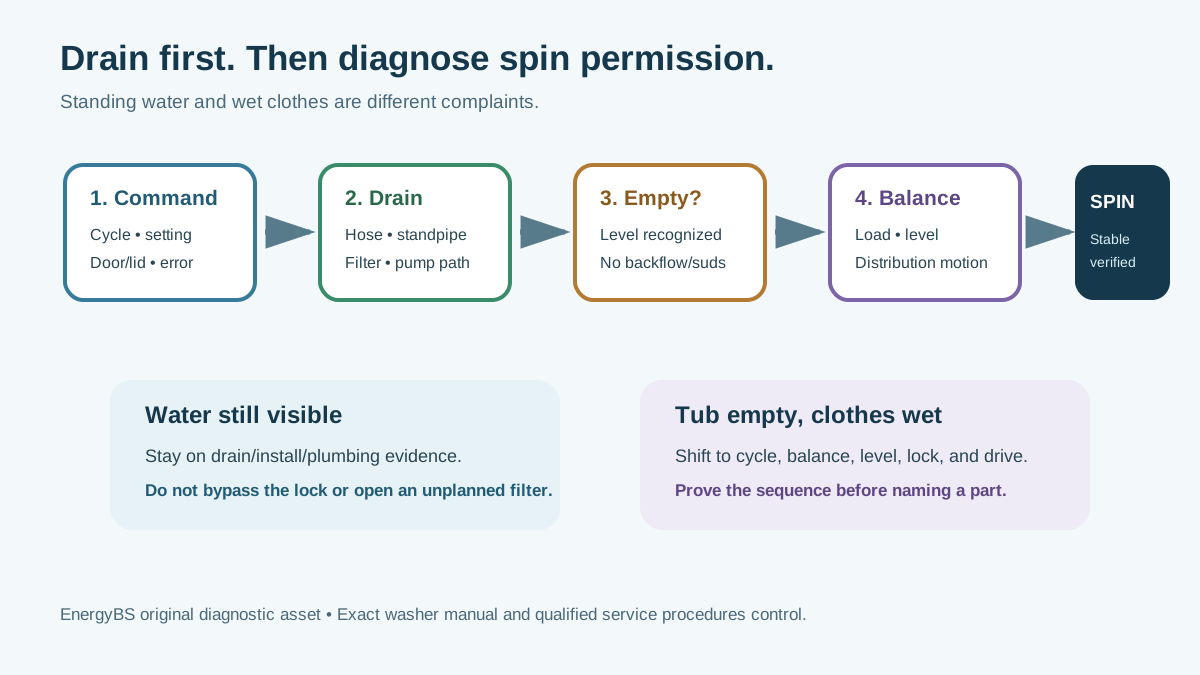
Washing Machine Won't Drain or Spin? Separate the Water Path From the Spin Problem
A safe, modelspecific diagnostic for standing water, soaked clothes, drain errors, and nospin complaints that separates cycle, load, suds, hose, standpipe, filter, pump, door/lid, balance, and drive evidence.
Direct Answer
A safe, modelspecific diagnostic for standing water, soaked clothes, drain errors, and nospin complaints that separates cycle, load, suds, hose, standpipe, filter, pump, door/lid, balance, and drive evidence.
Drain Comes Before High-Speed Spin on Many Washers
Short answer: Stop the cycle, protect the floor, and record the error, remaining water, load, sounds, and cycle phase. If the washer contains water, diagnose drainage first: settings, load/suds, drain-hose route, household standpipe, and only the filter or emergency-drain procedure identified in the exact model manual. If the tub drains but does not spin, shift to door/lid closure, load balance, level/installation, control mode, and model-specific service evidence. Do not force a locked door, tip a water-filled washer, bypass a switch, or reach into a moving drum.
“Won't drain,” “won't spin,” and “clothes are wet” overlap but are not identical. A washer may refuse high-speed spin because water remains. It may drain normally but repeatedly rebalance a bulky load. A low-spin fabric cycle can leave wet clothing without a fault. Build the sequence before naming a pump, belt, motor, or control.
Stop for These Conditions
Disconnect or isolate the appliance only as safely allowed and obtain appropriate help when there is:
- smoke, flame, burning electrical odor, arcing, or a hot plug/receptacle;
- repeated breaker or protective-device trips;
- water at electrical connections or below a stacked electrical dryer;
- a violently moving machine, damaged cabinet, or loose counterweight-like impact;
- a shattered door, broken glass, or inability to secure the drum;
- a pressurized inlet leak or household drain overflow;
- a recalled model with stop-use instructions;
- suspected internal wiring, drive, or refrigerant issue in a combination heat-pump unit.
Do not keep restarting a stalled pump. Do not use an extension cord. Do not bypass the lid/door interlock to “see whether it spins.” Search the exact model and serial in the manufacturer's official support system and the CPSC washing-machine recall category.
Record the Complaint Precisely
| Observation | Diagnostic value |
|---|---|
| Standing water visible in tub | Drain path must be resolved before judging final spin |
| Tub empty, clothes dripping | Spin speed/sequence, balance, load, or drive branch |
| Error code | Model-specific starting point; preserve before reset |
| Pump hum with no outflow | Restriction, installation, pump, or control evidence - not proof of pump failure |
| No pump sound | Setting, door/lid, control, wiring, or pump command branch |
| Repeated slow tumbles/rebalancing | Load distribution or installation may prevent high-speed spin |
| Water returns after draining | Standpipe/siphon/backflow or inlet condition may be involved |
| Only bulky loads fail | Load geometry, cycle selection, capacity, level, suspension evidence |
| Every load fails at same minute | Repeatable sequence/control/drain/service evidence |
Photograph the control panel, error, water level, load, hose route, and floor. Record the time from drain start to the symptom. Do not reset until the evidence is saved; a reset can clear a useful code without fixing the cause.
First Separate “Water in Tub” From “Water in Clothes”
Standing water means the appliance has not moved water out as intended. Wet clothing in an otherwise empty tub can mean insufficient spin extraction, a low-spin cycle, rebalancing, a load that held water, or a spin fault. A small amount of inaccessible water below the visible drum can be normal by design; use the manual's definition rather than tilting the machine to empty it.
Select Drain & Spin only if the manual permits, the load and machine are safe, and there is no active leak or electrical concern. Observe:
- Does the door/lid lock?
- Does a pump start?
- Does water visibly discharge at the household drain?
- Does the standpipe rise or overflow?
- Does the tub begin distribution/rebalancing?
- Does it reach high speed?
- What error or time-out follows?
This one controlled cycle creates a sequence. Stop if the floor, drain, sound, or motion becomes unsafe.
Check Cycle, Pause, and Control Conditions
Before opening panels, confirm:
- the cycle has actually ended rather than soaking, pausing, sanitizing, cooling, or balancing;
- a rinse-hold, no-spin, low-spin, delicate, hand-wash, or similar option is not selected;
- Control Lock/Child Lock is handled according to the manual;
- the Start/Pause sequence was completed;
- a power interruption did not stop the program;
- the door or lid is fully closed without fabric in the latch;
- the unit is not in demo, diagnostic, remote-start, or delay mode;
- the exact error is interpreted from official model support.
Whirlpool notes that gentle/hand-wash and low/no-spin selections can leave more water in laundry and that load balance and detergent can affect drain/spin results (Whirlpool drain guidance). That is general screening; the exact control names and permitted loads come from the model manual.
Load and Suds Evidence
Unbalanced load
A single absorbent bath mat, blanket, pet bed, pillow, or waterproof item can hold water unevenly. The washer may repeatedly redistribute and reduce or cancel high-speed spin. Follow the fabric care label and washer manual. Never add dry items to a locked water-filled drum without the approved pause/open procedure.
If allowed, redistribute a mixed ordinary load evenly. Do not use extra items to “balance” a product the manual prohibits. Record whether an empty or standardized towel test completes while the original bulky item does not. That separates machine-wide failure from load-specific behavior.
Overload or underload
Overpacking prevents movement and balance; a lone heavy object may also be unstable. Capacity in cubic feet does not mean every object that physically fits is permitted. Use load-type and weight guidance from the exact manual.
Excess detergent or wrong detergent
High-efficiency washers require compatible detergent and model/load/water-appropriate dosing. Excess suds can interfere with sensing, draining, rinsing, and spinning and may create leaks. Do not add a random household defoamer. Follow the manual's recovery cycle and detergent instructions.
Inspect the External Drain Path
Drain hose
Without disconnecting a water-filled machine unsafely, inspect accessible hose sections for:
- kink, crush, twist, abrasion, split, or freezing;
- machine pushed against the hose;
- incorrect insertion depth or missing restraint;
- standpipe height outside the model's installation range;
- airtight sealing where an air gap is required;
- routing that permits siphoning or backflow;
- recent movement or installation change.
Do not borrow a generic height or insertion number. Whirlpool and Maytag support pages publish dimensions for their products, but the exact washer installation instructions control yours. A hose installed too high can exceed pump capability; too low or improperly sealed/routed can create siphoning or refill-like symptoms.
Household standpipe or laundry sink
Watch the receiving drain during a controlled discharge. Rising water, overflow, gurgling, or slow recession can identify a building drain restriction rather than an appliance pump failure. Stop the test before overflow. A plumber may need to clear or resize the drain; do not pour incompatible drain chemicals into a line connected to the washer.
LG's washer-leak guidance notes that a clogged drain can backflow and resemble an appliance leak. That principle is useful, but local plumbing layout and code determine the remedy.
Drain Pump Filter: Only When the Manual Says There Is One
Some front-load washers have an owner-accessible pump filter and residual-water hose; some top-loaders and other designs do not. Whirlpool explicitly warns that filter locations vary and many models do not have an accessible filter (Whirlpool not-draining guide).
If the exact manual provides an owner procedure:
- stop and make the appliance safe as instructed;
- allow hot wash water to cool;
- protect flooring and use a low container/towels sized for the possible volume;
- use the residual drain tube slowly if present;
- open the filter only in the stated direction and sequence;
- remove documented debris without reaching into moving or sharp components;
- inspect the seal and threads without stretching or substituting parts;
- reinstall the filter and drain-tube cap fully;
- run the specified leak/function test while observing the access area.
Coins, pins, fabric, lint, pet hair, small socks, and broken garment pieces can obstruct a filter or pump path. Finding debris does not prove the pump is healthy, and reassembly errors can create a new leak.
Never open a filter door on a full machine without planning where the water will go. Never tip a front loader forward to force water out. A stacked unit adds fall and electrical hazards; use qualified service when safe access is not available.
When the Tub Drains but Will Not Spin
Shift from water path to spin permission and motion:
Door/lid lock
A closed-looking door may not prove the lock confirms safely. Inspect accessible latch areas for fabric, damage, misalignment, or an official error. Do not probe or bypass the lock. A technician can check the interlock, wiring, strike, alignment, and control command.
Level and installation
Use the manual's method to verify all feet contact the floor, locknuts are set, shipping bolts were removed on a newly installed front loader, the floor is structurally adequate, and stacked/pedestal components are approved and secured. Do not level by eye from the sloped top or control panel if the manual specifies another reference.
Load distribution
If normal mixed loads complete but a single bulky item does not, the machine may be protecting itself. If an empty manufacturer-approved spin also fails, the machine/service branch strengthens.
Drive and suspension evidence
Grinding, scraping, a loose-feeling basket, repeated impact, burning odor, or failure to rotate can involve bearings, suspension, drive, rotor/stator, belt on applicable designs, motor, wiring, or control. Do not remove guards or rotate an energized machine. Record video from a safe distance.
Samsung's support separates “does not spin at all” from “spins poorly” and directs users through drain and model-specific calibration paths (Samsung no-spin guidance). Treat calibration as a manufacturer procedure, not a universal reset.
A Sequence Matrix for the Service Call
| Stage | Expected evidence | Your observation |
|---|---|---|
| Cycle command | Correct option accepted | |
| Door/lid | Closed and lock confirmed | |
| Drain command | Pump/valve/control response | |
| Water exit | Flow reaches standpipe without overflow | |
| Empty-level sense | Control recognizes drainage | |
| Distribution | Slow rotation balances load | |
| High-speed permission | No imbalance/suds/lock error | |
| High-speed motion | Stable rotation, no abnormal impact | |
| Completion | uses and final error state |
This original matrix prevents “replace the pump” when the machine never commanded it, and prevents “bad motor” when a standpipe backs up and leaves the level sensor wet.
Run a Controlled Sequence Without Flooding the Room
Only after retained hot water is safely managed, no electrical/structural hazard exists, and the exact manual permits the test, change one condition at a time.
| Test | Starting water/load | Drain outlet | Time to empty | High spin | Error/noise |
|---|---|---|---|---|---|
| Original failure | Record exactly | Normal | |||
| Manual drain-only test | Prescribed | Normal | N/A | ||
| Small balanced load | Approved textiles | Normal | |||
| Standpipe boundary test | Only if manufacturer/plumber permits | Controlled approved location | N/A |
Supervise the entire discharge. Secure the hose so pump thrust cannot throw it from a sink or container. Stop at the first overflow, leak, grinding sound, burning odor, violent movement, or repeated code. Do not run the pump dry repeatedly to “prove” it works.
The sequence matters:
- If the washer cannot move water through its own hose, stay on the appliance drain path.
- If it discharges normally only when separated from the standpipe, the household drain/installation branch strengthens.
- If the tub empties but the control never recognizes empty, water-level sensing, pressure path, wiring, or control evidence becomes relevant.
- If empty is recognized but the machine cannot distribute a small approved load, check level, shipping restraints, suspension, lock, drive, and feedback.
- If a small load passes but one bulky item fails, use/load compatibility is more likely than a universal motor failure.
Understand Water-Level Evidence
Many machines infer water level through a pressure system, electronic sensor, or other model-specific method. Soap film, a pinched pressure path, a sensor/wiring issue, or control logic can make an empty tub appear full - or a full tub appear incorrectly measured. Owner access generally ends at recording the displayed state and water level.
Tell service whether:
- the display continues to show drain after visible water is gone;
- the pump runs for an unusually long time;
- the door remains locked after a documented safe wait;
- water enters again unexpectedly;
- the machine reports an overflow or level code;
- blowing/gurgling appears at the standpipe;
- unplugging changes only the display, not the retained water;
- the failure followed hose, pump, control, or moving work.
Do not blow into pressure tubing, open a control, or bypass a level/lock circuit. A locked door can be correct protection while water or an unsafe state remains.
Three Worked Symptom Patterns
Pump audible, standpipe overflows
Water visibly leaves the washer and rises from the household standpipe. Stop before property damage. Photograph the first overflow and hose insertion. The appliance pump may be doing its job while the drain is restricted, undersized, improperly vented, or incorrectly installed. A plumber should verify the building path; do not replace the washer pump from this pattern alone.
Tub empty, one blanket remains soaked
Normal mixed loads drain and spin. One approved bulky item repeatedly redistributes and ends wet. Review the textile and model's bulky/waterproof-item instructions, load pairing, capacity, and selected spin. Do not add unsafe ballast or hold the cabinet. Persistent failure on approved balanced loads deserves service.
Filter clears, then blocks again
An owner-accessible filter contains a coin and drainage returns, but another obstruction appears days later. Empty pockets, use suitable garment bags for small items, inspect damaged textiles, and document debris. Repeated fragments of plastic, rubber, or metal may come from the machine and should be assessed rather than treated as ordinary lint.
Emergency Door Release Is Not the First Step
Some front loaders have a documented emergency release, usually used only after power isolation and water removal. Others require service. Find the exact procedure by model. Before release, confirm the drum is stopped, water is below the door, temperature is safe, and the floor is protected. Never pull an unidentified tab, pry the latch, or apply power with an interlock exposed.
If the lock repeatedly fails to engage or release after normal conditions, photograph its alignment and error. The cause may be the strike, hinge, gasket/load obstruction, lock, wiring, control, or an unresolved water state. Replacing the latch without proving the sequence can leave the original fault.
What a Qualified Technician Should Document
Ask for model-specific findings:
- stored error and diagnostic history;
- drain time and residual water level;
- hose, standpipe, filter, and pump-path condition;
- pump electrical/mechanical evidence;
- water-level/pressure-sensing evidence;
- door/lid lock and wiring;
- control output and harness condition;
- balance, suspension, bearing, and basket evidence;
- motor/drive/rotor/stator/belt evidence as applicable;
- leak test after any filter, hose, or pump work;
- successful loaded drain-and-spin verification;
- parts/labor warranty and excluded conditions.
The repair is not proven by an empty tub alone. It should complete the relevant cycle without leakage, abnormal motion, or recurring code and leave laundry at an expected moisture level for the chosen spin.
Prevent Repeat Drain and Spin Problems
- Empty pockets and secure small items in appropriate garment bags.
- Follow load-type and capacity guidance.
- Use the correct detergent and dose for soil, load, water, and model.
- Keep the washer level and do not store it against hoses.
- Inspect accessible inlet/drain hoses and floor for moisture.
- Clean only the owner-accessible filter at the manual's interval.
- Leave required ventilation/clearance around combination units.
- Address a slow standpipe before it overflows.
- Keep model, warranty, and service records.
ENERGY STAR's washer criteria use Integrated Modified Energy Factor and Integrated Water Factor to certify energy/water performance (ENERGY STAR criteria). Those metrics do not diagnose drainage or guarantee that a particular cycle/load is balanced.
Manual Drainage Needs a Containment Plan
Opening a filter can release much more water than a baking tray holds. Before using an owner-accessible emergency drain:
- estimate the visible water volume and assume hidden water remains;
- let hot/sanitize water cool fully;
- protect finished flooring and the ceiling below;
- use multiple shallow containers that can slide under the access door;
- have a second person exchange containers where safe;
- shut power and supplies exactly as the manual directs;
- release a small amount at a time through the provided residual hose;
- stop if water reaches electrical parts or the hose/cap is damaged;
- keep the drain hose secured so it cannot retract into the cabinet;
- reinstall and leak-test every cap before returning to service.
Do not siphon through the main drain hose with your mouth. Do not tip the washer to pour water through a door or dispenser. Do not remove a top-loader hose that is inaccessible without service. A wet/dry vacuum connected to appliance plumbing is not a universal approved procedure and can damage components or create contamination; use it only if the exact manufacturer procedure allows.
Recover the wet laundry safely
Waterlogged blankets and rugs are heavy. Do not lift beyond your ability or drag fabric across a door gasket. If the door remains locked, follow the official power/manual-release procedure only after water is controlled. An emergency latch is not a drain. Forcing it with a full tub can flood the room.
Once removed, follow garment care. Rinse/re-wash items that sat in dirty water; do not move dripping loads directly across finished floors. If water came from a sewer backup, stop ordinary laundry handling and use appropriate contamination guidance/professional help.
Diagnose After Delivery, Moving, or Flooring Work
A drain/spin complaint that begins immediately after relocation often has installation evidence:
- shipping bolts or braces not removed - or not reinstalled for transport when required;
- drain hose kinked, crushed, inserted too far, or set outside height limits;
- hot/cold hoses crossed or valve not fully open;
- machine not level or one foot floating;
- locknuts not tightened;
- pedestal or stacking hardware mismatched;
- power/grounding changed;
- drain standpipe altered or sealed;
- packing material left below the cabinet;
- door/lid or harness disturbed.
Preserve delivery photographs and installation sign-off. Do not let a service diagnosis begin with internal parts before checking the condition that changed. If a retailer installed it, ask who owns correction, floor damage, and the return window.
Shipping restraints matter twice
Front-load shipping bolts restrain the suspension during transport. Operating with them installed can cause severe vibration; moving without the required restraints can damage the suspension. Follow the exact manual for removal, storage, and future transport. Never substitute hardware by dimension.
Interpret Common Complaint Patterns
“It drains, then adds water again”
The washer may be correcting suds, rebalancing, rinsing, or reacting to a sensor condition. Backflow/siphoning or a leaking inlet valve can also add water. Record whether water enters with the machine off, which inlet is active, and the displayed phase. Do not assume a control failure.
“It reaches one minute and stays there”
Displayed time may be an estimate that changes with balancing, suds, temperature, or drainage. Record actual elapsed time, motion, water level, and final error. A repeatable stall is useful service evidence; one altered estimate is not by itself a fault.
“The pump hums, but no water exits”
Possible evidence includes a blocked filter/hose, frozen path, jammed/damaged pump, installation height, or building drain issue. A hum does not prove the impeller turns or that the control voltage and water path are correct. Stop repeated attempts that could overheat a stalled component.
“The washer drains into the sink but not the standpipe”
If - and only if - the manufacturer/installer safely performs a controlled comparison, successful discharge to an approved temporary receptor can implicate the standpipe. Do not improvise a hose into a shallow sink where it can jump out, siphon, or overflow. A plumber should verify the building drain.
“Only towels or bedding fail”
Water retention and load geometry can defeat balance. Verify the manual permits the item and selected cycle, and distribute compatible items as directed. Persistent failure with permitted loads can indicate level/suspension/sensing/drive conditions.
“It spins empty but not loaded”
That does not prove the washer is healthy. It narrows the complaint toward load distribution, suspension, torque/drive under load, or sensing. A technician should use an approved representative load and document high-speed stability.
Distinguish a Washer Drain From a Plumbing Drain
Ask a plumber or installer to record:
- standpipe diameter and height under local requirements;
- risk and vent arrangement;
- flow capacity and evidence of restriction;
- hose insertion and restraint;
- shared-drain interactions with sink or other appliance;
- backflow or siphon evidence;
- correction and post-work discharge test.
An appliance pump replacement will not fix a restricted standpipe. Conversely, a clear standpipe will not fix a failed appliance pump. The observed boundary saves duplicate service calls.
Compare Repair Quotes on Evidence
For a pump, lock, sensor, control, or drive quote, request:
| Quote field | Provider A | Provider B |
|---|---|---|
| Confirmed test result | ||
| Part number/condition | ||
| Root cause and connected tests | ||
| Labor and second visit | ||
| Leak/loaded-cycle verification | ||
| Parts/labor warranty | ||
| Additional-cost limit |
If the diagnosed repair is large or uncertain, use the washer repair-versus-replace worksheet. Do not compare a diagnostic estimate with a delivered-only new-machine price.
Frequently Asked Questions
Why won't my washer spin when water remains?
Many washers drain before permitting high-speed spin. A hose, standpipe, filter, pump, suds, or level-sensing issue can therefore present as no-spin. Whirlpool describes this drain/spin interaction in its not-spinning guidance.
Can I open the pump filter with a full drum?
Only through the exact manual's controlled residual-drain procedure, with hot water cooled and a containment plan. Whirlpool notes that filter locations and accessibility vary and some models have no owner-accessible filter (Whirlpool).
Why are clothes wet even though the tub is empty?
Low/no-spin settings, delicate cycles, imbalance, overload, excess suds, or a spin-system fault can leave more retained water. Compare cycle and load before naming a part.
Can a clogged house drain look like a washer failure?
Yes. If the standpipe rises, overflows, or drains slowly during discharge, the receiving plumbing may be restricting flow. Stop before flooding and use appropriate plumbing help.
Should I reset the washer?
Record the error and sequence first. Reset only as the exact official manual directs. It may clear a temporary state but does not correct a kink, obstruction, failed lock, pump, or drive condition.
Is calibration a universal no-spin fix?
No. Calibration applies only where the manufacturer specifies it and after installation/drain conditions are correct. Samsung's no-spin procedure is for supported Samsung models, not every washer.
Where do I check recalls?
Search the complete model and serial with the manufacturer and CPSC washing-machine recalls. Follow the official stop-use and remedy language exactly.
What to Read Next
If water reaches the floor, trace fill, wash, drain, and idle timing in the washer leak-source guide. Prevent residue and retained-moisture odor with the front-load washer cleaning guide. Compare a diagnosed major repair with the washer repair-versus-replace worksheet, and diagnose unusually wet dryer loads with the slow-drying guide.
Sources and Verification
Drain and spin sequences are based on official Whirlpool drain, Whirlpool spin, Samsung drain, and Samsung spin support. These are manufacturer examples; the exact model manual and service sheet control. Efficiency terminology comes from ENERGY STAR, and safety recalls must be verified through CPSC. Local plumbing/electrical rules and qualified diagnosis govern repair.
Sources and Verification
Editorial Review
EnergyBS Editorial Team
EnergyBS publishes practical homeowner guides. Important program, product, and cost claims should be checked against the linked source and local project documents before you commit to work.
Related Guides
View All ArticlesWashing Machine Leaking Water? Map Fill, Wash, Drain,
Trace a washer leak by first wet point and cycle timing to separate household valves and drains, inlet hoses, dispensers and suds, door/gasket paths, pump filters, drain hoses, internal components, and overspray or spills.
FrontLoad Washer Smells Musty? Remove Residue and
A modelspecific frontload washer odor plan covering retained laundry and moisture, detergent dosing, gasket and dispenser cleaning, pumpfilter and drain checks, tubclean cycles, chemical safety, ventilation, recurrence tracking, and service escalation.
Washing Machine Repair or Replace? A FiveYear Cost,
Compare a diagnosed washer repair with a fully installed replacement using repair certainty, warranty, downtime, leak risk, model energy and water data, dryer effects, fit, hookups, delivery, and responsible haulaway.