Portable AC: Single Hose vs. Dual Hose, SACC, and Real Installed Performance
A portableairconditioner buyer guide comparing single and dualduct air paths, SACC and CEER labels, room load, windowpanel leakage, hose heat, condensate, electrical supply, noise, and pressure safety.
The Short Answer
Short Answer: Compare portable air conditioners by seasonally adjusted cooling capacity (SACC), CEER, hose configuration, and the exact installed room—not by the larger legacy-looking Btu number on the box. A single-duct model uses room air to cool its condenser and exhausts that air outdoors, so replacement air enters the room or building. A dual-duct model brings condenser air from outdoors and sends it back outdoors, usually reducing that pressure penalty. Either design can perform poorly when the window panel leaks, exhaust hose radiates heat, condensate handling is wrong, or the unit is oversized, undersized, or on an unsafe circuit.
Do not use an unvented “portable AC” that merely blows hot condenser air back into the room. Do not extend, crush, insulate, or replace hoses unless the exact manual permits it. Never use an extension cord or adapter, block egress, or operate where negative pressure could affect combustion appliances without qualified assessment.
Portable Does Not Mean No Installation
A portable AC still has an outdoor heat-rejection system. The wheeled cabinet sits inside, but one or two ducts, a window panel, seals, drain/tank, electrical cord, and clearance become a temporary mechanical installation.
Its result depends on:
- regulated cooling capacity under the correct label method;
- single- or dual-duct condenser airflow;
- room cooling load;
- outdoor replacement-air path;
- duct length, temperature, bends, and leakage;
- window-panel area and sealing;
- evaporator and condenser intake/discharge clearance;
- condensate mode and room humidity;
- thermostat/sensor location;
- voltage, current, receptacle, and circuit;
- room/building pressure and combustion safety;
- sound and floor vibration;
- cleaning and service access.
Rolling a cabinet beside a window is the beginning, not the end, of commissioning.
The Single- and Dual-Duct Air Map
Single duct
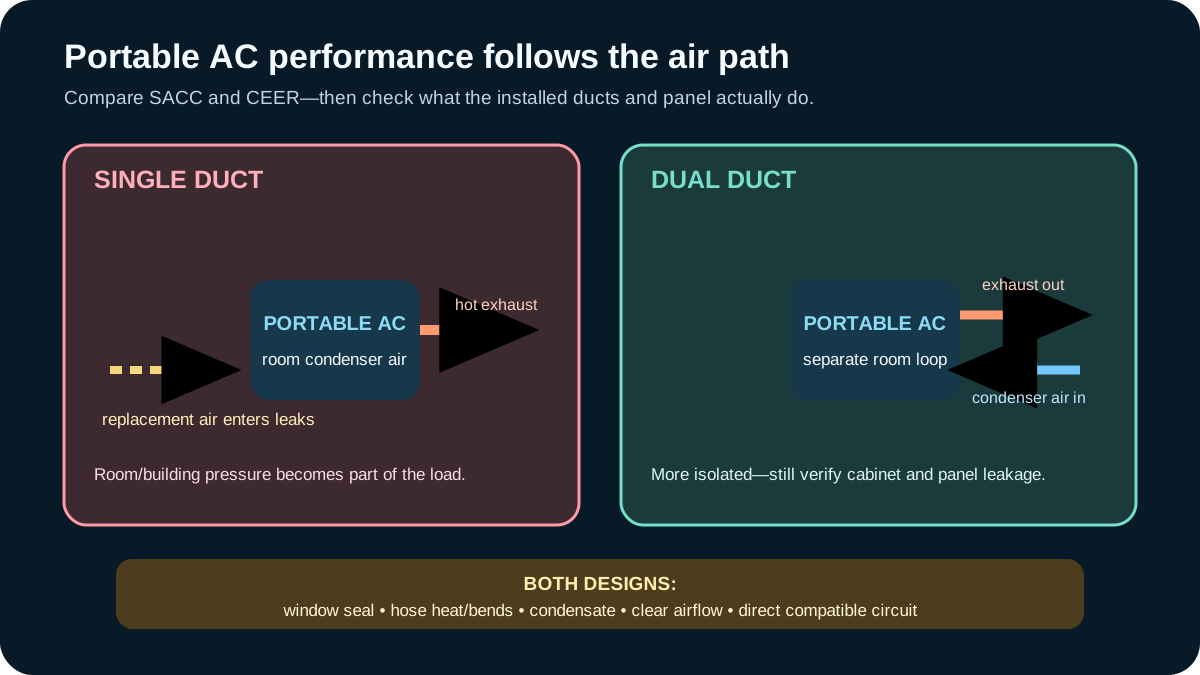
The evaporator side cools room air and returns it to the room. The condenser side also draws some room air, heats it, and exhausts it outdoors through one duct. The exhausted volume must be replaced. Air enters through the window kit, doors, envelope leakage, adjacent rooms, ventilation paths, or other openings.
That replacement air may be hot and humid, partially offsetting cooling. It can also redistribute odours or air from corridors, basements, garages, crawlspaces, and other zones.
Dual duct
One duct draws outdoor air to the condenser, and the other exhausts heated condenser air outdoors. The evaporator loop still cools room air. Ideally, condenser airflow is more isolated from the room, reducing induced replacement air.
“Dual hose” does not guarantee perfect pressure balance. Leakage inside the cabinet, at duct collars, through the panel, or between intake/exhaust streams matters. Some products use a hose-within-a-hose arrangement that is functionally dual duct; verify the certified configuration and manual.
Buy by SACC, Not the Biggest Btu Badge
Portable ACs have historically shown capacity numbers produced by different test concepts. The U.S. Department of Energy test procedure defines portable-AC performance including seasonally adjusted cooling capacity. Natural Resources Canada likewise requires SACC and CEER reporting for regulated portable models.
Record every capacity number and its label:
| Exact model | SACC Btu/h | Other capacity and method | CEER | Single/dual duct | Rated input/amps |
|---|---|---|---|---|---|
| A | |||||
| B | |||||
| C |
If one box says 14,000 Btu/h but the regulated SACC is 9,000 Btu/h, compare it as a 9,000-SACC product against other portable units using the same method. Do not compare its larger number directly with a window AC's rated room-air capacity.
SACC is still standardized test information, not a promise for a sunny loft, leaky apartment, very humid room, long hot duct, or open-plan home.
Use a Room-Load Screen, Then Respect Product Scope
ENERGY STAR's room-AC sizing chart provides a starting point by floor area and adjusts for shade/sun, occupants, and kitchens. Use the window AC room-load worksheet for those inputs, while recognizing portable units are a separate product category with different test methods and installation losses.
Do not simply match a portable unit's SACC to a chart and stop. Also examine:
- ceiling height;
- top-floor/roof and glass exposure;
- connected open rooms;
- how much hot replacement air a single duct can pull in;
- window-panel leakage;
- duct heat released indoors;
- whether condensate mode changes performance;
- high outdoor temperature/humidity;
- heat from computers, cooking, or occupants;
- room doors that must remain closed.
One portable unit rarely distributes air well around corners or through closed doors. A larger cabinet may cool the sensor area while distant zones remain hot.
Why “Bigger” Still Can Be Wrong
An oversized fixed-speed unit may cool the air near its sensor rapidly, cycle, and leave humidity high. An undersized unit can run continuously without reaching target, while its hot duct and replacement air add load.
Watch for:
- short cycles plus clammy room;
- constant maximum output without temperature decline;
- cold air trapped near the unit;
- warm air entering under a door or at the panel;
- tank filling quickly in humid weather;
- exhaust duct extremely hot or collapsed;
- thermostat reading far from occupied-zone temperature.
Variable-speed portable units may improve part-load stability, but compare certified capacity/efficiency and minimum sound/output data for exact models. “Inverter” does not eliminate duct, panel, or pressure losses.
Window Panel Leakage Can Erase the Convenience
The kit may fit vertical sash or horizontal slider openings within a stated range. Measure:
- clear width/height;
- panel overlap and fasteners;
- window track and sill condition;
- screen/storm window;
- meeting-rail gap;
- hose collar dimensions;
- security and window lock;
- egress requirement;
- rain and wind exposure;
- landlord/condominium restrictions.
Use provided/approved seal materials. Seal panel perimeter and window meeting rail without blocking drainage, required ventilation, window safety devices, or emergency removal.
A single-duct unit can pull hard on panel gaps. A tissue held safely away from moving parts can reveal inward drafts; do not use flame, smoke, or incense.
Rigid foam or homemade panels may improve thermal performance only when permitted, safely secured, weather-resistant, fire/egress compliant, and compatible with the window. A loose board is not security or fall protection.
Hose Length, Bends, and Heat Matter
The exhaust duct carries hot condenser air through the conditioned room. Keep it in the length and bend range specified by the manufacturer.
Avoid:
- compressing flexible duct into sharp turns;
- extending it with dryer duct or another kit;
- crushing it behind furniture;
- letting it disconnect under pressure;
- placing intake and exhaust openings where they immediately recirculate;
- covering it with unapproved insulation;
- putting hot duct against curtains, bedding, plastic, or skin;
- blocking collar screens or outdoor termination.
A longer or kinked exhaust raises resistance and cabinet temperature and may reduce capacity or trigger protection. An unapproved insulated wrap can risk excess heat or violate material/fire requirements. Choose a layout where the manufacturer hose reaches naturally.
For dual duct, label intake and exhaust. Reversing them or allowing exhaust to short-circuit into intake can degrade performance.
Condensate: Tank, Self-Evaporation, or Drain
Portable ACs remove water from room air. Depending on model/mode/conditions, water may be:
- evaporated into the exhaust stream;
- collected in an internal tank;
- drained continuously by gravity;
- pumped using an approved accessory;
- handled differently in cooling versus dehumidify mode.
Verify:
- full-tank behaviour and alarm;
- drain-port height;
- hose size, slope, support, and termination;
- whether a floor drain or condensate pump is permitted;
- freeze, trip, overflow, and backflow risks;
- whether the hose can pull the unit or leak on flooring;
- cleaning interval and microbial/slime control;
- water remaining before seasonal movement/storage.
Do not drink condensate. Do not route it outdoors or into plumbing where prohibited. Never remove a plug or drill a drain hole unless the exact manual directs it.
High tank fill can reflect humid conditions and real moisture removal; it can also reveal infiltration from a poorly sealed single-duct installation. Log indoor/outdoor humidity, runtime, and collected volume rather than assuming a fault.
Electrical Supply and Heat Safety
Read the exact nameplate and plug. Confirm:
- voltage and receptacle match;
- circuit and overcurrent protection meet instructions;
- plug fits firmly and directly;
- cord/LCDI protection device is intact and tested as directed;
- no adapter, extension, power strip, or ordinary smart plug is used;
- cord is not under carpet, pinched, coiled tightly, or touching hot duct;
- receptacle and plug remain cool, dry, and undamaged;
- other high loads do not overload the circuit.
Stop for heat, discoloration, buzzing, arcing, burning smell, repeated trip, damaged insulation, or water near power. Do not install a larger breaker or new receptacle without qualified electrical evaluation.
Many portable units have compressor startup and continuous loads beyond what a general timer or plug monitor supports. Use only manufacturer-supported controls; built-in scheduling may be safer than interrupting power externally.
Pressure and Combustion Safety
A single-duct unit exhausts room air and can depressurize the room/building. Exhaust fans, dryers, fireplaces, and other equipment can add to pressure effects.
Where fuel-burning appliances, fireplaces, attached garages, radon/soil-gas concerns, or shared corridors exist, have a qualified professional assess combustion air, venting, pressure, and code requirements. Maintain working smoke and carbon-monoxide alarms as required.
Stop if combustion odour, flue-gas concern, CO alarm, smoke movement reversal, pilot/venting trouble, or garage/basement odour appears. Turn off/evacuate/respond under emergency guidance; do not “solve” it by cracking a random window without finding the source.
Dual duct generally reduces the condenser-induced exhaust path but does not replace building pressure or combustion-safety assessment.
Compare Noise at the Occupied Condition
All compressor, condenser, and evaporator components sit inside the room. Sound data may list low/high fan levels but not tonal compressor noise, condensate movement, panel whistle, or floor vibration.
Check:
- published indoor sound method and setting;
- low-load variable-speed noise;
- compressor start/ramp sound;
- fan-only sound;
- hose and panel vibration;
- drain pump/tank alarm;
- night-mode lights and beeps;
- proximity to bed, desk, television, neighbour, or infant room;
- ability to direct air without moving the cabinet into a walkway.
Level the unit on a sound floor as instructed. Do not place it on a soft unstable platform or improvised vibration pad that blocks intake or changes condensate behaviour.
Calculate Operating Cost From Comparable Data
Use regulated label annual consumption/cost when available, but substitute your marginal electricity rate. For measured operation:
Daily kWh = measured average kW × operating hours
Suitable plug measurement requires the correct voltage, current, startup rating, grounding, and environment. Do not use adapters or a consumer monitor on an incompatible appliance.
Log:
| Day | Outdoor conditions | Start/end room temp/RH | Mode/setpoint | Runtime | kWh | Water removed |
|---|---|---|---|---|---|---|
| 1 | ||||||
| 3 | ||||||
| 7 |
Whole-house utility interval data can show the load block, but refrigerators, dehumidifiers, cooking, and central cooling may overlap. Use the summer bill diagnostic to separate them.
Compare Portable, Window, and Mini-Split as Installed Options
Portable
Useful when window weight, seasonal removal, lease restrictions, or opening type prevents a window chassis. Costs include floor area, indoor noise, hose/panel losses, condensate, and pressure effects.
Window unit
Places the hot side largely outdoors and can offer better room performance, but requires structural support, fall/egress/security planning, heavier installation, and a compatible window.
Mini-split
Can provide quiet efficient zoning without a window panel, but requires permanent professional installation, outdoor-unit location, refrigerant/electrical work, permission/permits, drainage, and higher upfront cost.
Compare five-year installed cost, not only purchase price. Include electricity, installation, storage, maintenance, service, window restoration, and expected use hours.
Worked Comparison: Same Room, Different Air Paths
Consider a 280-square-foot west-facing bedroom with an 8-foot ceiling, two regular occupants, a tight door to the rest of the apartment, and no safe way to support a window chassis. This is an illustrative decision structure, not a capacity prescription.
Three candidates are advertised:
| Candidate | Box headline | Regulated SACC | Duct | CEER | Installed concerns |
|---|---|---|---|---|---|
| A | 12,000 Btu/h | 7,500 Btu/h | Single | Replacement air, panel sealing | |
| B | 14,000 Btu/h | 9,000 Btu/h | Dual | Two collars, intake/exhaust separation | |
| C | 10,000 Btu/h | 7,800 Btu/h | Single variable | Minimum output, sound, pressure |
Do not choose B merely because both numbers are largest. Apply the room-load screen, then compare:
- whether 9,000 SACC is reasonable after afternoon sun/people adjustments;
- whether B's two ducts fit without sharp bends;
- whether outdoor intake can avoid recirculating its exhaust;
- whether the panel can be sealed and secured;
- whether C's modulation improves part-load sound/humidity enough to offset its single-duct path;
- exact voltage, current, tank/drain, return policy, and local service;
- actual CEER and projected hours at local electricity price.
After installation, log room temperature and relative humidity at the bed/occupied zone—not only the unit display. If B holds target at lower runtime and less door undercut airflow, that is useful installed evidence. If its intake/exhaust short-circuit outside, the theoretical advantage may not appear. If C runs quietly but cannot recover from afternoon sun, a better shade/load solution or higher appropriate SACC may be needed.
Heat-Emergency Planning Is Different From Ordinary Comfort
A portable AC may be used as a temporary heat-safety measure when central cooling fails. Plan before extreme heat:
- choose one closable room with manageable solar/load and safe egress;
- confirm the circuit and window panel in advance;
- keep filters, hoses, drain parts, and manual together;
- know tank-full behaviour;
- test the unit under ordinary weather;
- maintain communications, hydration, prescribed medicine storage, and local heat-alert information;
- identify an accessible backup cooling location if the unit cannot maintain safe conditions;
- account for infants, older adults, pregnancy, disability, chronic illness, and pets without assuming one room temperature is safe for everyone.
Do not provide emergency cooling by creating a combustion, electrical, trip, fall, or blocked-egress hazard. If anyone shows signs of heat illness, follow local medical/emergency guidance rather than waiting for the room to cool.
During a power outage, do not connect the unit to a small battery, generator, extension, or transfer arrangement based only on running watts. Compressor starting, continuous power, grounding, carbon-monoxide, outdoor generator placement, fuel, transfer equipment, and manufacturer instructions require a complete safe plan.
Return-Window Acceptance Test
Use the same test before the retailer's return deadline:
| Check | Pass condition | Result |
|---|---|---|
| Label | SACC/CEER/configuration match listing | |
| Ducts | Correct parts, reach without stress or sharp bends | |
| Panel | Secure, weather-resistant, minimal leakage | |
| Electrical | Direct compatible receptacle, no heat/trip | |
| Cooling | Measured occupied-zone trend under known weather | |
| Humidity | Stable/improving without rapid short cycling | |
| Pressure | No unexplained door draft/odour/combustion concern | |
| Condensate | Tank/drain behaves without indoor leak | |
| Noise | Acceptable in required operating mode | |
| Controls | Core functions work without unwanted account dependence |
Keep packaging until policy and inspection allow disposal. Record serial, label, damage, missing parts, and first-run results. A return is easier to justify with a specific mismatch—wrong certified capacity, damaged collar, unsafe plug heating, repeated tank fault, or inability to meet a documented load—than “doesn't feel powerful.”
Avoid Double-Counting Cooling Claims
Do not add the evaporator's cold-air output and exhaust heat as two separate capacity penalties, and do not treat every cubic foot of theoretical infiltration as outdoor air at the worst condition all day. Conversely, do not ignore replacement air because the room door is closed; air still finds a pressure path.
For household comparison, use certified SACC/CEER first, then measured installed room temperature, humidity, power, and air-path evidence. A detailed building model may quantify infiltration, but a marketing calculation built from an unmeasured air-flow guess can be less reliable than a seven-day log.
Commission the Exact Portable AC
Before the return window closes:
- verify model/serial and recall status;
- follow transport-orientation and startup wait instructions;
- install the correct single/dual configuration;
- seal and secure the permitted panel;
- keep hoses within length/bend limits;
- verify intake/exhaust outdoor separation;
- connect directly to the correct receptacle;
- set condensate mode/drain correctly;
- clear all air inlets/outlets;
- log room temperature/RH and outdoor conditions;
- inspect for indoor water, hot plug, abnormal sound, or panel movement;
- test controls, full-tank response, and safe shutdown.
If it cannot lower room temperature under reasonable design conditions, do not immediately buy a second unit. Check SACC, room load, replacement-air path, panel/duct leakage, hose heat, air distribution, and equipment operation.
Maintenance and Seasonal Storage
Follow the manual for:
- filter inspection/cleaning;
- intake/outlet dust;
- tank and drain sanitation;
- hose/collar inspection;
- remote batteries;
- condensate removal before moving;
- drying before storage;
- upright transport/storage orientation;
- cord protection;
- service for coils, fan, refrigerant, or electrical parts.
Do not open the sealed refrigerant system. Some models use flammable refrigerants; only qualified service should cut, braze, recover, charge, or repair that circuit.
At end of life, EPA guidance requires proper refrigerant handling. Use an established retailer, municipal program, or qualified appliance recycler; do not cut lines or remove the compressor.
Frequently Asked Questions
Is a dual-hose portable AC always better?
It usually reduces single-duct replacement-air effects, but certified SACC/CEER, cabinet leakage, hose/panel installation, capacity, noise, and condensate still determine the exact result.
What is SACC?
Seasonally adjusted cooling capacity is a regulated portable-AC performance value under defined test procedures. Use it to compare portable models on the same basis rather than the larger differently tested capacity number; DOE maintains the current framework on its portable-air-conditioner page.
Can I add a second hose to a single-hose unit?
Not unless the manufacturer specifically lists a conversion for that exact model. Improvised ducts can restrict airflow, overheat the cabinet, disrupt condensate, or create a safety issue.
Can I shorten or extend the exhaust hose?
Use only the manual's permitted range and components. Extra length and bends increase resistance and heat; unauthorized changes can degrade performance and safety.
Why does the room feel humid even while cooling?
Oversizing/cycling, infiltration, wrong mode, full tank/drain problem, poor air distribution, or high moisture load may be involved. Measure temperature and RH and inspect the air path.
Can I run a portable AC with a gas water heater nearby?
Depressurization can interact with combustion venting. Have a qualified professional assess the specific building and appliances; respond immediately to any CO alarm or combustion concern.
Does ENERGY STAR certify portable ACs?
Portable and window/room air conditioners are separate product categories. Use the applicable portable SACC/CEER and regulatory label for the exact market/model rather than assuming the ENERGY STAR room-AC program applies.
What to Read Next
If a window chassis is allowed, compare it with the window AC sizing and installation worksheet. For whole-home versus room cooling, use the central AC and room-unit comparison. If the added load is hard to see on the bill, follow the summer interval-data diagnostic.
Sources and Verification
Portable definitions, SACC, CEER, certification, and test-procedure claims use the DOE portable-AC page, current eCFR test procedures, and Natural Resources Canada requirements. Room/window sizing context comes from ENERGY STAR. Recall and disposal claims use CPSC and the EPA homeowner FAQ. Exact model ratings, manuals, electrical/building conditions, and qualified installation control an individual choice.
Sources and Verification
Editorial Review
EnergyBS Editorial Team
EnergyBS publishes practical homeowner guides. Important program, product, and cost claims should be checked against the linked source and local project documents before you commit to work.
Related Guides
View All ArticlesPortable AC vs Window AC: Compare SACC, Heat Rejection, Window Fit, Noise, and Installed Cost
Compare portable and window air conditioners using the correct capacity metrics, exhaust and infiltration paths, window and building constraints, electrical supply, drainage, noise, room distribution, installation safety, energy, maintenance, and total ownership cost.
Window Air Conditioner Sizing and Installation: A RoombyRoom Worksheet
A roombyroom window AC worksheet that adjusts capacity for area, ceiling, sun, people, kitchen loads, enclosure leakage, airflow, electrical supply, window support, drainage, noise, and installed operating cost.
Central AC vs. Window Units: Compare the Cooling Boundary, Not Just Efficiency Ratings
A measurementfirst comparison of central air conditioning and window units using occupied rooms, SEER2, CEER, duct and enclosure losses, humidity, installation constraints, and a fiveyear cost ledger.