Entry Door Replacement Cost 2026: What It Really Costs
Replacing a single entry door in 2026 typically costs $500 to $2,500 installed in the US, with most projects landing near $1,218. This guide prices doors by material, separates slab work from a full prehung system, explains where frame damage changes the job, and works through the energy side: Ufactor, glass share, and the point where weatherstripping beats replacement.
Quick Checks
- 1Budget $500 to $2,500 installed for a single entry door in the US in 2026. Angi puts the national average at $1,218, inside a typical $498 to $1,961 band from more than 6,400 verified projects.
- 2Material sets the starting price. Published door-only prices run $200 to $600 for steel, $300 to $2,000 for fiberglass, and $500 to $2,500 for solid wood, before hardware and labour.
- 3Keep a sound frame and the job stays a door swap. A new frame and jamb run $200 to $650 in Angi data, and a full system change runs $800 to $1,000, so frame condition decides whether you are near the bottom or the top of the range.
- 4Glass is the energy cost. ENERGY STAR rates opaque doors far tighter (U-factor 0.17 or lower) than doors that are more than half glass (0.25 or lower in northern zones), because the glass loses more heat than an insulated slab.
- 5Price the five-minute test before the $1,200 door. New weatherstripping at $10 to $40 and a threshold fix solve a large share of draft complaints for less than 5 percent of a replacement.
Entry Door Replacement Cost 2026: What It Really Costs
By EnergyBS Editorial Team | October 7, 2026
The Short Answer
Short Answer: A single entry door replacement costs $500 to $2,500 installed in the US in 2026, and the national average sits near $1,218. Angi's 2026 data, drawn from more than 6,400 verified door projects, puts most homeowners between $498 and $1,961 once the door, hardware and labour are counted. HomeGuide prices the same single-door swap at $500 to $2,500 or more, with double-door entrances at $1,500 to $6,500 or more. The spread looks wide until you split it. A basic insulated steel door in a sound existing opening lands near the bottom. A fiberglass or wood door with sidelights, new framing and hardware lands at the top, and a custom dealer entrance can pass $10,000.
An entry door sits in two budgets at once. It is a security and weather surface that gets used thousands of times a year, and it is a hole in the heated envelope roughly 20 square feet in size. Most buyers price the first job and forget the second. This guide prices both. It works through what the installed figure covers, how material and glass change the bill, why the frame decides the labour, and how much energy a new door can and cannot save. It also starts where a good installer starts: with the test that tells you whether you need a door at all.
1. Diagnose Before You Price: Repair, Seal, or Replace
A front door fails in three different ways, and only one of them needs a new door.
Air leaks come first, because they are cheap to fix. Perished foam or kerf weatherstripping, a worn door sweep and a threshold that no longer meets the slab will draft even on a well-made door. Replacement weatherstripping runs $10 to $40 in published parts pricing, a threshold runs $20 to $50, and either one is an hour of work. Run a hand around the closed door on a windy day, or hold a lit incense stick (carefully, and away from finishes) near the edges. Movement at the frame points to sealing. No movement, with a cold slab itself, points to the door.
Operation comes second. A door that sticks in August and closes cleanly in January is usually moving with humidity, not failing. Sagging hinges, a latch that misses the strike and a slab that has warped enough to show daylight at one corner are different faults with different fixes. Re-hanging and strike adjustment are service work. A warped or cracked slab, failed insulated glass in a door lite and rot that has softened the bottom rail are not.
Rot decides the scope, and it hides. The bottom of the frame, the threshold ends and the brickmould collect water first, and Ontario installers report finding rot in the rough opening often enough that frame repair at $200 to $800 belongs in the budget conversation before work starts, not after the old unit is out. Probe the frame bottoms with a screwdriver. Firm wood throughout means a slab or prehung swap can reuse the opening. Soft wood at the sill means the job is a system replacement with framing, and section 5 prices that difference.
Replace the door when the slab itself has failed, the glass unit has failed across a large lite, security hardware can no longer anchor into sound material, or the frame has rotted into the rough opening. Seal and adjust when the slab and frame are sound and the complaint is air. That order (seal, adjust, then replace) is the cheapest diagnostic path in this guide, and any quote written without it is guessing.
2. What the Installed Price Covers
A standard professional installation, as Ontario and US installers describe the scope, normally includes measuring the opening, removing and disposing of the old door, setting and shimming the new unit, fastening the frame, fitting exterior trim and interior casing, sealing the threshold and weatherstripping, and aligning the latch and deadbolt. Disposal of the old door adds $40 to $200 where it is billed separately.
Hardware is the line to check. Many quotes treat it as extra. Published parts pricing puts a deadbolt at $15 to $45, hinges at $10 to $50, a handle and lock set at $50 to $300, and a smart lock at $100 to $500. A quote that looks $250 low may simply have moved the lockset off the page.
Four items sit outside the base scope regularly:
- Frame and rough-opening repair: $200 to $800 where rot or damage is found, more where the opening must be reframed.
- Painting or finishing: $125 to $225 to paint a door, $150 to $400 for door and trim, where the unit arrives unfinished.
- Sidelights and transoms: sidelights add $500 to $1,500 or more per side in published guidance, and a transom runs $200 to $1,000 or more before labour, because both widen the system and the framing.
- Electrical moves: where a doorbell, alarm contact or lighting must be rerouted, electrician time at published hourly rates applies.
Bundling helps at the margin. Replacing a front and back door on one visit, or pairing door work with window work, spreads the setup and disposal trip across more units. It does not change the door price itself, and a bundled quote should still price each opening as its own line so it can be compared fairly.
3. Price by Material: Steel, Fiberglass and Wood
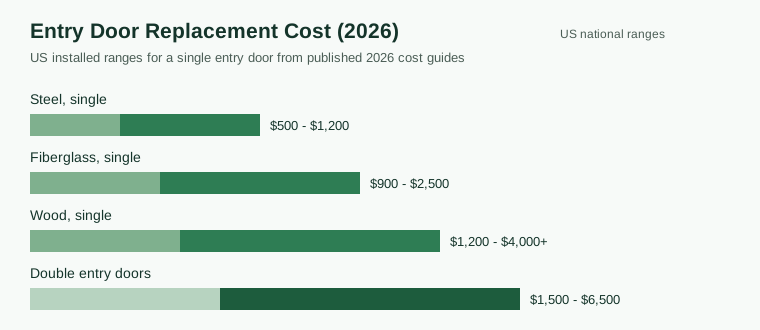
Material is the largest single choice in the quote. It sets the door price, the maintenance cycle and, within limits, the insulation value. Published 2026 door-only prices for a single prehung door (frame included, installation extra) run as follows:
| Material | Door-only price, single | Installed guide, US | What decides it |
|---|---|---|---|
| Steel | $200 to $600 | $500 to $1,200 | Lowest entry price, strong security, needs its finish maintained |
| Fiberglass | $300 to $2,000 | $900 to $2,500 | Best insulation and lowest upkeep, woodgrain finishes at the top |
| Solid wood | $500 to $2,500 | $1,200 to $4,000 plus | Appearance and heritage fit, highest upkeep |
The US installed column is built from the two national datasets above: HomeGuide's single-door band of $500 to $2,500 or more (basic steel near the bottom, wood and fiberglass toward $2,000 for the door) and Angi's exterior-door installed range of $550 to $2,000 with a $1,218 average. The Ontario installer data in section 8 lands in the same shape after currency: steel $800 to $1,200 installed, fiberglass $1,100 to $2,000, wood $1,500 to $4,000 or more. Where a dealer quotes well above these bands, the difference should be visible in the glass, the sidelights, the hardware or the framing, line by line.
Steel is the value and security pick. An insulated steel door carries a foam core between steel skins, resists forced entry well and holds paint. Its limits are physical. It dents rather than flexes, the finish must be kept intact where the skin is scratched or rust begins, and a steel slab conducts at its edges unless the design includes a real thermal break. Steel suits a protected entry, a rental or a tight budget where the door will be painted and left alone.
Fiberglass is the default recommendation from cold-climate installers for a reason that shows up in service records rather than brochures. It does not rust, dents far less readily than steel, moves less with temperature swings and can be moulded with a convincing wood grain. The insulation is at least as good as steel and the maintenance cycle is the shortest of the three: no rust treatment and no refinishing schedule. The premium over a comparable steel door runs a few hundred dollars at door level and buys the longer service interval.
Wood is an appearance decision and should be priced as one. A solid wood door feels substantial, suits heritage housing and can be repaired and refinished for decades. It also moves with humidity, needs refinishing every few years on sun and rain exposed entries (three to five years is the interval Canadian installers cite for exposed southern and western faces), and insulates the least of the three while sound. Buy wood for a covered entry you intend to maintain. On an unprotected, weather-beaten opening it is the most expensive way to own a door that ages fastest.
Glass cuts across all three rows. Decorative glass adds $100 to $1,000 or more to the door price in published guidance, and the next section explains why it also changes the energy rating more than the material does.
4. Single, Double, Storm and Patio: The Configuration Ladder
Configuration moves the price as much as material. Published 2026 installed ranges by type:
| Configuration | Installed range | Notes |
|---|---|---|
| Single entry door | $500 to $2,500 | The standard swap priced throughout this guide |
| Double entry doors | $1,500 to $6,500 | Doors alone $1,200 to $5,000; 5 to 8 ft total width |
| Storm door, added | $185 to $1,100 | Angi average near $400; HomeGuide $400 to $1,100 |
| Screen door | $100 to $1,500 | Angi average near $300 |
| Sliding patio door | $950 to $5,600 | HomeGuide type table; Angi $1,200 to $4,500 |
| Fire-rated entry | $450 to $1,300 | Rating and material drive the price |
Two points matter for energy readers. A double door doubles the perimeter that must seal and adds a centre seam that is the first place to draft as the system ages, so its installed price buys more sealing labour as well as more door. And a storm door is a buffer, not insulation. On an older, sound door in a windy exposure it cuts drafts and protects the finish. On a modern foam-core door the added energy saving is small, and the $450 to $900 installed figure Canadian installers quote should be justified as protection and ventilation rather than payback.
Oversizing is the quiet budget line. Standard single doors are built around a 36 by 80 inch slab. Moving to a larger or non-standard opening adds hundreds in published guidance before any material upgrade, and reshaping a rough opening or cutting a new one converts a door job into structural carpentry with its own permit and header costs.
5. Prehung vs Slab, and Why the Frame Decides the Labour
There are two ways to buy the door itself, and the choice interacts with the frame diagnosis in section 1.
Prehung means the slab arrives hinged in its frame, with weatherstripping fitted. Angi prices prehung doors at $300 to $2,400. Installation runs 2 to 4 hours in HomeGuide's comparison, because the crew sets one square unit, shims it and fastens it. Prehung is the standard choice where the frame is being replaced or its condition is unknown, because a slab fitted to a tired frame inherits every fault the frame carries.
Slab means the door alone, at $200 to $1,800 in Angi pricing. The slab is cheaper to buy and slower to hang at 3 to 8 hours, because hinges must be mortised and the slab fitted to an existing opening that is rarely perfectly square. Slab replacement makes sense only where the frame is verified sound, square and worth keeping.
Frame condition then sets the labour band. Angi prices work in an existing sound jamb or frame at $60 to $500, a new frame and jamb at $200 to $650, and changing the whole door system at $800 to $1,000. HomeGuide puts basic single-door labour at $300 to $500 where no framing issues arise, against a full labour span of under $300 to over $1,500 across job types. That is the arithmetic behind the $500 to $2,500 range. The same door can be a $600 job in a sound opening and a $1,900 job in a rotted one, with both figures describing real work.
Treat any quote that prices labour before anyone has probed the sill and measured the opening as provisional. The measurement visit is where the frame verdict should be recorded, in writing, opening by opening.
6. The Energy Side: U-Factor, Glass Share and Air Leakage
A door's energy performance is rated the same way a window's is, through the NFRC label, and ENERGY STAR Version 7.0 sets the bars a certified door must clear. The pattern in those bars is the useful lesson. In northern climate zones, an opaque door (no glass) must reach a U-factor of 0.17 or lower. A door that is half glass or less may qualify at 0.25 or lower, and a door that is more than half glass faces the same 0.25 ceiling but must also meet a solar heat gain condition, because most of its area is now glazing. Southern zones relax the insulation requirement and tighten the solar requirement instead. Swinging doors must also hold air leakage to 0.5 cubic feet per minute per square foot or less.
Read those three numbers as a ranking that no marketing term overrides:
Glass share dominates. An insulated slab is mostly foam core. Every square foot of glass added trades foam for glazing, and even good double glazing insulates far less than the slab it replaces. A half-lite fiberglass door will lose more heat than an opaque steel door, which is the opposite of the ranking most buyers expect from the material names. Choose the glass for daylight and appearance, and count its energy cost knowingly.
The slab beats the frame on paper and loses to it in the house. The U-factor rates the product as tested. The installed result depends on the perimeter seal, the threshold contact and the frame insulation that no label measures. A certified door hung with gaps at the sill will draft more than an uncertified door sealed properly, which is why installation scope (section 2) includes the threshold and weatherstripping lines and why section 1 starts with a $10 to $40 seal.
Insulated beats solid, by a wide margin. US Department of Energy guidance puts foam-core steel and fiberglass doors at roughly R-5 to R-6 for a typical 1.5 inch door without glass, against roughly one-fifth of that insulating value for a solid wood door of the same thickness. Material still matters here, but as a step from wood to insulated construction, not as a contest between steel and fiberglass, which sit close together.
Climate points the glass decision. In heating climates, a north-facing entry gains little from door glass and loses heat through it all winter, so a small lite or an opaque slab is the disciplined pick. In cooling climates, solar heat gain through a west-facing glass door is a cooling load, and the ENERGY STAR southern limits exist for that case. Either way, low-E glazing and insulated glass units are the options that narrow the penalty where glass is wanted.
7. Ownership Cost: Maintenance, Service Life and the Repair Ledger
Installed price is the first bill. The following ones arrive on a schedule that differs sharply by material.
Steel needs its finish inspected and touched up where it chips, because the skin rusts once the coating is breached. Fiberglass needs cleaning and little else, which is why Canadian installers place it at 25 to 30 plus years of service against 20 to 30 years for a maintained steel door. Wood needs refinishing on the three to five year cycle noted above on exposed faces, and a wood door whose finish lapses degrades from the surface inward, so the maintenance is not optional spending.
Hardware wears on its own cycle regardless of slab material. Published repair and parts pricing puts weatherstripping at $10 to $40, a threshold at $20 to $50, hinges at $10 to $50 and locksets at $50 to $300, with professional frame and door repair visits priced per job. A door that is serviced (seals renewed, hinges tightened, threshold adjusted) holds its air leakage rating far longer than a door left alone, and the service items cost less together than one winter of heating through a failed seal is worth worrying about precisely. Budget the small lines annually and the door keeps the performance you paid for.
One ownership risk deserves naming. A premium slab installed in a frame that was left marginal will rack, bind and wear its weatherstripping unevenly within a few seasons, presenting as a door problem that is actually a frame problem. That is the practical cost of skipping the section 5 frame decision, and it is why installers warranty product and labour separately: the slab warranty does not cover a setting fault, and the labour warranty does not cover a slab defect. Get both terms in writing.
8. Canada Pricing
Canadian pricing runs above US pricing and should be budgeted in Canadian dollars, not converted from a US table. The clearest published Canadian breakdown, from an Ontario installer writing for 2026, puts a standard single exterior door at $800 to $2,500 installed, split at $800 to $1,200 for a basic steel entry, $1,100 to $2,000 for fiberglass and $1,500 to $4,000 or more for wood. A second Ontario pricing guide places typical Canadian entry projects between roughly $2,000 and $6,000 once glass design, sidelights and hardware are added, with custom work above that band. Use the installer band for a plain single-door swap and the wider band where sidelights, large glass or custom sizing enter the job.
The Canadian differences that matter are climatic rather than commercial. Freeze-thaw cycling works on frames and thresholds harder than steady cold does, and rot in north-facing and snow-collecting entries is a routine finding, with minor frame repair at $200 to $400 and full frame replacement reaching $600 to $1,000 in published Ontario figures. Fiberglass earns its premium in that cycle because it does not rust and moves less as temperatures swing. Energy ratings transfer directly: ENERGY STAR Canada rates the whole assembly, and installers in the Greater Toronto Area cite an Energy Rating of 25 or higher as a practical target for a climate zone 6 entry, with fiberglass assemblies typically rating highest, steel close behind on plain slabs and wood lowest per dollar.
On incentives, hold the same discipline as the window market. The older federal Greener Homes amounts have closed to new applicants, and provincial and utility programs change by program year. Confirm that a named program is open, that the door model is on its eligible list and whether a pre-retrofit assessment is required before any work starts. A rebate shown without a program name is a discount invented for the quote.
9. The Payback Check
A new entry door rarely pays for itself on energy savings alone, and the reason is arithmetic rather than opinion. One door is about 20 square feet of envelope. Even a large improvement across that area (from a leaky, uninsulated door to a sealed, insulated one) moves a small share of a whole-house heating bill that is driven by walls, attic, windows and air leakage everywhere else.
Run the scale with a plainly labelled hypothetical. Suppose a home spends $2,000 a year on heating (hypothetical, for illustration) and suppose a failed, drafty door accounts for an unusually large 3 percent of that loss, or $60 a year. A new, well-sealed insulated door that halves the door's share saves about $30 a year. Against a $1,218 average installed cost, energy alone repays the job in roughly four decades, which is longer than the door's hardware cycle. Where the old unit is a sound, insulated door with a worn seal, the saving is smaller still, and the $10 to $40 weatherstripping fix captures most of it.
Buy the door for the reasons that do repay: a slab or frame that has failed, security hardware anchoring into sound material again, an entry that closes and seals without force, daylight where glass was wanted, and the end of a refinishing cycle you no longer intend to keep. Count energy as a secondary return that is real in comfort terms (no draft at the entry, no cold slab radiating into the hall) and modest in dollar terms. Any salesperson booking a five-year energy payback on a single door is selling.
Sequence matters more than the single number. Air sealing across the whole envelope and attic insulation move far more heat per dollar than one door, and our air sealing guide for older homes and blown-in attic insulation cost guide price those jobs. Replace the door when the door has failed. Seal the house on the house's schedule.
10. DIY, Storm Doors and the Two Middle Options
DIY saves the labour share, which is $300 to $500 on a basic swap and more where a slab must be fitted. The work is within reach of an experienced homeowner for a prehung unit into a sound, square opening: set, shim, fasten, seal, trim. The failure modes are the ones professionals are paid to avoid: a frame set out of square that binds from the first week, a threshold sealed poorly enough to admit water under the flooring, and weatherstripping compressed unevenly so the door seals at the hinges and drafts at the latch. A slab-only hang into an older opening is the harder version of the job and the poorer DIY candidate. Where the opening's condition is unknown, professional measurement alone is worth buying even if you hang the door yourself.
A storm door at $185 to $1,100 installed ($450 to $900 in Ontario figures) is the middle option where the primary door is sound but old. It adds a buffer air layer, takes the weather off the main door's finish and provides screened ventilation in summer. It does not turn a failed slab into a good one, and on a modern insulated door its energy contribution is small, per the DOE guidance cited above. Buy it for protection and ventilation on an exposed entry.
Weatherstripping and a new sweep at $10 to $40 in parts are the second middle option and the correct first move in most draft complaints (section 1). If new seals restore the door, the replacement budget stays intact for a job that needs it.
11. Quote Checklist
Get three written quotes against the same scope. Door quotes diverge on frame assumptions and hardware, so each quote should state:
- Door material, exact model and slab size, with glass share (opaque, half-lite or full-lite) stated
- NFRC U-factor and, in southern zones, solar heat gain rating for the assembly, not the glass alone
- Prehung system or slab only, and the frame verdict from measurement (sound, repair or replace) with the repair priced as its own line
- Hardware included or excluded: lockset, deadbolt, hinges and threshold, each named
- Sidelights, transom, painting or finishing, and permit, each stated or excluded
- Removal and disposal of the old door, included or priced
- Warranty split: product term, glass seal term where glass is present, and installation labour term, with who registers what
- Total price with taxes, payment schedule and lead time (custom doors run weeks; confirm the date in writing)
Red flags: a price quoted without measuring the opening, no frame condition recorded, a certified-performance claim with no NFRC numbers, an unnamed rebate subtracted from the total, and pressure to sign the same day. Compare the frame and hardware lines first. That is where cheap quotes hide their difference.
Frequently Asked Questions
How much does it cost to replace an entry door in 2026?
A single entry door runs $500 to $2,500 installed in the US, with Angi's 2026 national average at $1,218 inside a typical $498 to $1,961 band. Double doors run $1,500 to $6,500 or more installed. Ontario installer pricing for a standard single exterior door runs $800 to $2,500 installed in Canadian dollars, at $800 to $1,200 for steel, $1,100 to $2,000 for fiberglass and $1,500 to $4,000 or more for wood.
Which material is best for an entry door?
For most homes, fiberglass. It insulates as well as or better than steel, does not rust, moves less in temperature swings and carries the shortest maintenance cycle, at a door price of $300 to $2,000 against $200 to $600 for steel. Steel is the budget and security pick at $200 to $600 for the door. Wood at $500 to $2,500 for the door is an appearance choice that adds a refinishing cycle every three to five years on exposed entries.
Is a prehung door or a slab door cheaper?
The slab is cheaper to buy ($200 to $1,800 against $300 to $2,400 for prehung in Angi pricing) and slower to install (3 to 8 hours against 2 to 4). Prehung is the safer scope wherever the frame is being replaced or its condition is uncertain, because the unit arrives square with weatherstripping fitted. Slab replacement only pays where the existing frame is verified sound and square.
Do I need to replace the frame as well?
Only where the frame has failed. Work in a sound existing frame runs $60 to $500 in Angi data, a new frame and jamb runs $200 to $650, and changing the whole system runs $800 to $1,000. Probe the sill and frame bottoms for rot before deciding. Ontario installers price minor frame repair at $200 to $400 and full frame replacement at $600 to $1,000 where rot has spread.
How much energy does a new front door save?
Less than the sales pitch suggests. An insulated foam-core door insulates at roughly R-5 to R-6 against roughly one-fifth of that for a solid wood door, and glass share changes the rating more than material: ENERGY STAR requires a U-factor of 0.17 or lower for opaque doors in northern zones, against 0.25 or lower once glass is added. One door is about 20 square feet of envelope, so the whole-house saving is small. Buy for failure, security and comfort, and fix drafts first with $10 to $40 of weatherstripping.
What does a storm door add?
A storm door costs $185 to $1,100 installed (Angi average near $400; Ontario $450 to $900) and adds a protective buffer, finish protection and screened ventilation. On an older sound door in a windy exposure it cuts drafts noticeably. On a modern foam-core door the added energy saving is small, so justify it as protection rather than payback.
How long does entry door replacement take?
A prehung single door into a prepared opening takes 2 to 4 hours. A slab fitted to an existing opening takes 3 to 8 hours. Frame repair, sidelights or an opening change extend the job, and French or patio configurations commonly take a full day. Custom doors add manufacturing lead time of weeks before the install day.
Can I install an entry door myself?
A prehung unit into a sound, square opening is realistic DIY for an experienced homeowner, saving $300 to $500 of basic labour. The risks are a frame set out of square, a threshold sealed poorly enough to admit water, and unevenly compressed weatherstripping. Most manufacturers also tie full warranty terms to correct installation. A slab-only fit into an older opening is the harder job and the poorer DIY candidate.
What to Read Next
- Window Replacement Cost 2026 - the companion envelope project, priced per window with the same installed-scope discipline
- Triple Pane Window Cost 2026 - when the premium glass choice earns its price in cold climates
- Air Sealing Guide for Older Homes - the $10 to $40 fixes to make before any door or window budget is spent
- Window Condensation in Winter - how to tell a humidity problem from a failing glass unit before you buy
Sources and Verification
- HomeGuide How Much Does Front Door Replacement Cost? (2026 installed ranges by door type, dooronly prices by material, labour and hardware ranges drawn from HomeGuide project data)
- Angi How Much Does Door Installation Cost? (2026 national average from verified projects, installed ranges by style and material, frame and removal costs, updated September 2026)
- Custom Contracting Door Replacement Cost Ontario 2026 (Ontario installed ranges for steel, fibreglass and wood entry doors, frame rot repair and installation scope from a Canadian installer)
- ENERGY STAR Residential Windows, Doors and Skylights Version 7.0 specification (Ufactor and solar heat gain limits for doors by climate zone and glass share, with air leakage limits for swinging doors)
- U.S. Department of Energy guidance via Illinois Keep Warm Doors (insulated metal and fibreglass doors insulate far better than solid wood, the role of thermal breaks, weatherstripping and storm doors)
Editorial Review
EnergyBS Editorial Team
EnergyBS publishes practical homeowner guides. Important program, product, and cost claims should be checked against the linked source and local project documents before you commit to work.
Related Guides
View All ArticlesWindow Replacement Cost 2026: What Installation Really Costs
Replacing house windows in 2026 averages $517$800 per installed window in the US (C$600C$2,000 in Canada). This guide breaks down frame materials, insert vs. fullframe pricing, glass packages, overlooked costs, and a payback check with stated assumptions.
Air Sealing Guide for Old Homes 2026 Tool (Data & DIY)
Stop drafts and lower heating bills in centuryold homes. Learn the systematic topdown, bottomup approach to air sealing rim joists, attics, and chimneys without trapping moisture.
Winter Window Condensation 2026 Guide & Data
Use condensation location, outdoor temperature, indoor humidity, surface temperature, and room conditions to separate normal coldsnap fogging from failed glass, leaks, and mold risk.