Window Replacement Cost 2026: What Installation Really Costs
Replacing house windows in 2026 averages $517$800 per installed window in the US (C$600C$2,000 in Canada). This guide breaks down frame materials, insert vs. fullframe pricing, glass packages, overlooked costs, and an honest payback check.
Quick Checks
- 1Budget $517-$800 per installed window in the US in 2026 (C$600-C$2,000 in Canada); a typical whole-home project runs about $7,183 in the US survey data.
- 2Frame material is the biggest single price lever: vinyl averages $350-$800 installed, fiberglass $400-$1,500, and wood $600-$2,000 per window.
- 3An insert (pocket) replacement reuses the existing frame and costs far less than a full-frame replacement, which adds roughly 40%-100% for framing, trim, and finish work.
- 4Energy savings alone rarely pay for new windows quickly: ENERGY STAR puts the average bill reduction at up to 13% when replacing single-pane windows, so comfort, failed seals, and rot are usually the real reasons to replace.
- 5The federal 25C tax credit expired for equipment placed in service after December 31, 2025, so check state, utility, and provincial rebates (Ontario pays $100 per rough opening) before signing.
Window Replacement Cost 2026: What Installation Really Costs
By EnergyBS Editorial Team | October 2, 2026
The Short Answer: What Window Replacement Costs
Short Answer: In 2026, replacing a window typically costs $517 to $800 per installed window in the United States. A 2026 survey of 1,000 window customers put the average at $517 per installed window and about $7,183 for a typical whole project, while contractor cost data from Fixr averages $800 per window with a typical range of $450 to $1,200 and a full spread of $300 to $3,000 depending on size, style, frame, and glass. In Canada, published 2026 pricing runs C$600 to C$2,000 per window installed, with premium or custom units reaching C$3,000 to C$4,000 or more.
The two US averages are not in conflict. They measure different mixes of work. Survey data skews toward standard vinyl insert replacements bought in multi-window projects, while contractor cost databases include more full-frame work, larger openings, and premium materials. Your project will land somewhere in that band based on four decisions you control: frame material, window style, glass package, and whether the existing frame stays or goes. This guide prices each one, then runs an honest energy-payback check, because the savings math on windows is widely oversold.
1. What the Installed Price Actually Covers
A per-window installed price is a bundle, and comparing quotes only works if each bundle contains the same things. A complete installed price normally covers:
- The window unit itself: frame, sash, insulated glass, hardware, screen, and factory finish.
- Removal and disposal of the old window.
- Labour to set, shim, fasten, insulate the frame cavity, and seal the unit.
- Interior and exterior trim and caulking, plus touch-up on surrounding surfaces when included.
- Permits, haul-away, and lead-safe preparation where the home and local rules require them.
What is often not in the headline price: repairing rotted framing or water-damaged rough openings, structural changes to enlarge an opening, new interior casing or exterior brickmould, blinds and shutters, and any permit fee billed as a pass-through. A quote that looks $150 per window cheaper frequently just moved two of those items off the page. Section 9 lists the hidden-cost traps to ask about directly.
One more line item matters in 2026: code. Bedrooms need egress-sized operable windows in most jurisdictions, and tempered (safety) glass is required near doors, tubs, stairs, and within certain distances of the floor. If an old opening does not meet current code, bringing it into compliance can mean a larger or different unit than the one coming out. A good contractor flags this during measurement, not on install day.
2. Cost by Frame Material: The Biggest Price Lever
Frame material moves the price more than any other single choice. The table below uses published 2026 contractor cost data for installed per-window pricing:
| Frame material | Typical installed cost per window | Practical notes |
|---|---|---|
| Vinyl | $350-$800 (average about $575) | Lowest cost, low maintenance, the default for most replacement projects |
| Aluminum | $200-$800 | Slim profiles; weaker thermal performance unless thermally broken |
| Fiberglass | $400-$1,500 | Strong, stable in extreme temperatures, paintable, low maintenance |
| Composite | $300-$2,500 | Wood-fibre and polymer blends; price varies widely by brand |
| Wood / wood-clad | $600-$2,000 | Best traditional appearance; highest upkeep and highest price |
The survey data shows the same ordering at the project level: aluminum averaged $453 per installed window and fiberglass $564 in the 2026 customer survey, with vinyl projects dominating the lower half of the market. Material also decides maintenance reality. Vinyl and fiberglass are effectively wash-and-done. Wood needs exterior paint or cladding care on a cycle, and that upkeep cost belongs in any honest 20-year comparison, even though it never appears on the install quote.
For most homes replacing failed or drafty windows on a budget, vinyl is the rational default. Fiberglass earns its premium in very cold or very hot climates where vinyl can flex and seals work harder, and in homes where the owner expects to keep the windows 30 years or more. Wood is an appearance and heritage decision: buy it because the house needs it visually, and price the maintenance in.
3. Cost by Window Style
Style drives both the unit price and the labour. Standard sizes in standard openings sit at the bottom of every price table; anything that moves, bends, or bows costs more.
| Window style | Typical installed range (US) | Why it prices there |
|---|---|---|
| Picture / fixed | $250-$800 | No moving parts; cheapest glass per square foot |
| Single-hung / double-hung | $300-$900 | The standard replacement unit; double-hung costs slightly more |
| Casement | $350-$1,000 (up to $2,000 in fiberglass or wood) | Crank hardware and a tighter compression seal |
| Sliding | $300-$900 | Simple mechanics, common in mid-century homes |
| Awning / hopper | $250-$800 | Small units, often basements and bathrooms |
| Bay / bow | $1,500-$4,500+ | Multiple units, one structural opening, roof and support work |
Two budget rules follow from the table. First, replacing like with like in the same opening is the cheapest project you can buy; changing style or size converts a window job into a carpentry job. Second, the one big feature window usually costs as much as four or five standard units, so a 15-window quote with a bay is not comparable to a 15-window quote without one. Ask for the feature units to be priced as separate lines.
4. Insert vs. Full-Frame: The Decision That Halves or Doubles Labour
There are two ways to put a new window in an old hole, and the difference is the largest labour swing in the project.
Insert (pocket) replacement. The old frame stays. The installer removes the sashes and stops, sets a new unit inside the existing frame, insulates the cavity, and caps or trims the exterior. This only works when the existing frame and sill are sound, square, and free of rot. It is faster, less disruptive, and preserves interior trim, which is why it anchors the low end of per-window pricing.
Full-frame replacement. Everything comes out to the rough opening: frame, sill, trim, and sometimes surrounding material. The crew can inspect and repair the opening, flash it properly, and restore full glass area (an insert loses a few inches of glass to the frame-within-a-frame). Published 2026 guidance puts full-frame work at roughly 40% to 100% more than the same window as an insert, once framing, trim, and finish work are included.
Choose full-frame when frames are rotted, out of square, leaking into the wall, or when you are changing size or style. Choose inserts when frames are solid and the problem is the glass and sash: failed seals, fogged units, drafty single-pane sashes, or worn hardware. Replacing a full frame just because a salesperson prefers it is the most common way window projects overspend. If a quote insists on full-frame, ask to see the rot or damage that requires it, opening by opening.
If your frames are sound and only the glass performance disappoints, also price the middle path before you commit: our interior storm windows vs. replacement guide covers when a storm panel solves the comfort problem for a fraction of replacement cost.
5. Cost by Project Size: What Whole Homes Pay
Per-window pricing falls as the count rises, because setup, measurement, and delivery spread across more units. Published 2026 contractor ranges by project size:
| Number of windows | Total installed range (US) | Notes |
|---|---|---|
| 1 | $450-$1,200 | Single-window jobs carry minimum charges; expect the top of the range |
| 5-10 | $2,250-$12,000 | Typical partial-home project (worst rooms first) |
| 11-20 | $4,950-$24,000 | Most whole-home replacements land here |
| 21-25 | $9,450-$30,000 | Larger homes; volume pricing matters most |
The survey average tells the same story from the buyer's side: about $7,183 for a typical project. Vinyl-only math at the published $575 average vinyl window puts 10 windows at $3,500-$8,000 and 20 windows at $7,350-$20,000 depending on glass and options. The practical takeaway is sequencing. If the budget will not cover the whole house, replace the failed and north-facing units first, and keep the order on one contract so the per-window price is locked across phases. Splitting the job into one-window service calls is the most expensive way to buy windows.
6. The Glass Package: Where Performance Money Goes
The frame holds the glass; the glass does the thermal work. Published 2026 per-window costs by glass type:
| Glass package | Typical installed cost per window | What it buys |
|---|---|---|
| Single-pane | $200-$900 | Rarely a sensible new purchase; minimal insulation |
| Double-pane, clear | $250-$1,100 | Baseline insulated unit |
| Double-pane, low-E with argon | Add roughly 10%-15% over clear | Cuts window energy loss by about 30%-50% per DOE guidance |
| Triple-pane | $500-$1,500+ | Best insulation and noise control; heaviest sash |
The U.S. Department of Energy estimates that heat gain and loss through windows account for 25% to 30% of residential heating and cooling energy use, which is why the glass package matters more than frame fashion. Low-E coatings are the highest-value option on the list: DOE guidance puts the premium at roughly 10%-15% over regular glass for a 30%-50% reduction in window energy loss. Argon fill is a modest, worthwhile add in cold climates. Krypton suits thin triple-pane cavities and prices accordingly.
For cold-climate homes considering the triple-pane jump, our triple pane window cost breakdown prices the premium honestly, including the long energy payback. Climate matching matters more than maximum specs: southern homes should weigh solar heat gain control, northern homes should weigh insulation value, and both should check the NFRC label rather than marketing glass names.
7. The Honest Payback Check: Do New Windows Pay for Themselves?
Usually not on energy savings alone, and any salesperson who promises a five-year payback from window savings is selling, not calculating. The credible numbers:
- ENERGY STAR estimates replacing single-pane windows with certified models lowers household energy bills by an average of up to 13% nationwide, roughly $101-$583 per year for single-pane replacements and $27-$197 per year when replacing double-pane windows.
- DOE guidance puts ENERGY STAR window savings at 7%-15% or more on annual household energy bills depending on region and the window being replaced.
Run the math on a clearly labeled hypothetical example. Suppose a home spends $2,400 a year on heating and cooling (hypothetical, for illustration). A 13% reduction is about $312 a year. Against a $7,183 typical project, that is a simple payback of roughly 23 years from energy savings alone, before counting any resale, comfort, or avoided-repair value. Replace double-pane windows instead, and the same illustration at $27-$197 a year stretches far longer. Windows are a 20- to 40-year product bought primarily for failed seals, rot, drafts, noise, condensation, and comfort. Energy savings are a real but secondary dividend.
That does not make the energy angle useless. It makes order of operations important. Air leaks around old frames often cost more heat than the glass itself, which is why our air sealing guide for old homes and insulation types and R-value comparison belong ahead of windows in most retrofit queues. If you do replace windows, the full value case includes comfort at the glass in winter, quieter rooms, working hardware, and the resale credit: remodeling cost-versus-value data for vinyl window replacement has recently returned roughly three quarters of project cost at resale. Treat that as a market estimate that varies by region, not a promise.
8. Canada Pricing and Rebates in 2026
Canadian homeowners pay more per opening and should budget separately. Published 2026 Canadian pricing runs C$600 to C$2,000 per window installed, with premium or custom windows at C$3,000 to C$4,000 or more. Toronto-area labour commonly runs 15%-25% above smaller Ontario cities, and most full-home projects (10-15 windows) land between C$12,000 and C$18,000, with basic vinyl retrofits starting near C$8,000 and premium full-frame work exceeding C$25,000.
On incentives, be careful which program year a website is quoting:
- Ontario Home Renovation Savings Program: $100 per rough opening for ENERGY STAR certified windows, with program deadlines applying (published program material sets a late-November 2026 completion and application deadline). A rough opening is the framed hole, so a three-unit bay counts once, not three times.
- Federal Greener Homes programs: the older federal grant ($125 per ENERGY STAR opening, $250 for Most Efficient) has closed to new applicants, and the interest-free Greener Homes Loan has also wound down. Pages still advertising those amounts as current are out of date.
- Provincial and utility programs (for example BC programs at $100 per window or door with a per-home cap) change by program year and sometimes exclude specific municipalities. Confirm eligibility, approved-product lists, and whether a pre-retrofit energy assessment is required before work starts, because several programs deny claims filed after installation.
Contractors quoting "rebate-included" prices should show the rebate as a separate line with the program named. If the program is closed, the discount is imaginary.
9. overlooked costs That Blow Up Window Budgets
The quote is the floor, not the ceiling. The common additions:
- Rot and water damage repair. Once a full-frame unit comes out, damaged sills, framing, or sheathing must be fixed before the new unit goes in. This is legitimate work, but it should be priced per opening with photos, not as a blank change order.
- Lead-safe work. Homes built before 1978 can trigger lead-paint rules that add preparation and containment cost per opening.
- Egress and tempered-glass upgrades. Bringing a bedroom or bathroom window up to current code can change the unit size or glass specification.
- Trim, casing, and exterior capping. New casing, brickmould, and aluminum capping are sometimes quoted as options after the base price hooks you.
- Permits and disposal fees billed as pass-throughs.
- Custom sizes, colours, and grids. Non-standard anything typically adds 10%-25% per published contractor guidance, and extends lead times.
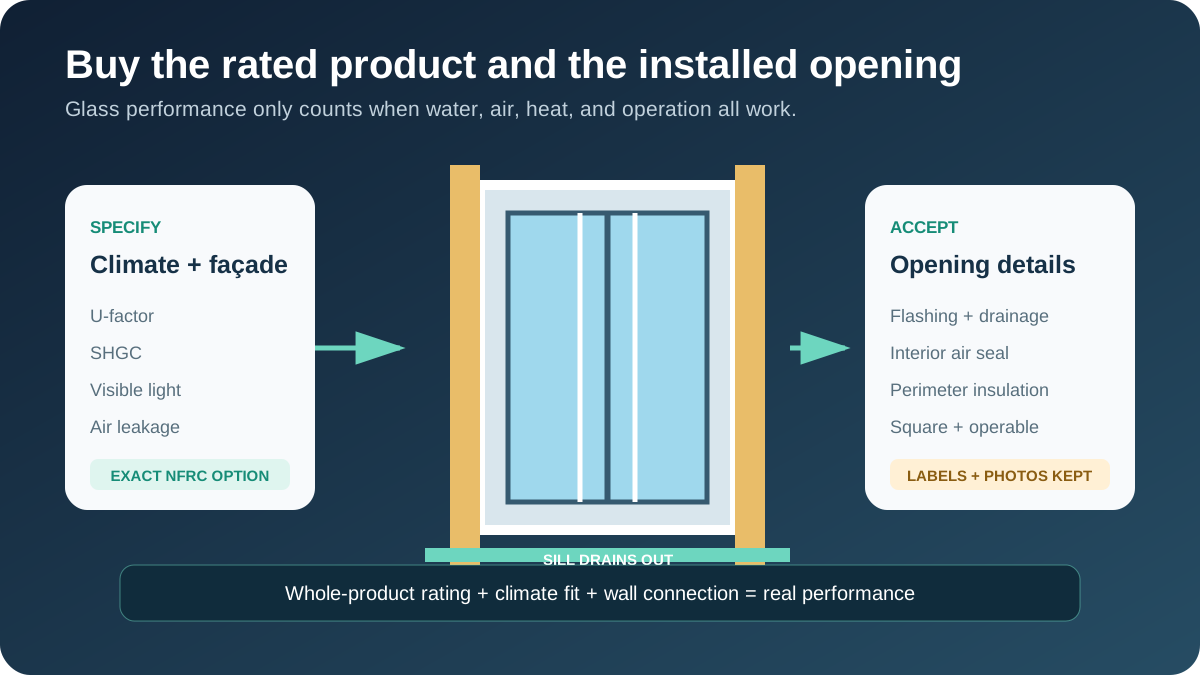
The defence is a written scope: unit brand and model, glass package with NFRC values, installation type per opening, trim included or excluded, permit and disposal responsibility, and warranty terms split into product, glass seal, and labour. Get that from three contractors and the low quote usually explains itself.
10. Repair or Replace: When Not to Buy New Windows
Replacement is not always the disciplined spend. Repair first when:
- One window has a failed seal or cracked pane but the frame and sash are sound: glass-unit replacement or a sash kit costs far less than a new window.
- Hardware fails (cranks, balances, locks) on otherwise tight windows.
- Drafts trace to weatherstripping or caulk, not the window itself.
- The frame is solid and the complaint is comfort at the glass: price storm windows or interior panels first, per the guide linked in section 4.
Replace when frames are rotted or out of square, seals have failed across most units, sashes no longer operate, or condensation is appearing inside the wall rather than on the glass. Our window condensation guide helps separate a glass problem from a humidity problem before you spend anything, because new windows installed into a humid house can still sweat.
11. Incentives in the US for 2026
Budget as if no federal cheque is coming. The federal Energy Efficient Home Improvement Credit (Section 25C), which previously covered qualifying windows at 30% up to a $600 window cap, ended for equipment placed in service after December 31, 2025. For a 2026 installation, do not let a quote subtract a federal window credit unless a tax professional confirms a current provision applies to you.
What can still apply, depending on address and program year: state energy-office rebates, utility programs for ENERGY STAR Most Efficient windows, and manufacturer or dealer promotions (usually seasonal). Most require certified products and pre-approval. Verify the program is open for 2026 before you sign, and keep NFRC ratings and invoices with your records.
12. Quote Checklist: Compare Three Quotes Fairly
- Exact manufacturer, series, and model for every unit, with frame material and colour.
- Glass package per window: panes, low-E coating, gas fill, and the NFRC U-factor and solar heat gain numbers.
- Installation type stated per opening (insert or full-frame) with the reason for any full-frame recommendation.
- What is included: removal, disposal, interior trim, exterior capping, permits, and any rot-repair allowance with a per-opening price.
- Warranty terms separated: product, insulated-glass seal failure, and labour, plus who registers what.
- Total price with taxes, payment schedule, and lead time. Never pay in full before the windows are installed and operating.
Red flags: a per-window price quoted before measuring, no NFRC numbers, pressure to sign the same day, a rental or rent-to-own agreement presented as a purchase, or a rebate line with no program named. Shoulder seasons (spring and fall) usually get the most careful measurements and the shortest waits.
Frequently Asked Questions (FAQ)
How much does it cost to replace windows in 2026?
A 2026 survey of 1,000 US window customers averaged $517 per installed window and about $7,183 per project. Contractor cost data averages $800 per window with a typical range of $450-$1,200. Canada runs C$600-C$2,000 per window installed. Material, style, glass, and install type decide where your project lands.
What is the cheapest way to replace windows?
Standard-size vinyl insert replacements, bought as a multi-window project. Vinyl averages about $575 per installed window in contractor data, and inserts avoid the framing and trim cost of full-frame work. Replacing only the failed units first, on one contract, keeps the per-window price down.
Is full-frame replacement worth the extra cost?
Only when the existing frame earns it: rot, water damage, warping, style or size changes, or a leaking opening that needs proper flashing. Published guidance puts full-frame at roughly 40%-100% more than an insert for the same window. Sound frames should stay.
Do new windows save enough energy to pay for themselves?
On energy alone, usually not quickly. ENERGY STAR estimates up to 13% lower household energy bills when replacing single-pane windows ($101-$583 a year), and $27-$197 a year replacing double-pane. Buy windows for failure, comfort, and noise; count energy savings as a secondary return.
Are there window rebates or tax credits in 2026?
The US federal 25C window credit expired for installations after December 31, 2025. Ontario's Home Renovation Savings Program pays $100 per rough opening for ENERGY STAR windows with a late-November 2026 deadline. The older federal Canada Greener Homes amounts have closed to new applicants. State, provincial, and utility programs remain, so verify current eligibility before signing.
How long does a whole-home window replacement take?
Measurement and manufacturing usually take several weeks after signing, depending on how custom the order is. Installation itself commonly runs a day or two for a typical home once the units arrive, with full-frame work on the longer end. Confirm lead time and install days in writing.
Should I choose double-pane or triple-pane?
Double-pane low-E with argon is the value standard for most homes. Triple-pane earns its premium (about $500-$1,500+ per window installed) in cold climates, on noisy streets, and where winter comfort at the glass matters most. Our triple pane cost breakdown runs the payback honestly for cold-climate homes.
What to Read Next
- Triple Pane Window Replacement Cost Breakdown 2026 - when the triple-pane premium makes sense
- Window Replacement ROI by Climate Zone - how climate changes the savings math
- Interior Storm Windows vs. Replacement - the cheaper fix when frames are sound
- Air Sealing Guide for Old Homes - fix the leaks around windows before replacing them
- Blown-In Attic Insulation Cost 2026 - the retrofit that usually pays back faster than windows
Sources and Verification
- This Old House Window Replacement Cost (2026): 2026 survey of 1,000 window customers, average $517 per installed window and $7,183 per project
- Fixr How Much Does Window Replacement Cost in 2026? Average $800 per window, typical range $450$1,200 per window
- U.S. Department of Energy Consumer Guide to EnergyEfficient Windows: windows account for 25%30% of residential heating and cooling energy use; ENERGY STAR upgrades can save 7%15% or more on annual household energy bills
- Magic Window Window Replacement Cost in Canada: 2026 Price Guide: C$600C$2,000 per window installed in Canada
Editorial Review
EnergyBS Editorial Team
EnergyBS publishes practical homeowner guides. Important program, product, and cost claims should be checked against the linked source and local project documents before you commit to work.
Related Guides
View All ArticlesWindow Replacement ROI by Climate 2026 Tool (Analysis)
Compare window repair, inserts, fullframe replacement, and storm windows using exact NFRC ratings, climate, orientation, air and water leakage, installed scope, modeled energy, comfort, maintenance, incentives, and low/base/high payback.
Heat Pump Sizing Guide
A homeownerfocused guide to Manual J loads, Manual S equipment selection, coldweather capacity, balance points, duct constraints, and the documents a defensible heatpump quote should include.
Ductless MiniSplit Head Placement 2026 Tool
A homeowner planning method for locating ductless indoor units by room load, air throw, doors, sensors, noise, condensate, line routes, service access, and wholehome comfort not wall convenience alone.