EnergyBS
    Lower bills

    Ohio Electricity Rates: Price to Compare by Utility and How Choice Works

    Ohio households paid an average of 19.38 cents per kWh in August 2026, 6.7% above the 18.16-cent U.S. average and 10.4% above August 2025 (EIA). The supply price, called the price to compare, is 10.49 cents at Duke Energy Ohio, 10.86 at AES Ohio, 11.07 at Ohio Edison and 11.26 at Toledo Edison for the current period, and most of them reset again on January 1 or December 1.

    EnergyBS Editorial Team14 sources13 min read

    Direct Answer

    Ohio households paid an average of 19.38 cents per kWh in August 2026, 6.7% above the 18.16-cent U.S. average and 10.4% above August 2025 (EIA). The supply price, called the price to compare, is 10.49 cents at Duke Energy Ohio, 10.86 at AES Ohio, 11.07 at Ohio Edison and 11.26...

    Ohio Electricity Rates: Price to Compare by Utility and How Choice Works

    Quick Checks

    • 1Your price to compare is printed on your bill below the total amount due. A supplier only saves you money if its price per kWh is lower, for the same usage, and stays lower after any introductory term.
    • 2Ohio's six electric utilities do not reset on the same day: Duke Energy Ohio changes monthly, AEP Ohio and the three FirstEnergy utilities in several steps a year (five periods in 2026), and AES Ohio once a year on June 1.
    • 3Compare offers on the Public Utilities Commission of Ohio's Energy Choice Ohio site (Apples to Apples), and check for early termination fees, which an aggregation notice must disclose.
    • 4If your city or township runs opt-out aggregation, read the mailed notice: the response window is generally 14 to 21 days, and you get 7 more days from the enrollment notice's postmark to rescind without penalty.
    • 5On 1,000 kWh a month, the supply price in the current period runs from $104.90 at Duke Energy Ohio to $112.60 at Toledo Edison. The delivery bill comes on top, and two utilities have 2027 distribution increases pending.
    • 6Duke Energy Ohio's request would add about $8.32 a month for a typical customer, and FirstEnergy's would add $4.26 to $5.30 a month for each of three years at 1,000 kWh; both have public hearings in December 2026.
    On this page(11 sections)Show
    1. Numbers checked November 23, 2026
    2. What is each Ohio utility charging for supply in late 2026?
    3. Why do the six utilities reset on different schedules?
    4. What does 1,000 kWh of supply cost at each utility?
    5. How does Energy Choice Ohio's Apples to Apples work?
    6. How does opt-out aggregation work in Ohio?
    7. What do the 2027 distribution cases add to bills?
    8. Why is Ohio above the national average?
    9. Mistakes to avoid when shopping
    10. Frequently Asked Questions
    11. Related Reading

    By EnergyBS Editorial Team | Updated November 23, 2026

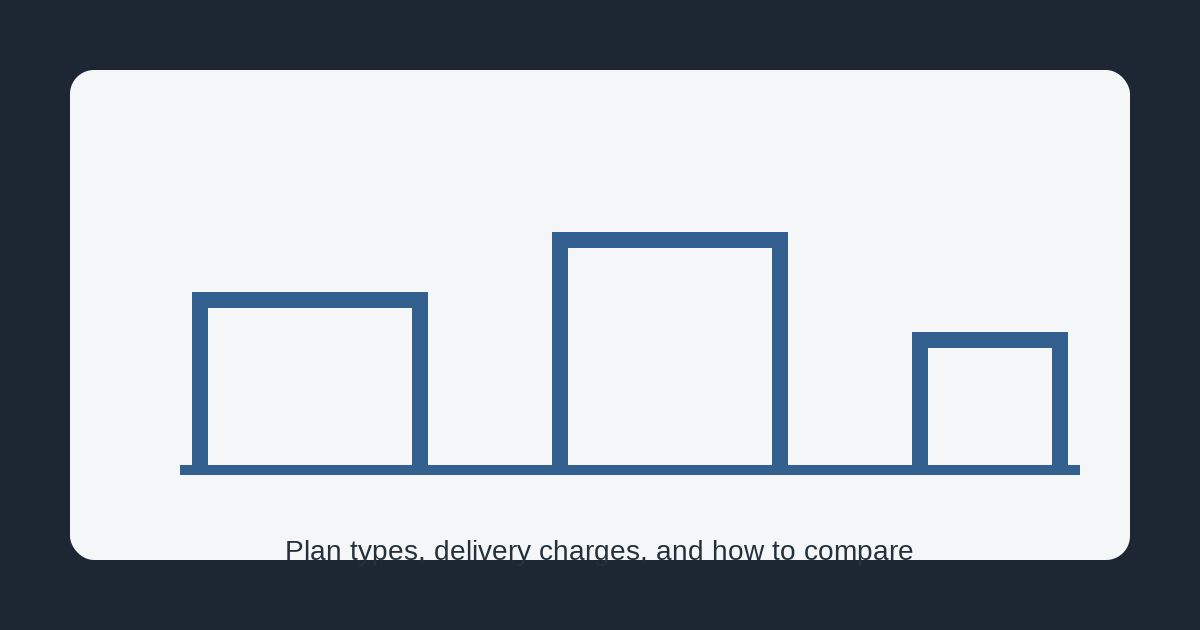
    Ohio's utilities charge between 10.49 and 11.26 cents per kilowatt-hour for supply, a figure Ohio calls the price to compare: 10.49 at Duke Energy Ohio, 10.86 at AES Ohio, 10.97 at AEP Ohio as charted, 11.07 at Ohio Edison, 11.23 at The Illuminating Company and 11.26 at Toledo Edison. Supply is part of the 19.38 cents Ohio households paid on average in August 2026, which is 6.7% above the 18.16-cent U.S. average and 10.4% above August 2025, according to the Energy Information Administration (EIA) Electric Power Monthly, Table 5.6.A.

    Ohio is one of the states where you can buy supply from a certified company instead of your utility, and every utility's price to compare is the number a seller has to beat. The catch is the calendar: six utilities, three reset rhythms, and several changes before January 1, 2027. Our guide to reading your electric bill covers the bill layout, and the Bills hub lists other states. Ohio's neighbor to the east has a different arrangement, which our Pennsylvania guide lays out.

    Numbers checked November 23, 2026

    • Ohio average residential price, August 2026: 19.38 cents/kWh (17.55 in August 2025). U.S.: 18.16 (EIA Table 5.6.A, checked November 23, 2026).
    • Price to compare, October to December 2026: Ohio Edison 11.07, Illuminating Company 11.23, Toledo Edison 11.26 cents/kWh (Public Utilities Commission of Ohio historical charts, checked November 23, 2026).
    • Duke Energy Ohio, October and November 2026: 10.49 cents/kWh. AES Ohio, June 1, 2026 to May 31, 2027: 10.86 (same source, checked November 23, 2026).
    • Duke Energy Ohio's pending distribution request: 38% on the distribution line, about $8.32 a month (Ohio Consumers' Counsel, checked November 23, 2026).

    Advertisement

    What is each Ohio utility charging for supply in late 2026?

    Between 10.49 and 11.26 cents per kWh, depending on the utility, and every one of them is higher than a year ago. The Public Utilities Commission of Ohio (PUCO) keeps a historical price-to-compare chart for each utility; the 2026 rows are below, with the same quarter of 2025 for comparison.

    Utility Jan to Mar 2026 Apr to May June Jul to Sep Oct to Dec 2026 Oct to Dec 2025
    Ohio Edison 9.33 9.70 10.83 10.92 11.07 9.11
    Illuminating Company 9.50 9.88 11.11 11.16 11.23 9.16
    Toledo Edison 9.69 9.99 11.00 11.10 11.26 9.43
    AEP Ohio (Ohio Power Company) 10.65 9.94 10.12 10.97 10.97 as charted 9.80

    Duke Energy Ohio posts a rate for each month: 10.06 for January to March, 10.08 for April and May, 10.70 for June, 10.69 for July to September, and 10.49 for October and November. AES Ohio has one price for a whole year, 10.86 cents from June 1, 2026 to May 31, 2027, up from 9.45 the year before; its own supply page rounds that to 10.9.

    At the three FirstEnergy utilities the fourth-quarter price is 19% to 23% above the same quarter in 2025: Ohio Edison from 9.11 to 11.07 is up 21.5%, Illuminating from 9.16 to 11.23 is up 22.6%, and Toledo Edison from 9.43 to 11.26 is up 19.4%. One caution on AEP Ohio: PUCO's chart repeats the July to September figure of 10.97 for October to December, and we could not confirm the fourth-quarter number from AEP Ohio's own pages. Your bill is the authority. The next figures for AEP Ohio and FirstEnergy start January 1, 2027, and Duke Energy Ohio's December price starts December 1; none of those was published when we checked.

    Why do the six utilities reset on different schedules?

    The charts show three rhythms: monthly at Duke Energy Ohio, a handful of periods a year (five in 2026) at AEP Ohio and the three FirstEnergy companies, and once a year at AES Ohio. AES Ohio says its price comes from market-based auctions run by an independent third party under PUCO oversight, and that its price blends the results of auctions held on April 29, 2025 and October 15, so the price reflects market conditions on those auction days. Duke Energy Ohio's own price-to-compare page could not be read by our tools, so its monthly figures here come from PUCO.

    Why this matters in practice: a fixed-rate offer from a supplier is competing with a moving target. If you sign in March, the utility's price to compare may be 10.06 or 9.33 cents, and by October that same utility can be at 11.07. An offer that looked like no saving in spring can look good by fall, and the reverse. Look at the dates on the price you compare against, and for a longer contract look at the whole year of the chart, not the current quarter alone.

    What does 1,000 kWh of supply cost at each utility?

    At the current prices, 1,000 kWh of supply costs $104.90 at Duke Energy Ohio and $112.60 at Toledo Edison, a gap of $7.70 for the same usage. This table covers supply only. Delivery and other charges are billed on top and differ by utility.

    Utility Price to compare Supply cost, 1,000 kWh
    Duke Energy Ohio (Oct to Nov) 10.49 cents $104.90
    AES Ohio (June 2026 to May 2027) 10.86 cents $108.60
    AEP Ohio (as charted) 10.97 cents $109.70
    Ohio Edison (Oct to Dec) 11.07 cents $110.70
    Illuminating Company (Oct to Dec) 11.23 cents $112.30
    Toledo Edison (Oct to Dec) 11.26 cents $112.60

    Here is the arithmetic of an offer, as an illustration. Suppose an Ohio Edison customer is offered a fixed 9.89 cents per kWh for 12 months with no monthly fee. At 1,000 kWh a month: 11.07 minus 9.89 is 1.18 cents, times 1,000 kWh is $11.80 a month, or $141.60 over the year. Now add an early termination fee of $50: that fee takes a little over four months of savings (50 divided by 11.80 is 4.2) to cover. And if the offer rolls to a variable rate after the first year and you do not notice, one expensive month can erase a lot of it. The numbers are invented for the example; the method is not. Take your own 12 months of usage, multiply by the offer, multiply by the utility's price, and subtract.

    AES Ohio says that if you stay with it, it charges the price to compare with no mark-up. AEP Ohio's residential choice page says a supplier must offer a price lower than your price per kWh for the same usage, that you may return to the standard service offer at any time by canceling your supplier contract, that switching is limited to once per billing month, and that you have 7 days from the postmark of the confirmation letter to object.

    How does Energy Choice Ohio's Apples to Apples work?

    It is the PUCO's official comparison site: you pick your utility and see the offers from PUCO-certified suppliers side by side. Both AEP Ohio and AES Ohio point customers to it. Use the price you are quoted in cents per kWh, the contract length, the monthly fee if any, and the early termination fee, and lay them against your own bill's price to compare.

    Two practical rules. First, compare the same usage: a price quoted at 1,000 kWh a month means little if your house uses 600. Second, treat introductory prices with suspicion and ask what the rate becomes at renewal. Our seasonal energy bill checklist is a handy prompt for reviewing a bill before each price change.

    How does opt-out aggregation work in Ohio?

    A city, township or county asks voters for permission, and if the vote passes, residents are enrolled automatically unless they say no. The Office of the Ohio Consumers' Counsel (OCC) fact sheet lays out the rules. The local government must be certified by PUCO before it begins, opt-out aggregation needs a majority vote on the ballot, and at least two public hearings must be held before the plan is adopted. Each resident then receives a notice explaining the rate, other fees, early termination charges and how to opt out.

    The windows are short. The OCC says respond promptly, generally within 14 to 21 days, to avoid automatic enrollment, and you get an extra 7 days from the postmark of the utility's enrollment notice to rescind without penalty. Some customers are left out: people on the Percentage of Income Payment Plan Plus, customers served by municipal electric systems, and customers of electric cooperatives unless their co-op opens to choice. Customers who already picked a supplier are not supposed to be on the list. You can register on the Electric Do Not Aggregate list through PUCO at 1-800-686-7826, though your name and service address are shown publicly on PUCO's site. As with any offer, the test is the price against your utility's price to compare, and the end date.

    What do the 2027 distribution cases add to bills?

    Duke Energy Ohio's request is the larger one, and FirstEnergy's is the longer. Duke Energy Ohio is asking PUCO, in case 26-0132-EL-AIR, for a 38% increase in distribution charges, which the OCC puts at about $8.32 a month for a typical customer, or roughly $100 a year, starting in 2027. Public hearings are December 1, 2026 in Middletown at 6 p.m., and December 10 in Cincinnati at 12:30 p.m. and in Hamilton at 6 p.m.

    FirstEnergy's three Ohio utilities, case 26-0347-EL-AIR, want a three-year increase that begins in 2027 and runs through 2029. At 1,000 kWh a month the OCC estimates the increase at $5.30 each year at Toledo Edison, $5.15 at Illuminating Company and $4.26 at Ohio Edison, reaching $15.90, $15.45 and $12.78 a month by year three. Hearings are December 2 in Cleveland, December 9 in Akron and December 17 in Toledo. These are requests, not decisions, and the increases come on top of supply and transmission charges. The OCC represents residential customers in both cases.

    Neither case changes your price to compare, which covers supply and transmission. They change the distribution line, so shopping for a supplier cannot avoid them. Weatherizing and trimming usage can: our free ways to lower your energy bill is a cheap place to start.

    Why is Ohio above the national average?

    Supply is only about 55% to 58% of the average price, so delivery and other charges carry the rest, and PJM capacity costs feed into the supply part. Ohio's price-to-compare figures in the summer quarter ran 10.69 to 11.16 cents, against an August state average of 19.38, so delivery, riders and other charges make up the remainder. Ohio is one of 13 states in the PJM Interconnection, and PJM's capacity auctions have been clearing at the cap: the 2028/2029 auction in July 2026 cleared at $325 per megawatt-day, down 2.5% from the $333.44 of the prior auction, but still 6,831 megawatts short of the reliability requirement, according to PJM. The Ohio Consumers' Counsel criticized that result, and the Statehouse News Bureau reported that Ohio bills are expected to stay high for some time. The national version of the story is in our piece on why electricity rates are rising in 2026.
    Advertisement

    Mistakes to avoid when shopping

    • Comparing a supplier's price with last quarter's price to compare. Check the date range printed on the chart or bill.
    • Forgetting that Duke Energy Ohio changes monthly and AES Ohio only in June.
    • Comparing an offer against supply alone and ignoring the fee: a $5 monthly fee on 1,000 kWh is half a cent per kWh.
    • Missing an aggregation notice. If you throw out the mailing, you may be enrolled and lose the free exit window.
    • Assuming a new supplier changes delivery. The utility still delivers your power and bills the distribution charges.
    • Believing a pending rate request is a done deal. The Duke Energy Ohio and FirstEnergy cases are requests until PUCO rules, and the hearings in December are where customers can speak.

    Heating belongs in the same budget; our look at winter heating costs by fuel for 2026 and 2027 puts electric heat next to gas, oil and propane. Our Texas guide shows how a state built on retail plans handles the same questions.

    Frequently Asked Questions

    What is the price to compare in Ohio?

    It is the generation and transmission price your utility charges per kWh if you do not choose a supplier, and a supplier must beat it to save you money. Your bill shows it below the total amount due. The current figures run from 10.49 cents at Duke Energy Ohio to 11.26 at Toledo Edison.

    How far above the U.S. average is Ohio?

    About 6.7%. EIA's August 2026 price is 19.38 cents per kWh for Ohio against 18.16 for the U.S., a gap of 1.22 cents or 6.7%. Ohio rose 10.4% from August 2025, compared with 3.4% for the U.S.

    Should I switch to a supplier in Ohio?

    Only if the numbers beat your utility's price to compare for your usage, after fees and the end of any introductory rate. Use the Apples to Apples tool, ask what the price becomes at renewal, and read the early termination fee. If you cannot find the saving in a few lines of arithmetic, stay.

    Will my price to compare change in January?

    At AEP Ohio and the three FirstEnergy utilities, the charts show a new period starting each January 1, so expect a new figure. Duke Energy Ohio changes on the first of each month. AES Ohio keeps 10.86 cents until May 31, 2027. The new numbers were not published when we checked.

    How do I stop aggregation enrollment?

    Respond to the opt-out notice within the window, usually 14 to 21 days, or contact your utility within 7 days of the enrollment notice's postmark to rescind. You can also register on the Electric Do Not Aggregate list at 1-800-686-7826, knowing that your name and address become public.

    What to Read Next

    How to Read Your Electric Bill 2026Use this next to compare the cost, incentive, installation, or operating-risk angle before you make a home energy decision.

    Sources and Verification

    Editorial Review

    EnergyBS Editorial Team

    EnergyBS publishes practical homeowner guides. Important program, product, and cost claims should be checked against the linked source and local project documents before you commit to work.

    Read our editorial policy and methodology, or report an error.

    Important: Educational Purposes OnlyThe guides, tools, cost estimates, and ROI calculators provided on EnergyBS.com are for informational and educational purposes only. They do not constitute certified financial, tax, or professional engineering advice. Energy costs, government rebates, and installation fees vary significantly by location and are subject to change. Always consult with certified local professionals before undertaking home energy projects or making financial commitments.