AC Condensate Drain Clogged or Leaking: Find the Water Path Before Clearing the Line
Separate a clogged primary drain from coil freeze, cracked pans, missing traps, duct sweating, plumbing leaks, and roof water. Includes a panriskswitch commissioning worksheet.
Direct Answer
Separate a clogged primary drain from coil freeze, cracked pans, missing traps, duct sweating, plumbing leaks, and roof water. Includes a panriskswitch commissioning worksheet.
Quick Checks
- 1Turn cooling off when water threatens ceilings, wiring, or the air-handler platform.
- 2Do not bypass a float switch; it may be the only control preventing an overflow.
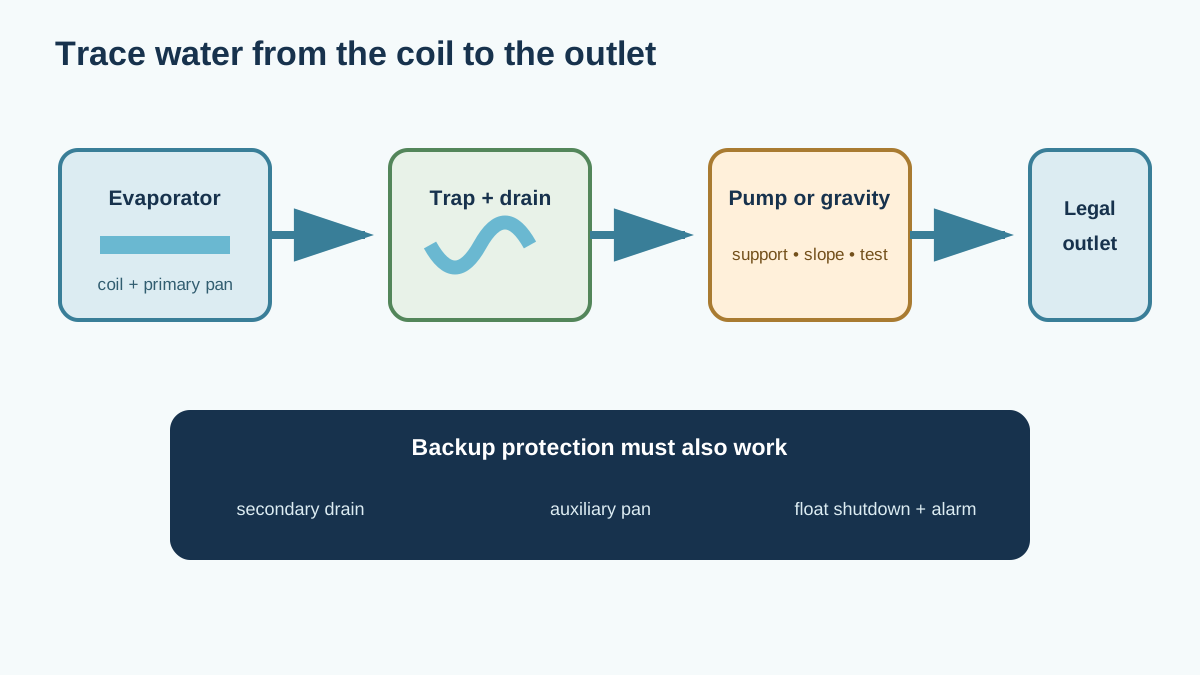
- 3Trace water from coil to primary pan, trap, drain, pump, and final discharge before treating a visible drip.
Water Near the Air Handler Isn't Automatically a Clogged Drain
Short answer: Turn cooling off if water is overflowing or threatening electrical parts, ceilings, or finishes. Trace the full path: coil, primary pan, risk, drain, condensate pump, secondary drain or auxiliary pan, and discharge. A clog is common, but a frozen coil, cracked pan, missing or dry risk, poor slope, failed pump, duct sweating, plumbing leak, or roof leak can produce similar water.
Clearing one line can hide the evidence while the real defect remains. A good service call shows where water stopped moving, why, and whether the overflow controls work.
Protect the Building First
Shut cooling off at the thermostat when water is rising, dripping through a ceiling, or reaching electrical equipment. Follow the equipment instructions and use qualified help if safe isolation is uncertain.
Do not:
- bypass or tape down a float switch;
- keep restarting a unit that shuts off on water level;
- open energized panels;
- pour bleach, acid, or drain opener into the system;
- use high-pressure air without knowing where debris and pressure will go;
- vacuum a line that may connect to another drain or occupied space;
- walk on ceiling drywall in an attic;
- cover wet materials before they dry.
Move belongings, photograph damage, and contact the insurer when appropriate. EPA advises fixing moisture sources and drying wet materials promptly, often within 24–48 hours, to limit mold growth.
Identify Which Water You See
Primary condensate overflow
Water collects in or spills from the air-handler's internal primary pan because the drain path is blocked, mispitched, untrapped, cracked, or unable to overcome unit pressure.
Auxiliary pan water
An external pan beneath attic or concealed equipment catches overflow. Water here means the primary system or cabinet leaked. The pan is a warning and damage-control layer, not the normal drain.
Secondary drain discharge
Some systems route a secondary outlet to a conspicuous location, such as above a window. Water appearing there tells the occupant the primary path needs service. Do not reroute it out of sight.
Coil-thaw water
A frozen evaporator can release much more water than normal when it thaws, sometimes beyond the pan or drain capacity. Check the frozen-coil guide if airflow was weak or refrigerant piping iced.
Duct or cabinet sweating
Humid air contacting a cold, poorly insulated duct, boot, cabinet, or suction line can condense on the outside. The drain may work perfectly. Look for beads on exterior surfaces rather than water originating inside the pan.
Plumbing, roof, or humidifier leak
Water can travel along framing or pipes and emerge beside the unit. Correlate it with rain, fixture use, or humidifier operation. Do not let the air handler's location determine the diagnosis.
Draw the Drain System
Sketch every component before taking it apart:
- evaporator coil and primary pan;
- primary outlet fitting;
- risk and cleanout/vent arrangement;
- horizontal drain slope and supports;
- condensate pump if present;
- secondary outlet or auxiliary pan;
- float switches and shutdown wiring;
- final discharge or plumbing connection;
- neutralizer if the line also handles furnace condensate;
- freeze-exposed sections.
Mark pipe size, fittings, direction, and elevation. A photo of white PVC leaving the cabinet isn't a drain design.
Why a risk Matters
An air handler can place the drain pan under negative or positive pressure relative to the room. Without a correctly sized and configured risk, air can move through the drain opening and keep water from leaving the pan or blow air/water the wrong way.
risk depth, vent location, cleanout caps, and priming depend on equipment pressure and manufacturer instructions. Copying a generic P-risk can fail. A dry risk after winter can also pass air until it refills.
The technician should compare the installation with the exact air-handler manual and measured pressure. Do not add a vent or open cleanout where it defeats the risk.
Common Blockage Locations
- slime or debris at the primary pan outlet;
- a risk filled with biofilm;
- a sagging horizontal line;
- an unglued or shifted fitting;
- a narrow reducer or improper adapter;
- a condensate-pump inlet or check valve;
- an outdoor termination filled with soil, insects, algae, or ice;
- a shared plumbing connection with poor slope;
- rust or flakes from a deteriorating pan;
- construction debris left in the cabinet.
A wet/dry vacuum at an accessible outdoor termination can sometimes clear a simple line when the equipment manufacturer and local setup allow it. But suction can empty a risk, pull debris into a pump, or affect a shared connection. If the route isn't known, stop.
Chemical Cleaning Has Limits
Home advice often recommends vinegar or bleach on a fixed schedule. Equipment, pan, pump, pipe, adhesives, coatings, local wastewater rules, and manufacturer instructions differ. Chlorine can corrode metals and react with other cleaners. Acids or drain openers can damage equipment and create hazardous fumes.
Use only a method approved for the exact system. Never mix chemicals. Mechanical cleaning, pan cleaning, risk service, and source control may be more appropriate than repeated dosing.
If microbial growth is extensive or the drain connects to contaminated material, use qualified service and follow EPA moisture guidance.
Drain Slope and Support
Gravity drains need continuous fall toward the discharge. Long unsupported PVC can sag between hangers and hold water. A fitting turned slightly uphill can create a hidden reservoir.
Check with a level and the installation instructions. Do not assume the garage floor or attic platform is level. Pipe supports must allow service without stressing the pan connection.
Avoid routing where storage, foot traffic, rodents, or other trades can crack the line. Protect it from freezing and UV exposure where applicable. Local plumbing and mechanical codes determine allowable termination.
Condensate Pumps
A pump adds a tank, float, motor, check valve, discharge tubing, power supply, and alarm/shutdown opportunity. Any one can fail.
Test as the manufacturer directs:
- tank fills without leaking;
- pump starts and stops at expected levels;
- discharge flows to the intended destination;
- check valve prevents harmful backflow;
- tubing is supported and not kinked;
- power cannot be accidentally switched off;
- overflow safety stops equipment or alarms;
- pump remains accessible for cleaning and replacement.
Do not plug the pump into an extension cord or outlet controlled by an unknown wall switch. A pump that runs constantly may have a stuck check valve, undersized line, blockage, or float fault.
Auxiliary Pans and Float Switches
PNNL guidance describes corrosion-resistant pans and water-level detection that shuts equipment down before overflow. Depending on equipment location and code, protection can include a secondary drain, auxiliary pan, primary-line switch, pan switch, or combination.
Commission each device. Lifting a float should create the intended shutdown or alarm. The thermostat may go blank or display a fault depending on wiring. Label the control so a future occupant knows that a “dead AC” may be water protection doing its job.
Never defeat the switch to restore cooling. Clear and diagnose the water first.
Frozen or Heat-Affected Drain Lines
An outdoor line can freeze if water remains in a low spot. Condensing furnaces may produce water during the coldest weather, when an exposed termination is most vulnerable. Attic lines can also see extreme heat and material movement.
Review:
- continuous slope and trapped water;
- pipe location inside/outside the enclosure;
- insulation or heat-trace design where allowed;
- termination height above snow and grade;
- pump discharge and check-valve holdback;
- whether furnace condensate shares the route;
- neutralizer and drain material compatibility.
Do not improvise electric heat cable inside a pipe or apply open flame. The durable fix is a code-compliant route that drains and remains serviceable.
Duct Sweating Versus Drain Overflow
Use the water's starting point:
| Observation | More consistent with |
|---|---|
| Water inside primary pan rises | Drain/risk/pump restriction |
| Exterior cabinet beads broadly | Air leakage/insulation and high dew point |
| One duct boot drips | Cold surface, insulation gap, humid room/attic air |
| Large water event after weak airflow and ice | Frozen-coil thaw |
| Stain follows rain | Roof/wall water possible |
| Water appears when upstairs fixture runs | Plumbing leak possible |
For sweating, measure air dew point and surface temperature. Repair duct air leakage and insulation continuity, and control the humid air source. Lowering the thermostat further can make the surface colder and worsen condensation.
A Commissioning Flow Test
After cleaning or repair, the technician should:
- clean and dry the pan safely;
- prime the risk as required;
- confirm caps and vents in correct positions;
- add a measured volume of clean water at the approved point;
- observe flow through risk and full route;
- test pump start/stop and discharge if present;
- test every float switch and alarm;
- run cooling long enough to produce condensate;
- inspect joints, cabinet, pan, and ceiling below;
- document the final discharge.
Do not rely on “water came out somewhere.” The test should show that the primary route handles flow and backup protection responds.
The Technician's Water-Path Record
| Component | Existing condition | Repair | Verified result |
|---|---|---|---|
| Primary pan/outlet | |||
| risk/cleanout/vent | |||
| Gravity line slope | |||
| Condensate pump | |||
| Secondary drain | |||
| Auxiliary pan | |||
| Float switches | |||
| Final discharge | |||
| Cabinet/duct sweating | |||
| Coil icing |
Ask for photographs where the drain disappears into a wall or attic.
Water Damage and Cleanup
Dry ceiling, insulation, framing, and flooring promptly. Remove or replace materials that cannot be cleaned and dried. Do not close a ceiling until the drain has passed a live operating test and concealed materials are dry.
Extensive mold, contaminated water, collapsed ceilings, and water through electrical systems need qualified remediation and trades. The condensate itself can carry dust and microbial material from the coil and pan; treat it as equipment wastewater, not clean drinking water.
Primary Pan Cracks and Cabinet Leaks
A clear drain doesn't help if the primary pan is cracked, rusted through, poorly pitched, or separated from its outlet. Plastic pans can split from stress or heat. Metal pans can corrode. Coil replacement or rough service can disturb the connection.
The technician may need to:
- inspect the entire pan with the coil thawed and unit off;
- test the outlet fitting and gasket;
- check cabinet level in both directions;
- verify water reaches the outlet instead of a low corner;
- distinguish pan leakage from condensate on the cabinet exterior;
- inspect coil support and refrigerant tubing for stress;
- confirm replacement-pan compatibility;
- remove wet insulation inside the cabinet as allowed by the manufacturer.
Sealant smeared over a dirty wet crack is rarely a durable repair. Use the equipment manufacturer's approved pan or repair method and protect refrigerant lines during access.
Cabinet Level and Equipment Pitch
An air handler or coil cabinet may require level installation or a specific slight pitch stated in its manual. A platform can settle, hangers can move, or a replacement furnace can change how the coil sits.
Measure at the cabinet, not the attic floor. Check that drain fittings aren't carrying pipe weight and that supports don't twist the pan. Correcting pitch must preserve duct alignment, refrigerant-line stress, flue/vent requirements, service clearance, and structural support.
Do not shim suspended equipment casually. A qualified installer should review hangers and vibration isolation.
Negative-Pressure Drain Failure
When the blower draws air through the coil and pan section, the cabinet may be under negative pressure. An untrapped drain can pull air inward. Water can hover in the pan or gulp through only when the blower stops.
Clues include:
- drain flows after cooling shuts off but poorly while running;
- bubbling or sucking sounds at an open cleanout;
- water level changes with blower speed;
- risk was removed during prior service;
- cleanout cap or vent is in the wrong place;
- pan overflows during high airflow.
The technician should measure cabinet pressure and size the risk from manufacturer guidance. More pipe fittings aren't the answer unless their elevations match the pressure requirement.
Positive-Pressure Drain Failure
Some coil sections are downstream of the blower and under positive pressure. Air can blow through the drain, push water, and spray from an open fitting. risk and vent details differ from a negative-pressure system.
Identify airflow direction before copying a diagram. A furnace with an add-on coil, a packaged unit, and a draw-through air handler can require different arrangements. The exact manual controls.
Shared Furnace and AC Condensate
A condensing furnace and cooling coil may share part of a drain path when allowed. Furnace condensate can be acidic and occurs in winter. The combined design must handle:
- material compatibility;
- required neutralization;
- separate traps where the manuals require them;
- winter freeze protection;
- pump capacity and switch behavior;
- venting and air-pressure separation;
- service without cross-draining equipment;
- local plumbing rules.
Never tie hoses together simply because they both carry water. An incorrect connection can disturb furnace pressure switches or allow air to bypass a risk.
Multi-Unit and Shared-Stack Problems
Condos, apartments, and stacked mechanical rooms can have shared or concealed drain routes. Water at one ceiling may come from another unit. A blockage downstream can affect several systems.
Before using pressure or chemicals:
- identify ownership and shutoff responsibility;
- trace every connected appliance;
- review building plans and access points;
- notify affected residents or management;
- protect lower units from discharged debris;
- confirm the legal cleanout method;
- document which unit produced water;
- test the shared route after repair.
Do not modify common property or shared plumbing without authorization.
New-System Acceptance Test
Condensate commissioning belongs in installation, not the first humid day.
For a new or replaced system, require:
| Test | Evidence |
|---|---|
| Cabinet level/pitch | Recorded measurement |
| risk configuration | Manual detail and photo |
| Primary flow | Measured water test |
| Secondary outlet | Visible route/photo |
| Auxiliary pan | Coverage and support |
| Float shutdown | Demonstrated operation |
| Pump | Fill/start/stop/discharge test |
| Final outlet | Legal location and free flow |
| Cooling run | Stable condensate, no leakage |
| Access | Cleanout, pan, switch serviceable |
The installer should test before ceilings close. For attic equipment, photograph the pan and switch from angles a future technician can use.
Maintenance Schedule by Climate and Use
There is no universal “flush every 30 days” rule. Dust load, humidity, runtime, pan design, pump, and local water/biological conditions vary.
Before cooling season
- inspect and clean the pan using approved methods;
- service risk and drain;
- test pump and switches;
- confirm pipe support and slope;
- inspect auxiliary pan and ceiling below;
- verify final outlet is clear.
During heavy cooling
- look for water where it shouldn't be;
- confirm the visible outlet behaves as expected;
- respond to float-switch shutdowns;
- keep filters and coils maintained;
- watch attic or closet humidity.
After cooling season
- clean as the manufacturer directs;
- prevent a risk or outdoor line from creating winter problems;
- test shared furnace condensate paths before heating;
- keep cleanouts capped as designed.
ENERGY STAR recommends condensate-drain inspection as part of professional HVAC maintenance because a plugged drain can damage the home and affect humidity.
A Water-Volume Reality Check
Cooling removes moisture from indoor air. The amount varies with humidity, airflow, coil temperature, runtime, and equipment capacity. A humid-day system can produce far more water than a mild-day service test.
Instead of claiming a fixed gallons-per-day number, have the technician run a measured water test and then observe live condensate under meaningful load. A drain that passes a cup of water slowly may still fail after hours of high latent load.
If a pump cycles every few seconds, measure inflow, tank volume, lift, and discharge restriction. Frequent cycling can wear the pump and signal backflow or undersizing.
Distinguish Drain Odor From “Dirty Sock” Odor
An open or dry risk can move drain or cabinet air. Microbial growth on a coil or in a pan can create a musty odor when the blower starts. Plumbing sewer gas, dead animals, wet insulation, and duct contamination can smell similar.
Record whether odor appears:
- only at startup;
- continuously while blower runs;
- near the air handler but not registers;
- after the risk dries;
- after rain or a drain backup;
- in one branch duct only.
Do not mask the odor with fragrance or ozone. Identify moisture and material sources. Ozone generators can harm occupants and materials and are not a condensate repair.
Repair Invoice Checklist
The invoice should state:
- where the blockage or leak was found;
- pan and cabinet condition;
- risk and vent configuration;
- method and materials used;
- pump and float-switch test results;
- secondary/auxiliary protection status;
- final discharge location;
- live cooling verification;
- water-damage observations and exclusions;
- follow-up maintenance tied to the equipment instructions.
“Cleared drain” without the location, cause, and protection test gives the next technician little evidence.
Common Failure Modes
- The line is cleared but the missing risk remains.
- A risk is installed without enough depth for unit pressure.
- The cleanout cap is left open and breaks the risk action.
- A float switch is bypassed after a nuisance shutdown.
- A secondary drain is routed where no one can see it.
- The auxiliary pan has no slope, switch, or safe outlet.
- PVC sags after supports loosen.
- A frozen outdoor termination is cleared but not rerouted.
- Bleach is added to an incompatible pan or pump.
- Coil ice thaws and is misdiagnosed as a simple clog.
- Duct sweating continues after the drain is serviced.
Frequently Asked Questions
Can I pour vinegar down the AC drain?
Only if the equipment and drain manufacturer allow that method. Materials and connections vary. Never mix cleaners.
Why did the thermostat go blank when the drain clogged?
A float switch may interrupt the control circuit to stop cooling before overflow. Treat it as a water warning, not a thermostat failure.
Where should the drain terminate?
Local code and equipment design control it. The outlet must be legal, visible or serviceable as required, protected from freezing, and unable to damage the foundation.
Is water in the auxiliary pan normal?
No. It means the primary path or cabinet leaked. Find the source and test the backup controls.
Can I use compressed air?
Not blindly. Pressure can separate fittings, damage the pan, spray contamination, or push a blockage deeper. A technician should know the route and safe pressure.
Why does the line clog every summer?
Pan contamination, poor slope, risk design, standing water, dirty coils, air leakage, or an inaccessible route may remain. Repeated clearing isn't a full diagnosis.
Can a clogged drain freeze the coil?
Not usually by itself, but a float switch may stop the system and water can affect components. Coil freeze more often involves airflow, refrigerant, load, or control conditions.
Should I install a water alarm?
It can add useful warning, especially in attics or finished spaces. It doesn't replace a working primary drain, auxiliary pan, and shutdown switch.
What to Read Next
Use the frozen evaporator-coil guide if the water event followed weak airflow, ice on the large refrigerant line, or a long thaw. For a new ductless system, compare gravity drainage with a condensate pump before choosing the wall with the mini-split indoor-unit placement guide.
Sources and Verification
- PNNL Building America: HVAC Has CorrosionResistant Condensate Drain Pan
- ENERGY STAR: Heating and Cooling Maintenance Checklist
- U.S. DOE Building America: Air Conditioner Diagnostics, Maintenance, and Replacement
- U.S. EPA: A Brief Guide to Mold, Moisture and Your Home
- U.S. EPA: Moisture Control Guidance for Building Design, Construction and Maintenance
Editorial Review
EnergyBS Editorial Team
EnergyBS publishes practical homeowner guides. Important program, product, and cost claims should be checked against the linked source and local project documents before you commit to work.
Related Guides
View All ArticlesFrozen AC Evaporator Coil: Thaw It Safely, Then Prove Why It Froze
Stop compressor operation, manage thaw water, document airflow and ice patterns, and separate filter, blower, duct, coil, thermostat, and refrigerant causes before authorizing repairs.
Duct Leakage Testing and Sealing: A Homeowner's Guide to DuctBlaster Results
A practical guide to total duct leakage, leakage to outdoors, CFM25 results, pressure problems, sealing materials, contractor scopes, safety checks, and postwork verification.
Why Is My Electric Bill So High in Summer? A 60Minute Diagnosis
A billfirst troubleshooting workflow that separates price changes, billingperiod effects, weatherdriven cooling, baseload growth, pool and waterheating loads, and HVAC faults before money is spent.