Attic Insulation Removal Cost 2026: What Removal and Replacement Really Cost
Removing old attic insulation in 2026 typically costs $1$2 per square foot, or $1,600$3,600 total on average, and removing plus replacing runs $2$6 per square foot. This guide breaks down cost by attic size and material, contamination and asbestos surcharges, why the empty attic is the cheapest airsealing window you will ever get, and how to compare quotes.
Quick Checks
- 1Budget $1-$2 per square foot for removal alone, or $1,600-$3,600 total on average in 2026; removal plus new insulation runs $2-$6 per square foot for a clean, uncontaminated attic.
- 2Contamination is what breaks the budget: contractor sanitation work often starts at a $1,500-$3,000 minimum, mold remediation averages $1,500-$6,000, and asbestos or vermiculite abatement runs $10-$25 per square foot.
- 3If the attic contains vermiculite, assume it contains asbestos. The US EPA guidance is explicit: do not disturb it, do not remove it yourself, and use a licensed asbestos contractor.
- 4An empty attic is the one cheap moment to air seal the ceiling plane. Air sealing at $350-$3,000 costs far less before new insulation goes in than after, and it is where much of the energy saving actually comes from.
- 5Many rebate and tax programs require a pre-retrofit audit or approved materials. Confirm eligibility before the old insulation leaves the house, not after.
Attic Insulation Removal Cost 2026: What Removal and Replacement Really Cost
By EnergyBS Editorial Team | October 4, 2026
The Short Answer: What Insulation Removal Costs
Short Answer: In 2026, professional attic insulation removal typically costs $1 to $2 per square foot, or $1,600 to $3,600 total on average for a typical attic, according to HomeGuide's 2026 removal cost guide, and that figure includes disposal of old, non-hazardous material. Removing the old insulation and installing new insulation in the same project runs $2 to $6 per square foot, with a published average total of $3,200 to $10,800 for an attic with no damage or contamination. Angi's 2026 cost data lands on the same per-foot band: $1 to $2 per square foot, with blown-in material near the low end and rigid foam near the top.
Those bands describe a clean job: dry insulation, in decent condition, in an attic a crew can move through. The rest of this guide is about everything that pushes a quote out of that band. Contamination, difficult access, hand removal instead of vacuum removal, and a roofline full of debris all reprice the same square footage, and the vermiculite case in section 5 leaves the per-foot market entirely. Read the bands as a starting point, then find which condition your attic is actually in.
One framing note before the tables. Removal is rarely a standalone purchase. It is the first line of a remove, air seal, and reinsulate project, and quoting it in isolation hides the two decisions that matter more: what condition the old material is in, and whether you use the empty-attic window to seal the ceiling plane. Sections 6 and 7 price those decisions with the same data.
1. What a Removal Quote Actually Covers
A professional removal quote prices a process, not an afternoon with a shop vacuum. For blown-in loose-fill, the standard method is a gas or electric insulation removal vacuum parked outside the house, a long large-diameter hose run into the attic, and sealed disposal bags that fill with the old material as the crew works. One of the less obvious details: the published removal band includes disposal of non-hazardous insulation, so if a quote prices removal and disposal as separate lines, ask whether the disposal line duplicates what the first line was supposed to include.
What a complete quote usually bundles:
- Crew labor for the removal itself, vacuum or hand work as the material requires
- Disposal bags, hauling, and landfill fees for non-hazardous material
- Basic attic cleanup of loose debris disturbed by the work, commonly $100-$500 as a standalone cleaning service in HomeGuide's data
- Protection of the living space below: sealed hatch or access, drop sheets, dust control at the access point
What it usually does not bundle unless listed: sanitation or decontamination, mold remediation, asbestos testing or abatement, air sealing, baffles or ventilation work, and the new insulation itself. When one quote lands well below the others, the gap is rarely faster labor. It is usually a missing disposal line, a missing sanitation scope the attic plainly needs, or new insulation priced at a lower depth than the other quotes. Section 11 turns this into a line-by-line checklist.
2. Cost by Attic Size
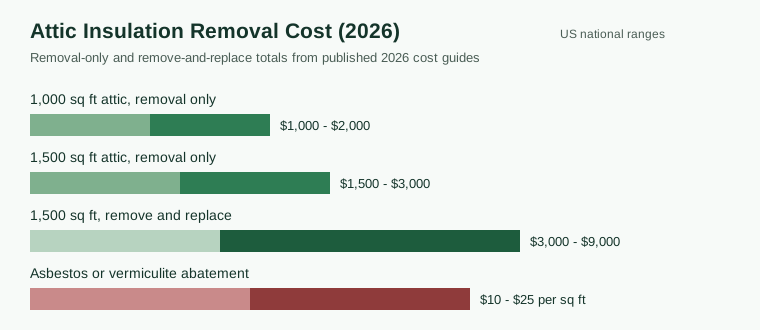
Size is the cleanest pricing ladder, because removal is sold by the square foot. HomeGuide's 2026 table, which includes disposal of non-hazardous material, is:
| Attic size | Removal only | Removal and replacement |
|---|---|---|
| 500 sq ft | $500 - $1,000 | $1,000 - $3,000 |
| 800 sq ft | $800 - $1,600 | $1,600 - $4,800 |
| 1,000 sq ft | $1,000 - $2,000 | $2,000 - $6,000 |
| 1,500 sq ft | $1,500 - $3,000 | $3,000 - $9,000 |
| 2,000 sq ft | $2,000 - $4,000 | $4,000 - $12,000 |
HomeGuide puts the average US attic at 1,600 to 1,800 square feet, which is why the national average total sits at $1,600 to $3,600 even though the rate is a simple $1-$2. Angi's size table matches the same arithmetic, with 1,000 square feet at $1,000-$2,000 and 1,500 square feet at $1,500-$3,000.
Two cautions on using the table. First, some contractors soften the per-foot rate on larger attics, since the vacuum setup, access work, and drive time are fixed costs spread over more footage. That is a legitimate discount, and it means a 2,000 square foot quote below $2 per foot is not automatically a red flag. Second, the top of a band is not contractor padding by default. Deep, compacted loose-fill, multiple layered materials, or an attic floor obstructed by storage, ductwork, and low roof pitches all add hours to the same square footage. The quote should say which condition it assumed.
3. Cost by Insulation Type
The old material decides the method, and the method decides where you land inside the band. Angi's 2026 figures by material, alongside HomeGuide's rental benchmark:
| Old insulation type | How it comes out | Published cost signal |
|---|---|---|
| Blown-in loose-fill (cellulose, fiberglass, mineral wool) | Industrial vacuum; loose material feeds the hose continuously | $1-$2/sq ft; Angi project totals $600-$1,000; fastest of the three methods |
| Batts and rolls | Hand removal; each batt is cut or rolled out and bagged | Angi project totals $800-$1,100; slower, more labor per square foot |
| Rigid foam board and spray foam remnants | Hand removal and prying, sometimes section cutting | Angi project totals $900-$1,200; near the top of the $1-$2 band |
| Any material, difficult access | Hand work in low or obstructed sections | Angi notes hard-to-reach areas can add up to $1/sq ft |
Blown-in is the cheapest removal per foot because the vacuum does the carrying. Batts cost more in labor even though each batt is intact, because a person has to move every one to the hatch. Rigid and foam-edged work is the slowest, and older mechanically fastened board can add fastener pulling across every joist bay.
HomeGuide notes one counterintuitive factor: loose-fill that looks easy can price above average if it is abrasive and hard on removal equipment, and mixed debris in the insulation forces hand removal instead of vacuum work, which moves the price the same way. Deep history in an old attic, several materials layered over decades, has the same effect. The type that sets the price is not the one on the surface. It is the one the crew reaches last, at the eaves.
The DIY benchmark. For clean, dry, accessible blown-in insulation, HomeGuide puts an insulation removal vacuum rental at about $200 to $350 per day. That is the honest amateur floor for the equipment alone, before bags, protective gear, hauling, and dump fees. What the rental does not include is Section 5 of this guide, and section 9 separates the jobs a homeowner can sensibly do from the ones that should never be priced as a rental.
4. The Contamination Surcharges: Where Attics Get Expensive
A clean attic is priced by the foot. A contaminated attic is priced by the condition. These are the three surcharge tracks in the published 2026 data, again from HomeGuide, and they stack onto the base removal price rather than replacing it.
Pest and rodent contamination. Rodent removal runs $150-$600 on average, cleanup and hazardous waste disposal add $600-$1,000, and sealing entry points to prevent reinfestation adds another $100-$800. Contractors commonly carry a $1,500-$3,000 minimum fee for full attic sanitation work, which is why a mid-size contaminated attic often prices as sanitation first and removal second.
Mold. Mold removal and sanitization averages $1,500-$6,000, and HomeGuide notes it can reach $15,000 or more where there is real structural damage or limited accessibility. Mold pricing has the widest spread of any line in this guide because the published average covers growth on insulation and framing, while the high end is effectively a repair project that started as a mold call.
Water damage and fire damage. Wet insulation must come out promptly to protect the structure, and experts recommend removing insulation after a fire even when the flames never reached it, because the smoke odor stays in the material. Neither condition carries a clean per-foot band in the sources, which itself is information: a contractor pricing water or fire work by the square foot, without opening the ceiling or inspecting the framing, has not priced the job yet.
The practical takeaway is sequencing. Document and price the contamination line separately from removal and from new insulation. During a quote walk, contaminated insulation should produce a separate line item with a separate cause (rodents, mold, water, smoke), not a thicker single number. That line is also the one most likely to be eligible under a homeowner policy claim after a leak or fire, and it is the first thing lost when the paperwork blends all three scopes into one total.
5. Vermiculite and Asbestos: A Different Category of Job
One material leaves this market entirely. If your attic contains vermiculite, the small pebble-like loose-fill sold widely from the 1940s through the 1980s, including under the Zonolite name, stop pricing removal quotes.
The United States Environmental Protection Agency's guidance to homeowners is direct: you should assume the vermiculite contains asbestos and not disturb it. The EPA says to leave it undisturbed, avoid storing items in the attic, keep children out of the attic, never attempt removal yourself, and hire a professional asbestos contractor for any renovation that would disturb it. There is no careful version of homeowner removal in that guidance. The do-not-disturb clause extends to contractors doing other attic work as well, because any disturbance can deposit fibers into the house below.
The economics follow the safety logic:
| Item | Published range (2026 data) |
|---|---|
| Asbestos inspection and testing | $250-$850 |
| Asbestos insulation removal / abatement | $10-$25 per sq ft |
| Asbestos removal project totals | $1,000-$11,000+ |
| Damaged or potentially hazardous insulation removal (general) | Up to $25+ per sq ft |
Those bands are not expensive removal. They are licensed abatement: negative-air containment, wet methods, sealed bags, trained crews, regulated disposal. If a standard insulation contractor discovers vermiculite mid-quote and offers to vacuum it out within the $1-$2 band, end the conversation; that refusal to reprice is the most expensive sentence in this entire guide.
One offset exists. HomeGuide notes that homeowners removing Zonolite vermiculite insulation sold between the 1940s and 1980s may be eligible for up to 55% reimbursement through the Zonolite Attic Insulation (ZAI) Trust, which repays a portion of removal and reinsulation costs. Test before you disturb, document the material and the invoice, and confirm trust eligibility before the abatement crew arrives, because retroactive claims depend on documentation the crew may not preserve for you.
6. Removal Plus Replacement: The Full Project Price
Most homeowners do not buy removal. They buy an empty attic replaced with a correctly insulated one. The published full-project band is $2 to $6 per square foot, averaging $3,200 to $10,800 total, for an attic with no damage or contamination (HomeGuide, 2026). What that buys, line by line in the same dataset:
| New material (installed) | Published range |
|---|---|
| Batt and roll insulation | $0.80-$2.60 per sq ft (to $4.70 per sq ft reaching full recommended R-value) |
| Blown-in insulation | $1.00-$2.80 per sq ft |
| Spray foam insulation | $1.50-$5.00 per sq ft ($0.60-$2.90 per board foot) |
| Attic air sealing | $350-$3,000 |
| Basic attic cleaning | $100-$500 |
Material-only prices sit below installed prices, as expected: cellulose at $1.20-$2.50 per square foot and fiberglass at $0.30-$1.30 per square foot in HomeGuide's material table. The gap between material and installed is the blowing machine, the second crew member, depth markers and containment, and the warranty.
Two honest readings of the replacement column. First, depth is priced, not just coverage. A quote reaching regional target R-values costs more than a quote restoring whatever depth was there, because the installer is selling material volume, not floor coverage. Second, the target itself varies by climate: ENERGY STAR guidance puts most attics at R-38, and cold climates at R-49 to R-60. Two quotes for the same attic can differ by thousands and both be "new insulation," because one stops at R-30 and the other reaches R-49. The R-value target belongs in writing on the quote, next to the material.
For the material side of that comparison, our blown-in attic insulation cost guide and spray foam insulation cost guide price the new layer on its own. This guide prices getting the old layer out.
7. The Empty Attic Is an Air-Sealing Window
Insulation resists heat flow. It does not stop air movement, and a ceiling plane full of unsealed penetrations (recessed lights, plumbing stacks, wire holes, top plates, the attic hatch itself) leaks conditioned air into the attic no matter how deep the new insulation is. Removing the old insulation exposes every one of those penetrations, once, at floor level, before they are buried again.
That is why air sealing is priced as its own line in section 6 at $350-$3,000, and why the order of work matters more than the total. Sealing before reinsulating costs the published band. Sealing after reinsulating means pulling back or working through new insulation, and the quote returns with it. Baffles at the eaves belong in the same conversation, since new blown-in depth can block soffit ventilation that the old, settled insulation never reached.
This is also where the remove-or-not decision should be made, rather than in the quote. If the existing insulation is dry, uncontaminated, and simply thin or settled, topping up may be the better purchase and removal is $2,000 spent to spend $3,000 more. Our guide to whether to remove old attic insulation or add on top works through that decision attic by attic. Removal earns its cost when the material is damaged or contaminated, when the ceiling plane needs sealing or repair work underneath it, or when a different insulation system is going in. When none of those are true, the money usually does more work on top of the old layer than underneath it.
Our air sealing guide for old homes covers what to seal and in what order, and our insulation types and R-values comparison is the reference for what each new material delivers per inch.
8. A Worked Example: 1,500 Square Foot Attic
Totals move less than assumptions do, so here is the arithmetic with every input named. This is a hypothetical example, built only from the published ranges above, to show how a contractor assembles the number.
Scenario: 1,500 square foot attic, clean dry blown-in material, vacuum removal, attic floor air sealed, new blown-in installed to an R-38 to R-49 target.
| Line | Basis | Hypothetical cost |
|---|---|---|
| Removal and disposal | 1,500 sq ft at $1-$2/sq ft | $1,500-$3,000 |
| Air sealing | Published band $350-$3,000 | $900 (mid-band assumption) |
| New blown-in insulation | 1,500 sq ft at $1.00-$2.80/sq ft (midpoint $1.90) | $2,850 |
| Total | $5,250-$6,750 |
The range checks against the published remove-and-replace band for this size, which at $3,000-$9,000 brackets the result. Two sensitivities matter more than the midpoint. If the attic needs rodent sanitation at the common $1,500-$3,000 contractor minimum, the same project lands around $6,750-$9,750 before any mold or repair work. If the old insulation can stay and be topped up instead, the removal and disposal line disappears entirely and the same money either buys more depth or leaves the budget altogether. Run your own attic through both versions of this table before the first quote visit. A contractor who has to beat a target you have already calculated quotes differently from one who is naming the first number.
9. DIY Removal: Where It Works and Where It Never Does
HomeGuide's DIY benchmark ($200-$350 per day for a removal vacuum rental) is real, and for one narrow job it is sensible: clean, dry, non-hazardous blown-in insulation in an accessible attic, where the homeowner is willing to supply the labor, bags, respirator-grade protective gear, and hauling, and can dispose of the material as non-hazardous waste under local rules. Batt removal is the other DIY-plausible job, since it is slow hand labor a crew prices accordingly.
The rest of this list is not DIY at any rental price:
- Vermiculite, always. The EPA line is unambiguous: assume asbestos, do not disturb, do not remove it yourself. See section 5.
- Suspect material in a pre-1980s home that has not been tested. Testing at $250-$850 is the cheapest line in this guide relative to what it rules out.
- Rodent-contaminated insulation. The insulation is hazardous waste; the sanitation scope in section 4 is the job.
- Mold remediation beyond a trivial area. The $1,500-$6,000 average band exists because visible growth is rarely the full extent.
- Spray foam or rigid removal. Prying and cutting in a low attic is the slowest, dustiest version of the job, priced at the top of the band for a reason.
One more honest friction: time. HomeGuide puts professional removal at 4 hours to 2 days depending on size and complexity. A homeowner rig typically takes a multiple of that, across several trips up the hatch with the vacuum hose fighting every truss. Price your weekends into the comparison, because the contractor quote already has.
10. Canada Pricing: Same Scope, Canadian Numbers
Canadian removal follows the same method and scope lines as US work, with regional labor rates doing most of the moving. The clearest published Canadian benchmarks are on the replacement side: HomeStars puts the average cost of attic insulation in Canada at $1,500 to $3,000 including materials and installation, with professional installation itself running $1.50 to $2.45 per square foot, and it treats removal of old insulation as an added labour cost without publishing a Canadian per-foot removal rate. That means there is no published Canadian removal-and-replacement band to quote the way HomeGuide's $2 to $6 per square foot serves the US, so do not let anyone price a Canadian job off the US table. Budget the replacement from the $1,500-$3,000 installed average, expect removal labour on top of it, and let the contamination rules in section 4 set the ceiling, not the floor.
Two Canada-specific cautions. First, vermiculite is common in older Canadian housing stock and the same rule applies: assume it contains asbestos until a test or a licensed assessor says otherwise, and use a licensed abatement contractor. Second, Canadian insulation incentives commonly run through audit-based programs at the provincial or utility level, and audit-before-work sequencing is the norm rather than the exception. Confirm the program and book the pre-retrofit audit before the removal crew arrives, since an attic emptied before the audit can cost you the entire rebate on the new insulation.
11. Incentives in 2026: Confirm Before the Attic Is Empty
Budget the project as if no cheque is coming, then verify. The US federal Energy Efficient Home Improvement Credit (Section 25C) is not available for equipment placed in service after December 31, 2025, so a 2026 insulation project should not carry an assumed federal credit in the math. Confirm your specific situation with a tax professional.
What can still apply:
- Utility and state programs, which frequently support insulation and air sealing and often require approved materials, minimum R-values, or participating contractors.
- Canadian provincial and utility programs, commonly gated on a pre-retrofit home energy audit (see section 10).
- The ZAI Trust for documented Zonolite vermiculite removal, at up to 55% reimbursement (see section 5).
The shared rule across all of them is documentation before work: photographs, material identification, audit reports where required, model and R-value records for the new insulation, and itemized invoices separating removal, sanitation, sealing, and new material. Removal is the phase that destroys the evidence every program asks for, so the photograph set matters more here than in any other attic project.
12. Quote Checklist: How to Compare Three Quotes Fairly
Get three written, itemized quotes for the same scope. Removal rewards scope discipline more than brand shopping, because every contractor is removing the same attic. Each quote should state:
- Old material identified in writing (type, approximate depth, condition), and the removal method: vacuum or hand
- Square footage being priced, and the per-foot rate if the quote uses one, with how low-slope or obstructed areas are counted
- Disposal: bags, hauling, and landfill fees included or explicitly excluded
- Contamination scope, if any, stated as a separate line with its cause: rodents, mold, water, smoke, unknown
- Suspect material protocol in writing: how the crew handles vermiculite or unidentified pre-1980s material if found mid-job
- Air sealing: included, excluded, or priced as an option, with baffle and hatch treatment named
- New insulation stated by material, manufacturer, and target R-value (not just depth), with depth markers or certification you keep
- Ventilation check: soffit baffles and any blocked vents identified before new depth goes in
- Basic cleanup and living-space dust protection included, permit or audit requirements named where they apply
- Total with taxes and payment schedule; never pay in full before removal, sealing, and new insulation are in and verified
Red flags: a quote with no material identification, no disposal line, per-foot pricing that never names a footage, an asbestos-suspect attic quoted at the standard removal rate, or a low total that quietly assumes topping up rather than removal. Shoulder seasons are the easiest time to get careful attic quotes; mid-winter and heat-wave weeks price urgency into every line.
Frequently Asked Questions
How much does it cost to remove attic insulation in 2026?
Professional removal typically costs $1-$2 per square foot, or $1,600-$3,600 total on average, including disposal of non-hazardous material (HomeGuide, 2026). Removing and replacing runs $2-$6 per square foot, averaging $3,200-$10,800 for a clean attic. Contamination, difficult access, and asbestos change the price category entirely.
How much does it cost to remove and replace insulation in a 1,500 sq ft attic?
Published 2026 ranges put removal alone at $1,500-$3,000 and removal plus replacement at $3,000-$9,000 for 1,500 square feet (HomeGuide). The worked example in section 8 lands at $5,250-$6,750 for clean material with air sealing and new blown-in insulation, before any contamination work.
Do I have to remove old insulation before adding new insulation?
Not always. Removal is warranted when the old insulation is damaged by water, mold, fire, or pests, when the ceiling plane underneath needs sealing or repair, or when a different insulation system is going in. Dry, clean, merely thin insulation can often be topped up instead, which skips the removal bill entirely.
Can I remove attic insulation myself?
Clean, dry blown-in insulation can be removed with a rented removal vacuum at about $200-$350 per day (HomeGuide), and batts can be removed by hand. Never remove vermiculite yourself: the EPA says to assume it contains asbestos and not disturb it. Contaminated, moldy, or untested pre-1980s material belongs to professionals.
How long does attic insulation removal take?
HomeGuide puts the removal itself at 4 hours to 2 days depending on attic size and complexity. Vacuum work on a clean attic is the fast end; hand removal, contamination, or restricted access extends it. Replacement insulation and air sealing are usually scheduled as a second phase once the attic is empty.
What does asbestos or vermiculite removal cost?
Asbestos insulation removal runs $10-$25 per square foot in published 2026 data, with project totals of $1,000-$11,000 or more depending on access and amount, and testing at $250-$850 (HomeGuide). Vermiculite owners may qualify for up to 55% reimbursement of removal and reinsulation costs through the Zonolite Attic Insulation Trust.
Should I air seal before the new insulation goes in?
Yes, whenever the attic floor is exposed. Air sealing at $350-$3,000 (HomeGuide) is cheapest and most complete in the empty window between removal and reinsulating. Once new depth covers the ceiling plane, the same penetrations are still leaking but are no longer reachable without disturbing the new insulation.
What to Read Next
- Blown-in Attic Insulation Cost 2026 - cellulose vs. fiberglass pricing for the new layer, by depth and R-value
- Spray Foam Insulation Cost 2026 - open-cell vs. closed-cell pricing when foam is the replacement system
- Remove Old Attic Insulation or Add On Top - the attic-by-attic decision framework this guide prices
- Air Sealing Guide for Old Homes - what to seal while the attic is empty, and in what order
- Insulation Types and R-Values Compared - what each replacement material delivers per inch
Sources and Verification
- HomeGuide How Much Does Attic Insulation Removal Cost? (2026 removalonly and removeandreplace ranges, size table, contamination and decontamination costs, vacuum rental)
- HomeGuide How Much Does Attic Insulation Cost? (2026 newinsulation installed ranges, material prices per square foot, ENERGY STAR Rvalue guidance)
- Angi How Much Does Attic Insulation Removal Cost? (2026 data: persquarefoot removal by material type, access premium, project totals)
- US EPA Protect Your Family from AsbestosContaminated Vermiculite Insulation (assume vermiculite contains asbestos, do not disturb, hire a professional asbestos contractor)
- HomeStars Understanding Attic Insulation Costs (Canada attic insulation installed average, installation cost per square foot, removal as added labour)
Editorial Review
EnergyBS Editorial Team
EnergyBS publishes practical homeowner guides. Important program, product, and cost claims should be checked against the linked source and local project documents before you commit to work.
Related Guides
View All ArticlesShould You Remove Old Attic Insulation or Add More on
Keep dry, clean insulation when it can remain part of a safe assembly; remove only what blocks air sealing or is wet, contaminated, damaged, or incompatible. Includes a quote and depthgrid worksheet.
Air Sealing Guide for Old Homes 2026 Tool (Data & DIY)
Stop drafts and lower heating bills in centuryold homes. Learn the systematic topdown, bottomup approach to air sealing rim joists, attics, and chimneys without trapping moisture.
Insulation Payback by Climate: A Homeowner's Savings and Quote Worksheet
A climateaware method for estimating attic and envelope insulation payback without applying a generic savings percentage to the entire utility bill.